





Why are there no true IMAX 15/70 screens in India? real reasons given
As Christopher Nolan’s The Odyssey released in India, the discussion once again turned to the lack of true 15/70mm IMAX theaters in the country. Why hasn’t India invested in the world’s highest quality IMAX format, and what does this say about the economics of premium cinema?

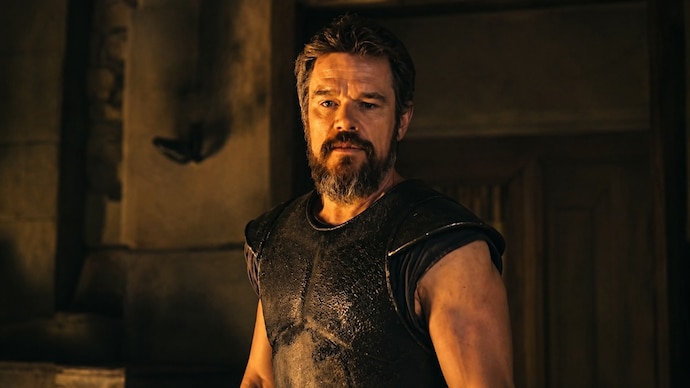


India is currently speaking Nolan language. christopher nolan’s odyssey Tomorrow is coming, but there’s a way to watch it that Indian audiences can’t experience at home. The film is shot entirely on IMAX 15/70 film, the largest and rarest format in modern cinema. Only 41 theaters in the world can screen it. India has none.
That absence seems especially striking now. Around the world, fans are traveling to different countries to watch it odyssey In Nolan’s intended format. In Melbourne, the only cinema in the southern hemisphere to show films on 15/70 film has become a destination in its own right. Its print spans over 17 km and weighs approximately 240 kg. For Indian audiences, the same journey ends on a digital IMAX screen.
This doesn’t mean that India’s IMAX screens are bad. They are often excellent. But the term IMAX covers many different experiences. A digital or laser IMAX presentation can offer a large screen, powerful sound, and a striking image. A true 15/70 IMAX presentation is something else: a giant 1.43:1 image projected from a huge strip of film, the frame of which extends far beyond the familiar widescreen size.
This distinction matters to filmmakers like Nolan, who has spent years defending the format. The name 15/70 refers to the 70 mm film stock and the 15 holes used for each frame. This allows massive amounts of image information to be captured and projected. For Nolan, this isn’t just an old-fashioned alternative to digital filmmaking. This is a way of making the cinema screen appear physically larger.
shooting odyssey The format came with its own complications. Cameras are heavy and noisy. The film stock had to be changed frequently, sometimes every three minutes during production. Nolan also worked with IMAX on a soundproof casing for the approximately 180 kg camera, allowing dialogue to be recorded during a 1570 film shoot for the first time.
So why doesn’t India have it?
This format is so rare partly because the infrastructure needs to show that it is in demand. A cinema needs the right projector, the right screen and trained staff who know how to handle huge film prints. Prints must be sent, stored, and threaded through a projector built to handle a format that has largely disappeared from commercial theaters.
1. Question of economics.
“India is a huge country, and IMAX requires significant capital investment. We have moved from single-screen theaters to multiplexes and megaplexes, but the economics of IMAX remain challenging. Of the approximately 3,000 multiplex screens and estimated 4,000 to 5,000 single screens in the country, it is still important to have about 34 IMAX screens,” said Girish Wankhede, former national marketing head of PVR Cinemas. India Today In an exclusive interview.
2. How many IMAX-friendly movies are actually being made?
Wankhede argued that the IMAX setup is expensive and demanding. Once a film ends its run in theaters even after running for weeks, there is nothing to recoup the investment. “One challenge is the lack of a steady supply of IMAX films. A film like Christopher Nolan odyssey It may last for several weeks, but once it leaves the theaters, there can be peace. “Unless there is a steady flow of IMAX releases, it becomes difficult to justify the huge capital investment required for these screens,” he adds.
India once had a strong relationship with 70mm IMAX. In the 2000s, commercial 70 mm IMAX screens existed in cities including Mumbai, Hyderabad, Ghaziabad and Kolkata. India is not entirely without 15/70 IMAX technology today: the Gujarat Science City in Ahmedabad has a projector capable of showing the format, but it is mainly used for educational and scientific films rather than commercial releases.
for a movie like odysseyIndian audiences still don’t have a 15/70 IMAX option. Digital projection was easier to set up, easier to maintain and far more practical for multiplexes that needed to show a wide range of films.
3. Do we have enough audiences for IMAX?
Wankhede said Indian film audiences may be willing to pay a premium for a big release, but that doesn’t mean they will pay a premium for the format itself.
He said, “Indian audiences are generally more content-driven than experience-based. They want to watch a film, but they don’t necessarily want to pay a significant premium for the format in which they watch it.” For example, you would like to see odysseyOne AvatarA Marvel Biggie, A stalwart or a Kantara On IMAX, but you won’t see a medium or small budget film like give give love, whole house Or Welcome On the same format.
“A section of the audience may be willing to pay Rs 3,000 for an IMAX experience, but most people would prefer to watch the same film in 2D for Rs 500 or Rs 600. India remains a value-conscious market,” he said.
In short, there was a chance for the old format to return. IMAX Melbourne removed its film projector in 2015, but brought it back two years later when Nolan urged IMAX theaters to feature it. dunkirk In 15/70. That decision now seems remarkably prescient. Cinema is one of the few places where audiences can watch odyssey Like a true IMAX movie experience.


can do odyssey Change IMAX story in India?
Wankhede believes this can help change the conversation in India.
“With Nolan’s film and his visit to India, people are discussing the technology and the experience, and that’s a wonderful thing. It shows that the Indian audience is maturing. If audiences are willing to travel to IMAX screens and create demand, national multiplex chains will take notice. It could encourage more investment in the format. odyssey The exhibition could become a breakthrough film for the region,” he explained.
Then again, India’s problem is not lack of interest in cinema. Quite the opposite. Indian audiences are willing to pay premium prices for major releases, and Nolan’s films regularly generate huge excitement here. The question is whether the demand is strong and consistent enough to justify the cost of maintaining a format that can only be used for a handful of films each year.
For now, India’s answer is digital. There is nothing inherently wrong with this. But odyssey This difference has made it impossible to ignore. Elsewhere, a 240-kilogram reel is spinning through a projector, bringing Homer’s ancient travels onto a screen so big the modern world could disappear for a few hours. Indian audiences will still get to see Nolan’s epic. They will still see demons, gods, and the long journey home. But not exactly the way the journey was planned.
And maybe that’s the strange irony odyssey: In an age when audiences can watch almost anything anywhere, the rarest cinematic experience is still one that requires you to be in the right room, with the right machine, playing the right piece of film.
At present, India is still waiting for that room.
❮❯