



“I don’t think there are limits” is a small line, but it takes on greater significance when placed next to the career of Usain Bolt, the fastest man on earth, whose performances in the 100m and 200m not only set records, but made people believe those distances were physically possible. Bolt holds the world records of 9.58 seconds in the 100 metres, 19.19 seconds in the 200 metres, and 36.84 seconds in the 4×100 meters relay, which were set between 2009 and 2012, and is an eight-time Olympic gold medalist as well as the only sprinter to win the 100 meters and 200 meters double at three consecutive Olympic Games in 2008. 2012 and 2016. He rose from a small town in Jamaica to become a global sports celebrity, known for his personality as much as his speed, but these results were built over years that included setbacks, injuries and adjustments that were not always visible when races were replayed.
what stood behind the demonstration
Bolt’s career began with scoliosis, a curvature of the spine that caused his right leg to be approximately half an inch shorter than his left, creating an imbalance that affected his stride and placed constant strain on his hamstrings and lower back. That imbalance meant he had to adapt his technique, and biomechanical studies showed that to compensate he hit the ground with about 14% more force on one side. Managing this required constant work away from the track, including core strengthening and regular chiropractic treatment, and his early years included frequent hamstring and back injuries that disrupted training and competition. Those details explain why his dominance didn’t come by a smooth path, even though it often looked that way at the finish line.
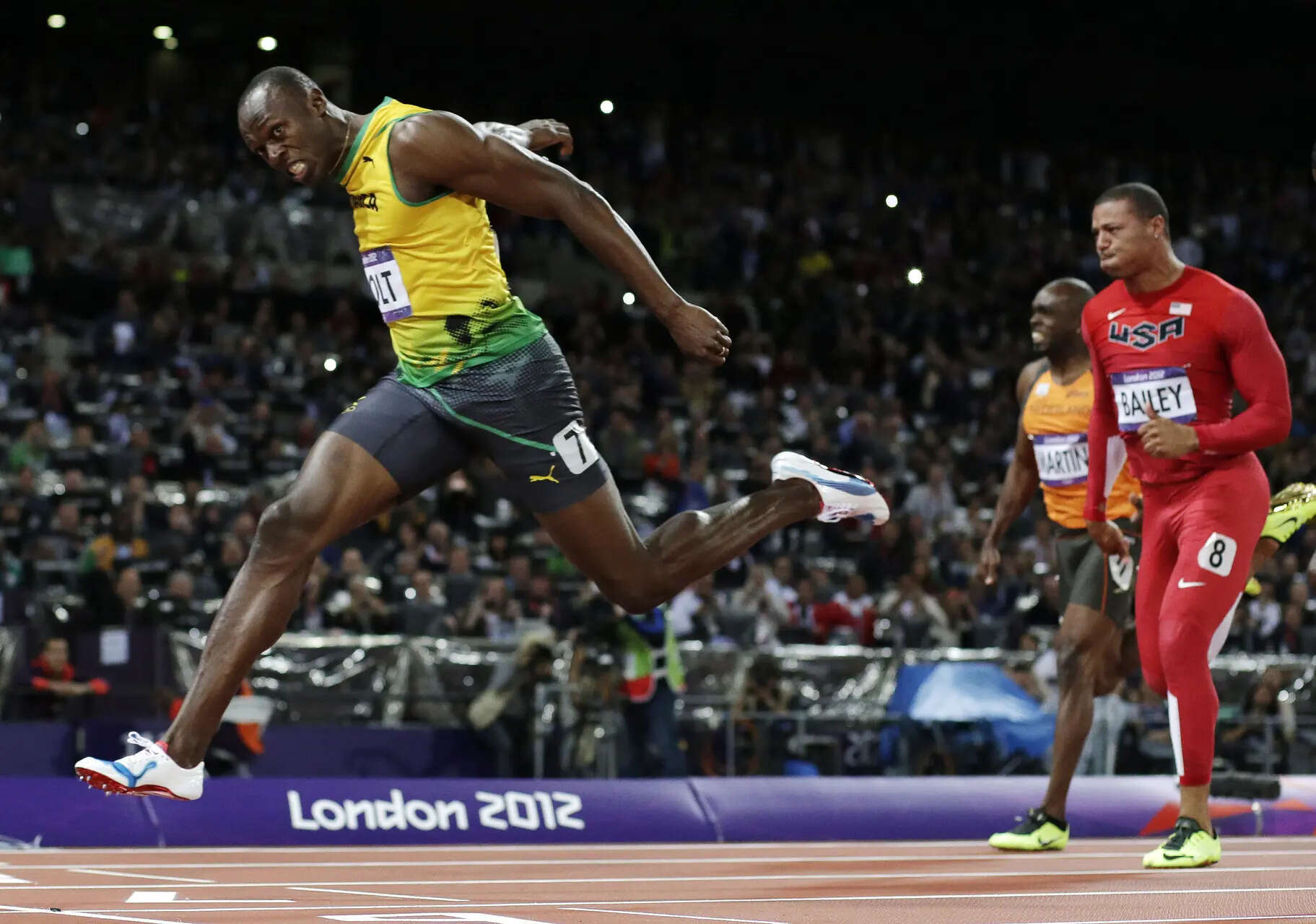
FILE – Jamaica’s Usain Bolt crosses the finish line to win gold in the men’s 100 meters final during athletics at the Olympic Stadium at the 2012 Summer Olympics, London, Sunday, Aug. 5, 2012. (AP Photo/David J. Philip, File)
Bolt’s first Olympic appearance came in Athens in 2004 when he was 17. He entered the 200 meters with high hopes but competed despite a hamstring injury and was eliminated in the first round of the heats. The result did not match the attention that had followed him in the Games, and it set the tone for a period where ability and performance did not always match.A different kind of disruption came at the 2011 World Championships, where he made a false start in the 100 m final and was disqualified, losing the chance to defend his title in one of the most notable moments of his career. Years later, in 2017, his last appearance at a major championship ended with a hamstring tear during the 4×100 meters relay, forcing him to leave the track before the race was completed. Those moments sit alongside the records, not apart from them, and they show why his approach to borders was not principled.
How is that mentality described?
Bolt has often emphasized that success depends not on speed alone, but on training, focus and confidence applied over time. His quote, “I don’t think about limitations,” reflects an approach to both competition and preparation, where belief in ability comes before results and is supported by the work required to reach that level.

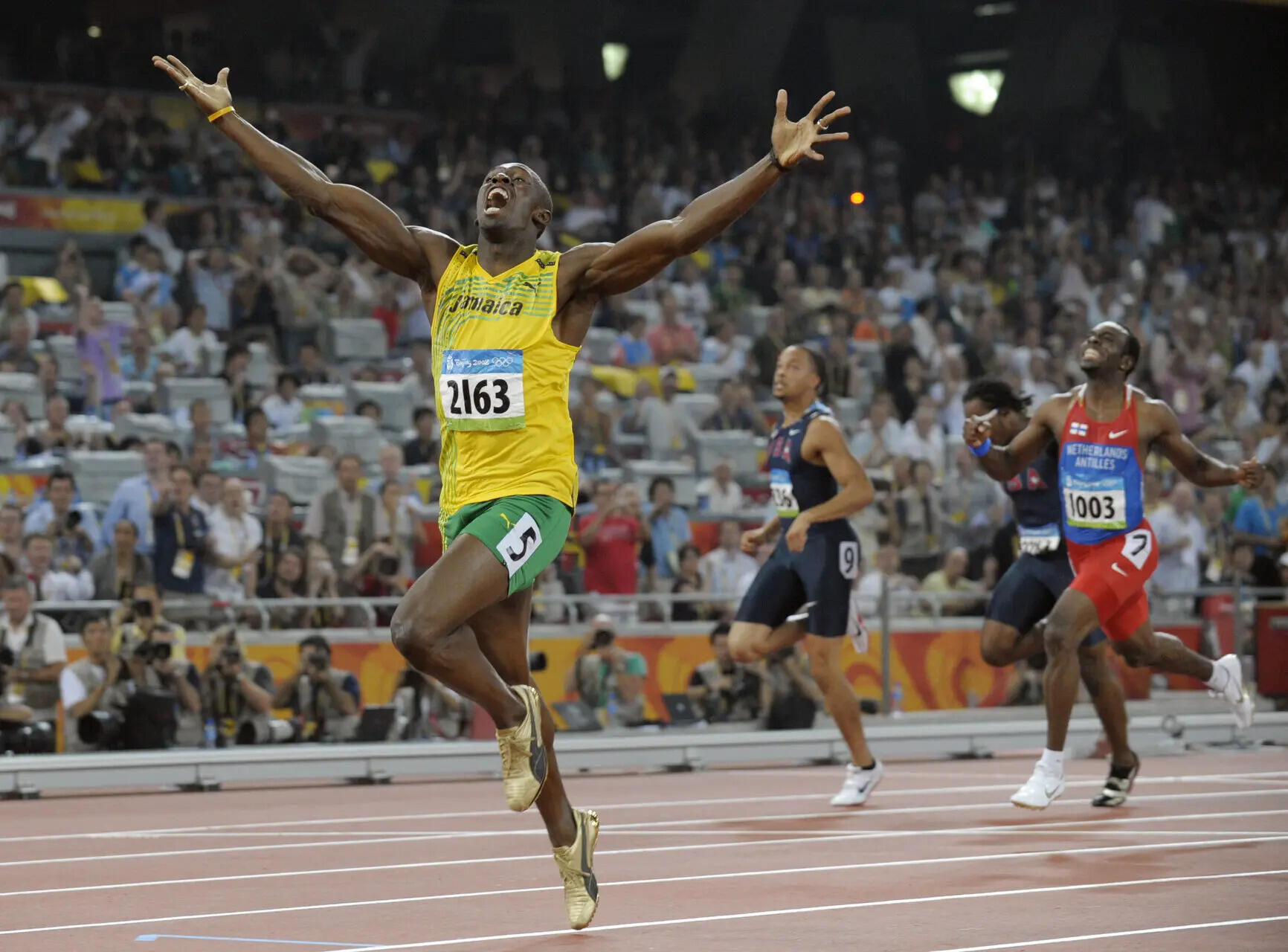
FILE – Usain Bolt of Jamaica celebrates after winning the men’s 200 meters final with a world record during the athletics competitions at the National Stadium at the Beijing 2008 Olympics, Wednesday, Aug. 20, 2008. (AP Photo/Thomas Kinzle, File)
He has spoken of focusing on his own goals rather than outside pressure or competition, even in races where expectations were highest, and this approach runs through his career from his early days in Jamaica to his Olympic appearances. This line is often repeated because it is simple, but it is associated with a way of working that requires consistency and mental discipline as well as physical ability.
Where Bolt’s Line Becomes Useful Outside of Sports
The reason “I don’t think limitations stick beyond running” is that most people encounter limitations long before they find success, and those limitations are usually quietly introduced through repetition rather than failure.Bolt’s career went against physical limitations in the literal sense, but this line also applies to the smaller limitations that people absorb early in life from parents, teachers, workplaces, or even their own past mistakes. Through admonitions to remain realistic, choose the safest option, avoid unnecessary risk, or stay within what feels familiar, those limits are often introduced quietly and repeatedly, until people begin to treat those limits as facts rather than suggestions. Over time, this thinking begins to dictate which jobs they apply for, what risks they take, and which parts of themselves they stop from developing. A student who struggles in math at age 14 may carry the label of being “bad at numbers” for years, without ever checking whether this is actually true. Someone who stutters during a presentation at work may quietly decide that he or she is “not a public speaking person” and avoid situations that would force improvement. A person who grows up hearing that business ownership is only for the rich or well-connected will never attempt it, even if he has the skills to build something consistently over time. Bolt’s quote goes against this very “box”. The box feels safe because it protects people from embarrassment and failure, but it also fixes them in place. Another part of the quote becomes clear from the way the problems are dealt with. Most people instinctively ask “Can I do this?” Before they even begin something difficult, which usually turns the situation into a judgment about capability before any work is done. Bolt’s mindset changes the question a bit. Instead of asking if something is possible, the focus turns to how it can be done. That difference matters under normal circumstances. A student preparing for an examination stops considering a weak subject as proof of his incompetence and starts looking for a way to improve it chapter by chapter. Someone trying to change careers stops focusing on whether they are a natural fit for the industry and starts identifying what skills or abilities they lack. A small business owner facing losses stops seeing the situation as a judgment on the business and begins to look at what can actually be adjusted, whether that means pricing, suppliers, or marketing. That thinking was reflected repeatedly in Bolt’s own career. He didn’t become the fastest man in history by looking at his early injuries, scoliosis or uneven strides and deciding where the ceiling was. He and his team looked for ways to manage those problems well in order to continue working. There’s a reason this quote connects so strongly with people struggling with pressure or self-doubt. Bolt’s line shows that limits are often accepted too quickly, especially during stressful periods where the current situation begins to seem permanent. His career progressed through injuries, false starts and setbacks, but those moments did not become the definitive definition of what would come next. That thought keeps appearing continuously in ordinary life. A tough year at university does not automatically define one’s intelligence. Losing an opportunity does not close the doors to a career forever. Struggling in the early stages of a business does not mean that the business is impossible. Bolt’s quote doesn’t guarantee success, but it challenges the tendency to treat temporary situations as permanent ceilings.An important part of Bolt’s approach is learning to be your own gatekeeper, paying attention to how you talk to yourself in private. Thoughts like “Maybe I’m not cut out for this” or “People like me don’t do this kind of work” can become silent routines if repeated over and over again. Bolt’s method goes directly against that pattern, focusing not on blind faith but on refusing to close the door on yourself before the work begins.