





Lenin review: Akhil Akkineni’s film confuses a good story and a good film
Lenin Movie Review: Akhil Akkineni’s Lenin sets a rural mystery around a man returned from jail in Sriramapuram. Its ambition and strong moments are diminished by weak character premise and shock-inducing twists.

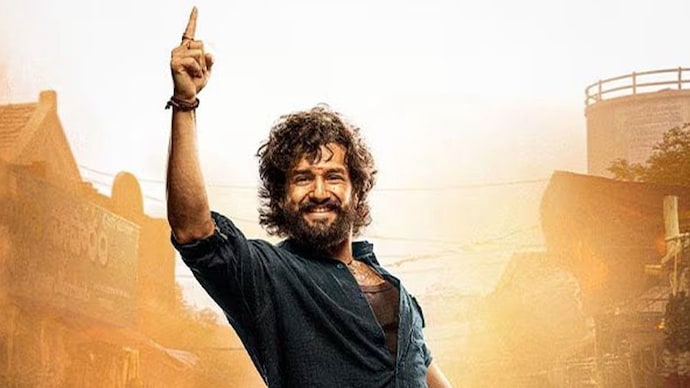


There comes a time in every romantic hero’s career when the charm wanes. The search begins for a film that can bridge the gap between the ‘mass’ audience. on paper, lenin This seems to be exactly the opportunity for Akhil Akkineni. A rural backdrop, emotionally charged characters, mythological backdrop and enough twists to promise larger than life entertainment. It has all the ingredients of a career-defining film. Unfortunately, it never learns how to put them together.
❮❯
Writer-director Murali Kishore creates an intriguing world in a village called Abburu Sriramapuram, whose annual Bharatam Jatara and the legend of Draupadi become the center of a mystery involving Lenin (Akhil Akkineni). The film begins with the hero returning from jail and discovering that many of his own villagers want him killed. It’s an effective hook, and as the story goes back to 1976 to uncover her origins and relationships, lenin Initially it feels like a grassroots rural drama with real promise.
The problem is not a lack of ideas but the inability to connect them systematically. The first half, despite leaning heavily on familiar tropes, works in parts because the world and its characters generate enough curiosity to keep you invested. Akhil takes a while to settle into the role and though he eventually finds his groove, his Chittoor accent remains inconsistent throughout.
Meanwhile, Bhagyashree Borse is one of the biggest strengths of the film, delivering a confident and natural performance. While the songs and several meandering moments slow down the story considerably, the mystery surrounding the village and its people maintains the intrigue. A well-executed interlude block also briefly reassures you that the film is finally going to pull all its scattered ideas together.

As the second part comes out, lenin falls into a familiar trap that has plagued many recent rural dramas. The script starts taking twists and turns that are more shocking than serving the story. Instead of feeling like natural outcomes of the narrative, they come across as carefully planted surprises, making their impact fleeting rather than memorable.
This issue extends to the characters. The role of Shivaji is introduced with considerable intrigue, hinting towards a layered character with conflicting motivations. But as the story progresses, he slowly falls into the same mold that has defined many of his recent performances, causing the character to become frustratingly familiar. The same pattern is repeated throughout most of the supporting cast. The characters are introduced with complexity but ultimately take predictable turns that diminish their potential.
Some of those twists are especially hard to accept. Ishwari Rao’s village head undergoes a dramatic makeover in the climax with little emotional or narrative basis. Shivaji’s character also follows a similarly sudden trajectory. Both changes are staged as big reveals, but because the motivations behind them are never solidly developed, they feel less like actual character development and more like scripting devices designed to create surprises.


The lack of foundation also harms the emotional core of the film. The romance between Lenin and Bharathi starts off awkwardly and, though it becomes more solid later on, the relationship never achieves the depth needed to truly reflect its emotional moments.
Lenin’s friendship with Vasant, the village head’s elder son, is considered to be the emotional backbone of the film, which has the same importance as the bond of Dharani and Suri in ‘Dasara’ or the relationship of Deva and Varada in ‘Salaar’. But those comparisons only highlight what’s missing. Where those films patiently built their friendship through shared moments and emotional beats, lenin Just asks the audience to accept that the bond exists. Vasanth is present throughout the story, but the screenplay never spends enough time establishing that connection. As a result, many emotional moments arrive without the necessary foundation to ground them.
The same problem affects the supporting characters as well. Praveen and Getup Srinu clearly hold important positions in Lenin’s life, yet his relationship with him remains casual and underdeveloped. Notably, Praveen is assigned a big emotional scene at the end, but the film does nothing to establish why that moment matters. Kartikeya Deva’s young supervisor, assigned the task of monitoring Vasanth, is introduced to the intrigue before suddenly disappearing into the background. These shortcomings are sometimes addressed by S. Hidden by Thaman’s score, which tries hard to elevate important moments. But the familiarity of many of the themes, echoing his previous works, often distracts rather than immerses.
As yet lenin Sometimes you’re reminded of the movie it could have been if executed well. An extraordinary scene featuring Shivaji, where he declares that one must maintain righteousness even when righteousness loses its way, is one of the finest moments of the film. The writing, performances and staging come together seamlessly, proving that ambition was never the film’s problem, the execution was.

Akhil deserves credit for taking on the most demanding role of his career and giving his best performance. Bhagyashree Borse complements him effortlessly, making this pair one of the biggest positives of the film. Murali Kishore Abburu also deserves appreciation for attempting a story that is more ambitious than the average commercial entertainer. But ambition alone can’t take a film forward. It takes discipline to turn ideas into drama, characters into people, and twists into emotional payoffs. Beneath its uneven script lies the outline of a compelling rural drama full of interesting characters, mythology and emotional potential. That version of the film pops up in flashes occasionally, but disappears beneath the convenient writing and constructed twists. In the end, missed opportunities last much longer than moments that actually come in handy.