



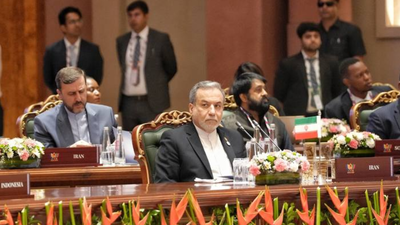
 The sharp rise came a day after the UAE refuted Israeli Prime Minister Benjamin Netanyahu’s claim that he had visited the Gulf country during the Iran war. Iranian Foreign Minister Abbas Araghchi had earlier warned that “those who are trying to create division by colluding with Israel will be held accountable.” “I did not name the UAE in my (BRICS) statement for unity. But the truth is that the UAE was directly involved in aggression against my country,” Reuters quoted Iranian state media as saying. “When the attacks started they didn’t even condemn,” he said.“We must live together in peace and this requires peaceful relations and full understanding between the two countries,” Araghchi said.Additionally, Kazem Gharibabadi, Deputy Foreign Minister for Legal and International Affairs, later issued an even more forceful statement, accusing the UAE of helping facilitate attacks against Iran and stressing that Abu Dhabi “must accept responsibility for its actions.”“The UAE played a key role in supporting and facilitating military aggression against the Islamic Republic of Iran,” Gharibabadi said during the BRICS meeting. “Therefore, the party which itself has contributed to creating and escalating tensions has no legitimacy to make political allegations and claims against Iran,” he said, quoting the Iran Embassy in India.“The UAE is an aggressor, not just a participant in aggression,” he added, citing a 1974 UN General Assembly resolution.Gharibabadi claimed that Iran had warned Gulf countries, including the United Arab Emirates, before the conflict escalated that any assistance to US or Israeli operations would be met with retaliation. “We had no choice but to target all U.S. bases in the United Arab Emirates, or any facilities and installations in the United Arab Emirates in which the United States had a role or involvement,” he said, calling the attacks an act of “legitimate self-defense.”“You must accept responsibility for your actions,” he told the Emirati side directly, adding that Iran had presented more than 120 diplomatic notes and extensive documents to the UN Security Council, including alleged records of “every warplane that flew from the UAE.”Recalling their early efforts to reach out and warnings, he said, “Let me remind you that several days before the aggression began, because we had information about the possibility of attacks by the Israeli regime and the United States, we sent official messages to regional countries, including the United Arab Emirates. We warned them that if they assisted the aggressors and made their territories and facilities available to them, Iran would have exercised its legitimate right of self-defense by targeting those facilities in defense of its own country. There will be no option but to do it.“The Iran War began with US and Israeli attacks on Iran on February 28, followed by Iranian missile and drone attacks on US bases and bases in the Gulf countries.The renewed war of words also threatens to complicate the consensus at the BRICS Foreign Ministers’ meeting in India. Iranian media cited Deputy Foreign Minister Gharibabadi as saying that there were already “problems and communications” in efforts to finalize the joint communiqué due to tensions with the United Arab Emirates.