





However, when you hear about food in space, the first thing that comes to mind is tubes and paste. But NASA’s Artemis II is rewriting the entire script. With a carefully selected list of 189 food and drink products, the astronauts travel around the Moon for 10 days. With everything from spicy hot sauces to hot drinks and food, this list is a testament to the power of science and the need for comfort. The food system for Artemis II is a fascinating glimpse of the future of sustainable, enjoyable space travel for astronauts.
Miscellaneous Artemis II Food menu with 189 items
The space agency announced that 189 different menu items will be offered to astronauts on the Artemis II mission, including more than 10 beverages and five hot sauces. This is a significant upgrade compared to previous missions. Some of the menu items proposed for this mission include:
- Barbecued Beef Brisket
- Mango Salad
- macaroni and cheese
- Spicy Green Beans
- Nuts, Granola, and Tortilla
- Maple Cream Cookies

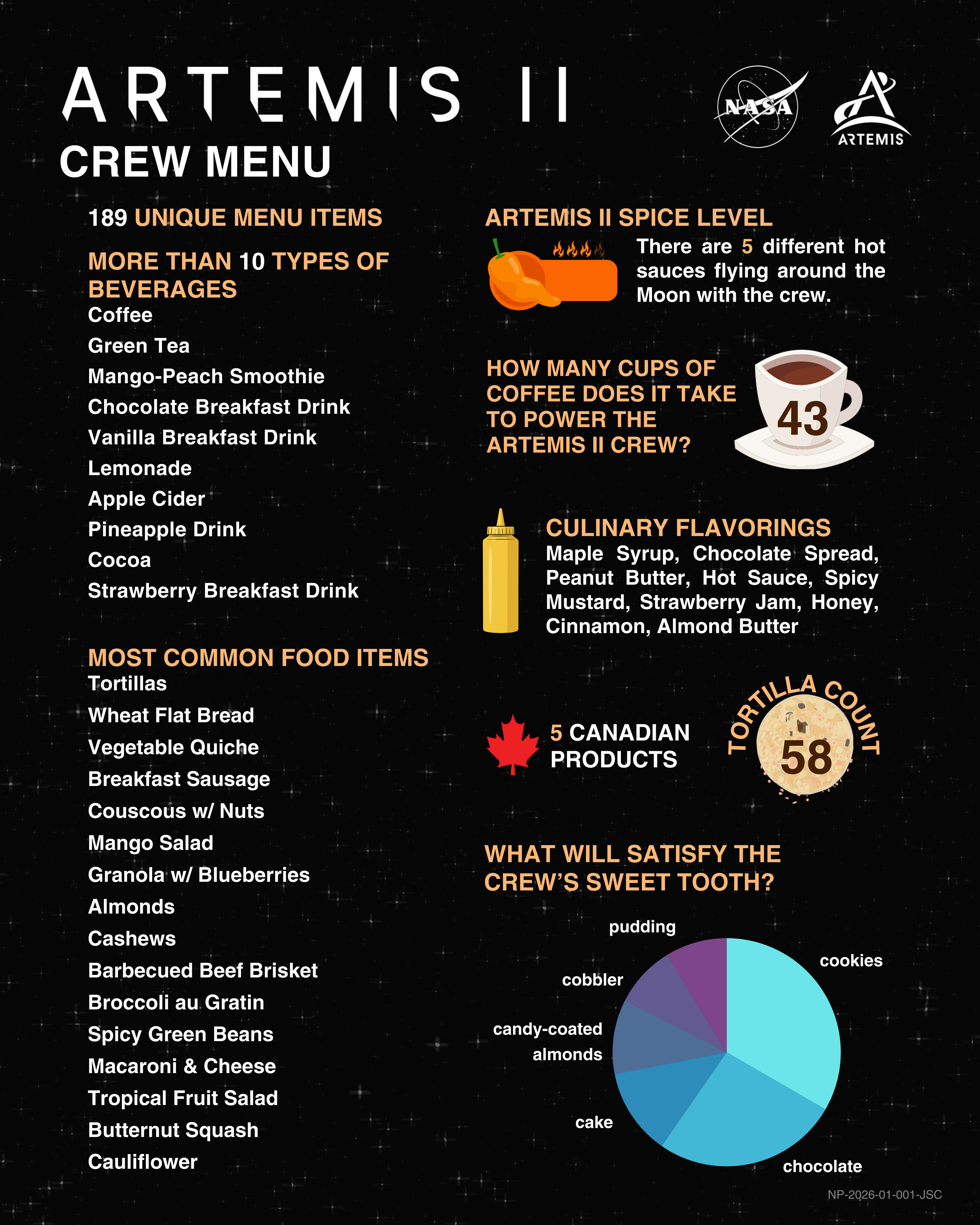
Image: NASA
This variety ensures that astronauts do not suffer from “menu fatigue” during missions. NASA has announced that food selection is determined by factors such as nutrition, shelf life and preference. It is also determined by the capabilities of the spacecraft. It is interesting to note that tortillas rather than bread were chosen for the mission because they produce fewer pieces in microgravity. This is an important factor in spacecraft.
Why do hot sauces and beverages matter in space?
One of the more talked about items on the Artemis II menu is the variety of five different hot sauces.It’s not just about taste, it’s about science. In microgravity, astronauts sometimes have reduced taste levels. This happens due to fluid changes in the body. Eating spicy food helps deal with this.The beverage selection is equally impressive, including:
- Coffee (because it’s a daily necessity!)
- green tea
- lemonade
- Apple cider
- cocoa
How is space food prepared and eaten?
Eating in space isn’t as easy as opening a lunchbox. The spacecraft has no refrigeration system, and so all food must be “shelf-stable”. This means it has to stay good for a long time. Here’s how astronauts eat:
- freeze-dried or thermostabilized food
- Water is added to food by a water dispenser
- Briefcase-style warmers used to warm food
- The packaging is designed to prevent pieces from floating away
According to NASA, “Food should be easy to prepare and consume in microgravity, and also provide good nutrition.”


A human touch: comfort, culture and choice
Unlike previous space missions, the crew of Artemis II could select their meals in advance, making it a more personalized experience for them. This personal approach towards human beings includes:
- Cultural foods like Canadian maple cookies
- comfort foods like cookies and spreads
- Flavors to boost their morale
Food isn’t just for energy, as space agencies have learned. This is emotional support. A good meal can go a long way in improving an astronaut’s mood.
What this means for the future of space food
The Artemis II menu symbolizes an emerging trend in space exploration. Space food isn’t just about survival; It’s about stability, performance and quality of life. Mars missions are on the horizon, and NASA is working hard to improve space food:
- nutritious and sustainable
- convenient to prepare in space
- Fun to eat to boost astronauts’ morale
In a way, the Artemis II menu symbolizes the fact that, despite being millions of kilometers away from home, good food still matters.