



Bharathiraja: The man who made Kamal look ‘ugly’ made a deal with Rajni for Rs 3,000
Filmmaker Bharathiraja, who presented 16 Vayathiniles in Maili Dhoti and reshaped Tamil cinema, died on June 10 at the age of 84. His rural realism, outdoor locations and focus on Kamal Haasan, Rajinikanth and Sridevi changed the direction of Indian cinema.
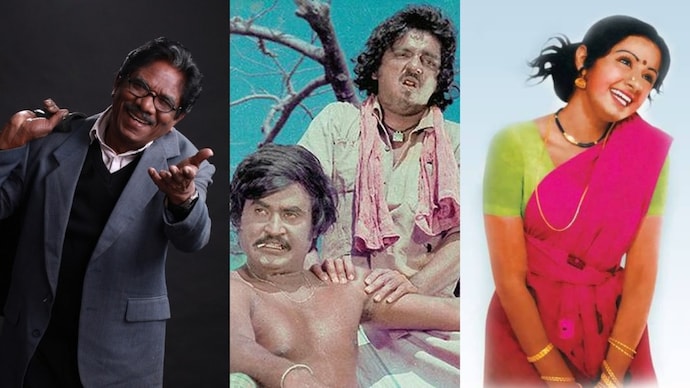

The man who walked into Kamal Haasan’s office in 1977 didn’t look like someone who was going to change Indian cinema. His dhoti It was dirty and the shirt was folded. He had no producer behind him, no distributor willing to touch his script, and the budget was so low that when he ran out of money for slow-motion equipment, he simply asked his actors to work in slow motion.
❮❯
The man, who faced all the obstacles, was Bharathiraja.
When Bharathiraja approached him, Kamal Haasan, already a rising name in Tamil cinema, listened to him. “If I had turned down the offer based on their dirty clothes, I wouldn’t be here talking to you,” Kamal recalled in 2017. He said, “After hearing the script, I realized he was very talented.”
No one knew that the film which did dirty-dhoti Main said the film would run for 175 days in theatres, reshaping the careers of two actors who would go on to become Tamil cinema’s biggest icons, sowing the seeds for Sridevi’s final Bollywood journey and becoming the first Tamil film to be shot primarily outdoors.
Bharathiraja, who died in Chennai on June 10, 2026, aged 84, understood something about cinema that most of his contemporaries did not: that the land itself could be a character.
The anger that fueled his passion
Before becoming a director, Bharathiraja wanted to be an actor – and was candid about why that didn’t happen. He said in a 2017 interview, “I came into this industry to be a star. But in those days, to be a hero you needed a doll-like face. Handsome guys like Gemini Ganesan and AVM Rajan were heroes at that time. Because of my strong features, I didn’t get a chance.” Rejection did not drive him out of cinema. This inspired him to protest. He said, “Since I had lost, I was seething with anger and I decided that I would make everyone a star. It is not necessary for a character to be beautiful.”
he became the backbone of philosophy 16 Vayathinile, His first directorial debut. He asked Kamal to grow his curly hair and wear clothes lungiand buttoned up a rough khadi shirt for his role as village hero Gopalakrishnan – admitting that he deliberately wanted Kamal to look “ugly”, not as an insult but as a departure from what Tamil cinema had decided its heroes should look like.
Kamal, who had come demanding Rs 30,000, finally accepted Rs 27,000. she trusted the dirty man dhoti.
Rajinikanth and no one won in the conversation
In 1977, Rajinikanth was not yet a superstar. When Bharathiraja approached him to play the role of Parattaiyaan 16 Vayathinile – The The two men entered into a conversation which Bharathiraja later recalled with obvious amusement: “Rajinikanth asked for Rs 5,000 as fee. I told him it was a very small budget film and I couldn’t afford it. He then asked for Rs 4,000, then finally settled on Rs 3,000, which I agreed to pay.”
Rajinikanth remembers his last figure being Rs 2,500. Either way, both men dedicated themselves in the service of what they believed in.
The working relationship gave rise to one of Tamil cinema’s more amusing long-running paradoxes. Even decades after Rajinikanth became a household name with this film, Bharathiraja still could not bring himself to call him a great actor.
In 2017, Rajinikanth himself delivered the punchline while speaking at the launch of Bharathiraja’s Film Institute in Chennai. “I like him very much. He likes me as a good person but doesn’t like me as an actor. In his old interviews, when journalists used to ask me my opinion about him, he used to say, ‘He is a good person.’ They never accepted me as a good actor,” he said.
Then, with characteristic wit: “I could read his face and hear his mind. He always wondered how I became such a great actor.”
This friendship continued into politics, where the two men repeatedly found themselves on opposing sides. Bharathiraja was completely frank about the harm he had caused: “I have issued many statements against him. I have hurt him a lot. But he forgets everything and shows affection towards me. He does not have a revenge mentality. He is a great person, a great soul.”

Fourteen year old Sridevi who cried for a village
third pillar of 16 Vayathinile She was fourteen years old when Bharathiraja saw her and chose her for the role of Mayil. He almost wrote the character as a sixteenth-grade student – but something in Sridevi’s eyes stopped him. He described it as a “dreamy glow” that was exactly as he had imagined. She agreed, without hesitation, to appear without makeup – a significant professional undertaking for a teenager in an industry that runs on cosmetic art.
She cried on the last day of shooting. When Bharathiraja asked why, he told him that he would miss the village where he filmed. “Then I realized how emotional she was as a person,” he recalled after her death in 2018.
Later he also brought him into Hindi cinema, directed Solva Sawan (1979), Hindi remake of 16 VayathinileDespite his initial reluctance to take the leap. This was his Bollywood debut as a lead actor. The rest belongs to film history.
16 Vayathinile It was made for Rs 5 lakh. It earned Rs 10 lakh, ran for 175 days and was remade in Telugu within a year. The three actors it sent into the world – Kamal Haasan, Rajinikanth, Sridevi – became three of the most influential figures in Indian cinema of the twentieth century.
And Tamil directors for the first time began to look outside the walls of their studios with the realization that the dust, heat, ordinary faces and heroic beauty of rural Tamil Nadu were worth filming.
Bharathiraja spent the rest of his career making the same argument – winning six National Film Awards, receiving the Padma Shri in 2004, and earning the honorific tag of. Iyakkunar Imayam (The Pinnacle of Directors) from an industry that doesn’t give out such names lightly.
man in dirty dhoti About fifty years ago a young actor walked into an office with a script about a girl, two rivals and a village. Tamil cinema followed him by moving out of the studios and never fully returning inside.