





Worldwide, there are approximately 200,000 to 275,000 glaciers that contain 69% of the world’s fresh water. They are found on every continent except Australia and in heavy concentrations in high mountain ranges such as the Himalayas and the Andes, as well as in the Arctic, Alaska, and Antarctica. But what happens when all these glaciers melt due to climate change?In a study published in Nature Communications, researchers from Sweden, the US, Switzerland and Norway mapped what lies beneath all the glaciers on the planet and came to a startling conclusion: When part of this ice disappears, the Earth could create 56,659 new lakes in areas currently completely frozen.
hidden terrain

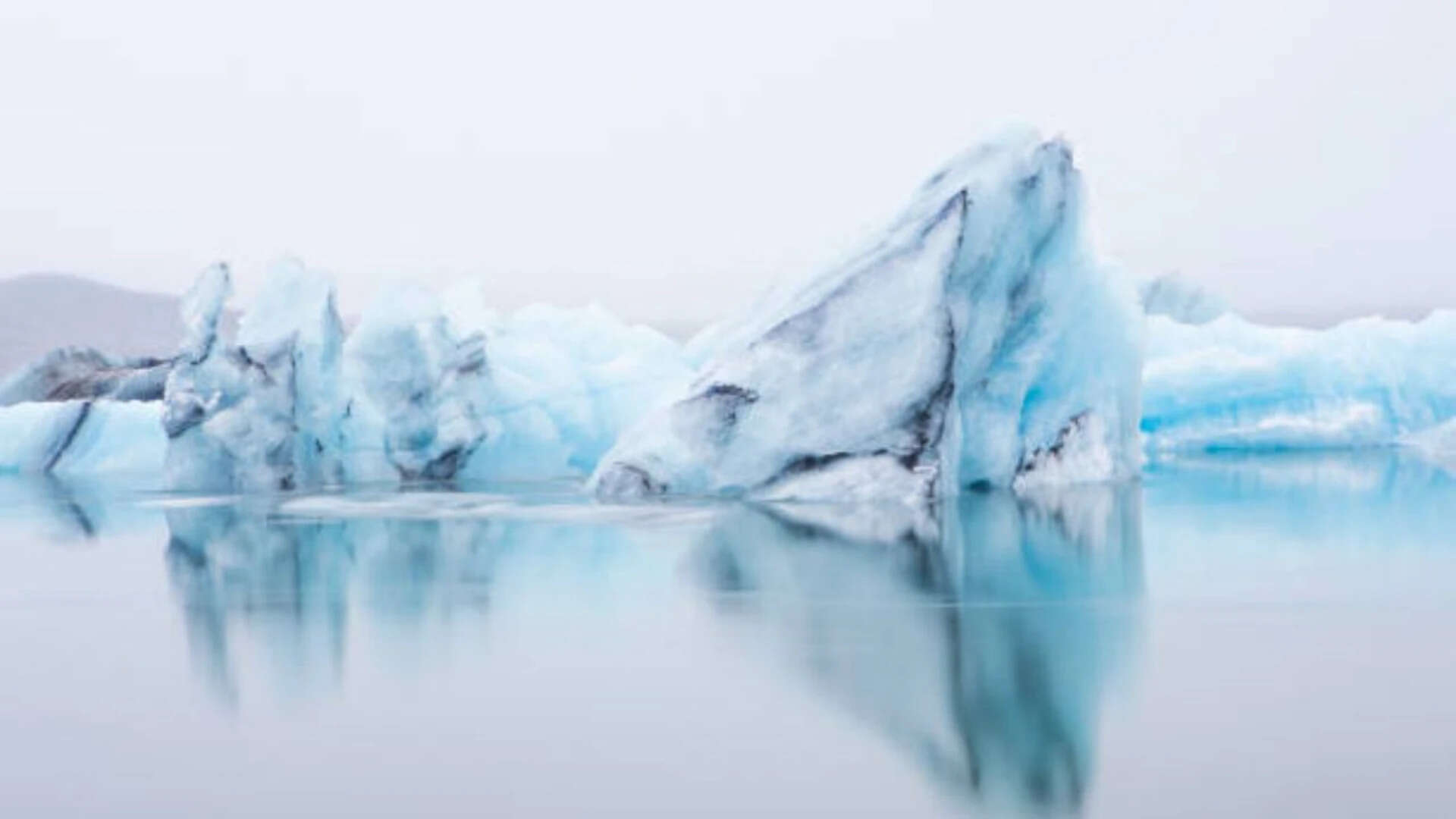
The idea was to understand what the Earth’s surface would look like if glaciers disappeared.
The team, led by researchers from Uppsala University in Sweden, Carnegie Mellon University in the US, the University of Lausanne in Switzerland and the University of Oslo in Norway, analyzed glaciers outside the large ice sheets of Greenland and Antarctica.They reconstructed the topography beneath the glaciers using a three-dimensional ice flow model called the Instructed Glacier Model, accelerated by GPUs and deep learning. The idea was to understand what the Earth’s surface would look like if glaciers disappeared. This process was complex because the base of glaciers is not directly visible and may contain hidden deep valleys, depressions, natural valleys, and areas where meltwater accumulates.The work also produced a dataset called Topography of a Deglaciated Earth, or TOPO-DE v1.0. According to Nature Communications, the goal was to create a physically coherent global map of the terrain currently hidden beneath glaciers. This map was created with a resolution of between 100 and 400 meters depending on the region, and allows the observation of typical glacial relief forms, such as carved valleys, deep valleys and areas where lakes may appear in the future.According to the study, direct observations of glacier bed height exist for only 2% of global glaciers. Therefore, the researchers needed to combine data on relief, ice thickness, flow velocity, mass balance and measurements already available in international databases.
More than 50,000 lakes in the future
The main finding of the study was to identify 56,659 potential future lakes with a minimum area of 0.05 km square. According to the authors, these future lakes could occupy 40,647 km² and store up to 3,138 km³ of water. This amount is equivalent to about 7 millimeters of sea level rise that would be temporarily retained in these natural reservoirs rather than flowing directly into the oceans. In practice, this means that about 6% of the new ice-free landscape could be covered by lakes. The study itself compares this number to the global average of lake coverage in non-glacial lands, which is about 2%.
Mountainous areas of Asia are a matter of concern


The study highlights High Mountain Asia, a region that includes mountain ranges such as the Himalayas, Karakoram, Hindu Kush, Pamir and Tien Shan, as one of the most vulnerable regions. Researchers observed large depressions near glacier fronts in this area. This is important because lakes formed near the lowest parts of glaciers can hold large volumes and be close to populated valleys, roads, hydroelectric plants, agricultural fields and villages. Nature Communications itself says that large depressions near glacial fronts in high mountain Asia indicate an increased risk of flash floods caused by glacial lake outbursts. These events are known by the English acronym GLOF, Glacial Lake Outburst Flood. They occur when a glacial lake suddenly overflows, releasing large amounts of water, mud, snow and sediment into the valley.
15 million people in danger

The research also shows that more than half of the affected population globally is concentrated in just four countries: India, Pakistan, Peru and China.
Another study published in 2023 in Nature Communications estimated that 15 million people worldwide are exposed to the potential impacts of flash floods from glacial lakes. This work identified High Mountain Asia as the region most at risk. According to a 2023 study, approximately 9.3 million people live in this region. The research also shows that more than half of the affected population globally is concentrated in just four countries: India, Pakistan, Peru and China.Despite warnings, the lakes formed by retreating glaciers will not be completely destroyed. They can become freshwater reserves in areas where glaciers already act as natural “water tanks”. In mountainous areas, accumulated snow releases water during dry periods and helps supply rivers, communities, agriculture and energy production. New lakes can store water, create habitat, modify the landscape, and even open up opportunities for hydropower use in some contexts.