





Rakasa review: More noise than laughs in a tired template
Rakasa Review: Rakasa, directed by Mansa Sharma, is a mix of horror and comedy, but struggles with weak writing and forced humor. While the performances and production design are excellent, the film falls short of its promising premise.

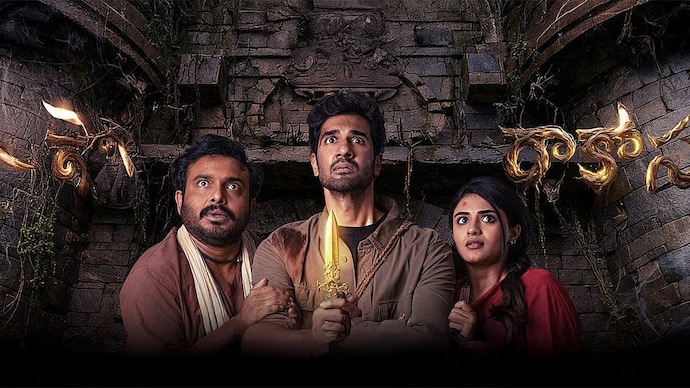


Horror comedy was once a refreshing blend of scares and entertainment, a genre that could balance atmosphere with entertainment. However, today, many of them feel like extensions of the template – built more around crowd-pleasing moments than cohesive storytelling. Telugu cinema is no exception.
Rakasa Initially promises to do something different. Its promotional material hints at a film with a different tone and interesting world. Although that curiosity persists in parts of the viewing experience, what follows feels more familiar than it should.
❮❯
The story revolves around an NRI Veerbabu (Sangeet Shobhan), who returns to his village, but finds himself trapped in a long-standing ritual tied to a demon. A curse, a set of warning signs, and the idea of human sacrifice form the main conflict. On paper, this setup has ample scope for mystery, world-building, and emotional stakes.
But the film rarely commits to exploring that potential. Director Mansa Sharma and the writing team come up with some interesting ideas, but instead of delving deeper into the mythology or building tension, the narrative keeps wandering into unnecessary tracks. Love stories, forced comedy bits and filler gags take up the bulk of the film, dragging it away from its core premise. Just like Veerbabu taking a wrong turn at a crucial moment, Rakasa It is moving away from where it should be.

The film is built on a familiar idea – a man challenging blind beliefs and long-held customs. This is not a problem in itself. But without a fresh story or a distinctive voice, the film feels like something we’ve seen many times before.
The first half struggles the most. The humor feels overly forced, with many scenes trying hard to generate laughs but instead testing the patience. The love track gives it tough competition in that regard, but the comedy still manages to perform better. Vennela Kishore’s entry brings some much-needed comic relief, and the portions involving the group’s attempt to navigate the haunted fort are charming. There are moments where you get glimpses of what the film could have been – a tighter, more engaging adventure-comedy – but like many recent films in this genre, it only hints at its potential rather than offering its full potential.


The music fits seamlessly into the role of Shobhan Veerbabu. It’s a space he’s familiar with, and he handles the humor with ease. His performance, especially in the early parts of the second half, adds energy to the film. Nayan Sarika has played her character without any difficulty, mainly because the character itself is not very demanding. Getup Srinu and Vennela Kishore manage to bring some laughs despite excessive writing, while Brahmaji feels underutilized given the potential of his role. Supporting actors like Tanikella Bharani and Ashish Vidyarthi make their presence felt in a limited space.
Technically, the film is a mixed bag. The production design, especially the fortress set pieces in the second half, stand out and add visual value, although the visual effects could have been better. The cinematography in these parts complements the setting well. However, Anudeep Dev’s music is a major weakness, with forgettable songs and an often overly loud background score that works against the mood.
However, the biggest issue is in the writing – especially the climax. After establishing the antagonist as a threatening force, the film opts for a familiar emotional backdrop, diluting the impact. It’s a choice that feels safe and overused, especially in a genre that benefits from unpredictability.
There are some genuinely entertaining moments, especially in the second half, but they aren’t enough to enhance the overall experience. Ultimately, Rakasa This is a film that offers glimpses of possibility but remains relegated to the familiar. It entertains in parts, but never fully takes advantage of the world it sets up.