



More than 5,000 meters above sea level in the Peruvian Andes lies La Rinconada, a settlement widely described as the highest permanent city on Earth. About 50,000 people live there, scattered across a bleak landscape of corrugated metal houses, muddy roads and waste from gold mines that dominate the local economy.For outsiders who have traveled there, the place presents a surprising contrast: spectacular mountain views surrounding a city battling extreme altitude, pollution, crime and harsh working conditions. The accounts of visitors documenting their visits offer a rare glimpse of daily life in a settlement that many describe as one of the hardest places in the world to live.
travel in thin air
When the members of Yes Theory, a YouTube channel known for documenting unusual travel experiences, set out to visit La Rinconada, the journey was already arduous. The settlement is approximately 5,100 meters (3.2 mi) above sea level, where the air contains about half the oxygen found at sea level. Tourists reaching there often face the problem of dizziness and breathlessness within minutes.

Thomas Bragg of the Yes Theory YouTube channel carries a portable oxygen tank with him to deal with thin air.
Italian traveler Zaza, who also documented his visit to the city in a separate YouTube video, described feeling the effects soon after arriving after a three-hour minibus ride from the town of Giuliaca, “I’m feeling dizzy. We’re over 5,000 meters away, and they say (above) 5,000 meters is no longer suitable for human life. But over 50,000 people live here. It’s incredible.” The altitude creates serious long-term health problems for residents. La Rinconada is considered the global epicenter of Chronic Mountain Sickness (CMS), a condition caused by prolonged oxygen deprivation. Doctors estimate that one in four residents may suffer from it, and untreated cases can lead to heart failure. Local medical staff often recommend traditional remedies to visitors, including chewing coca leaves, which contain mild stimulant compounds that can ease altitude symptoms. Aspirin is also usually recommended.
A gold rush that transformed a mountain village
Until 2003, La Rinconada was little more than a remote Andean village. That year, the gold rush began an increase in migration as thousands of people arrived in nearby mines hoping to strike it rich. The population grew rapidly, creating a settlement that grew faster than the infrastructure or law enforcement.

The streets of La Rinconada are muddy, littered with metal shacks, mining debris and piles of scattered garbage./ YouTube
Today the town is dominated by the gold industry, and its economy revolves almost entirely around mines dug in the nearby glacier. Mining here operates under a system locally known as cachorio. Workers can work without pay for 30 days, after which they get one day off in which to keep any gold they find. The reward is enough for some miners. For many others it is of little consequence.

Locals trudge through mud and debris in search of unseen gold particles on the streets every day to survive./ Image: YouTube
On the streets, it is common to see people sifting through rocks and soil from the mines hoping to discover tiny gold particles that were ignored during the extraction process, a reality that was captured by Italian travel YouTuber Zaza during his visit to the city, where he also saw children cooking on the side of the road and learned that less than 30% of children attend school as many are forced to work from a very young age, some are left to wander the streets.
“The sketchiest place I’ve ever seen”
Yes Theory YouTube channel member Thomas Bragg, who visited La Rinconada, said tension was immediately felt in the city. He described it as “the sketchiest place I’ve ever seen”. He said that during his stay he witnessed regular street fights, with no one often intervening to stop them. Alone one morning, he counted three separate fights within half an hour of his hotel window.
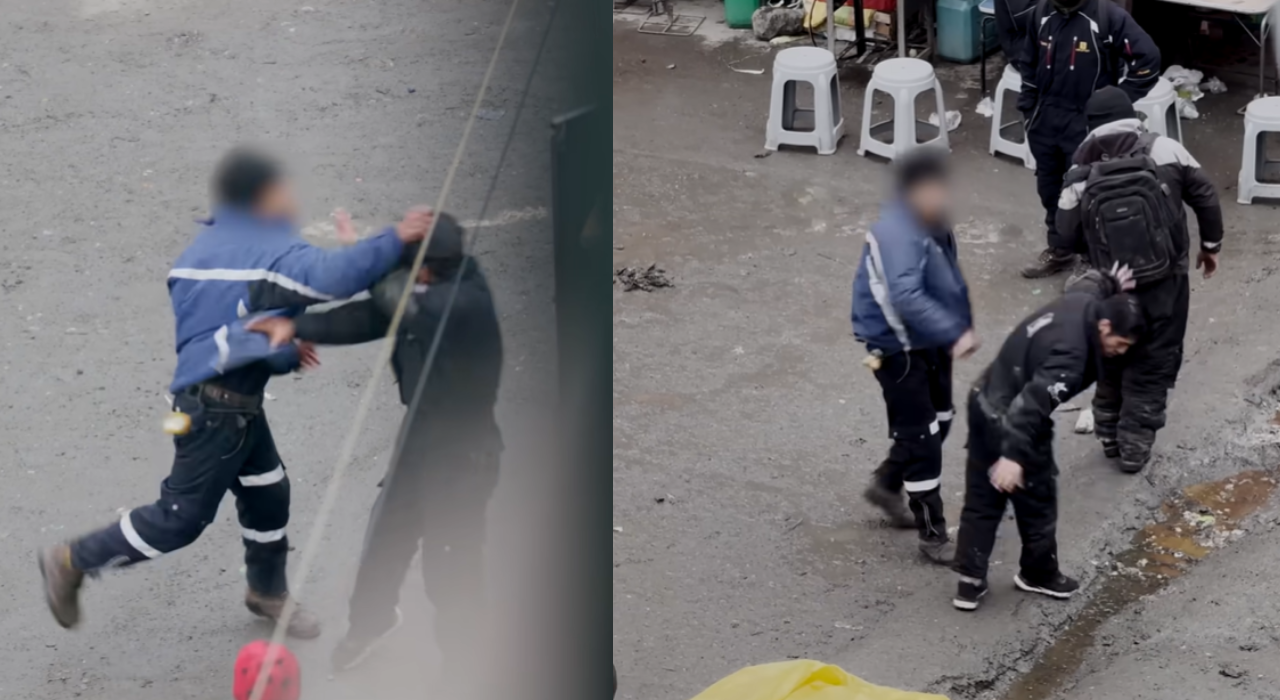
Miners drink heavily in the streets, while fights frequently break out, leaving the town tense and chaotic./ Image: YouTube Yes Theory
The security guards warn them that the atmosphere of the city changes dramatically as night falls. He advised her to stay indoors after dark, explaining that things could “completely change” after the sun sets. He said that night he heard gunshots and screams in the streets outside his hotel.
Hidden crimes and gangs among the miners
Italian YouTuber Zaza visited La Rinconada with two police officers for protection, and he candidly described his first impression of the town, calling it “practically an entire, giant slum.” The officers who accompanied him said that many criminals in the city work closely with the task force.
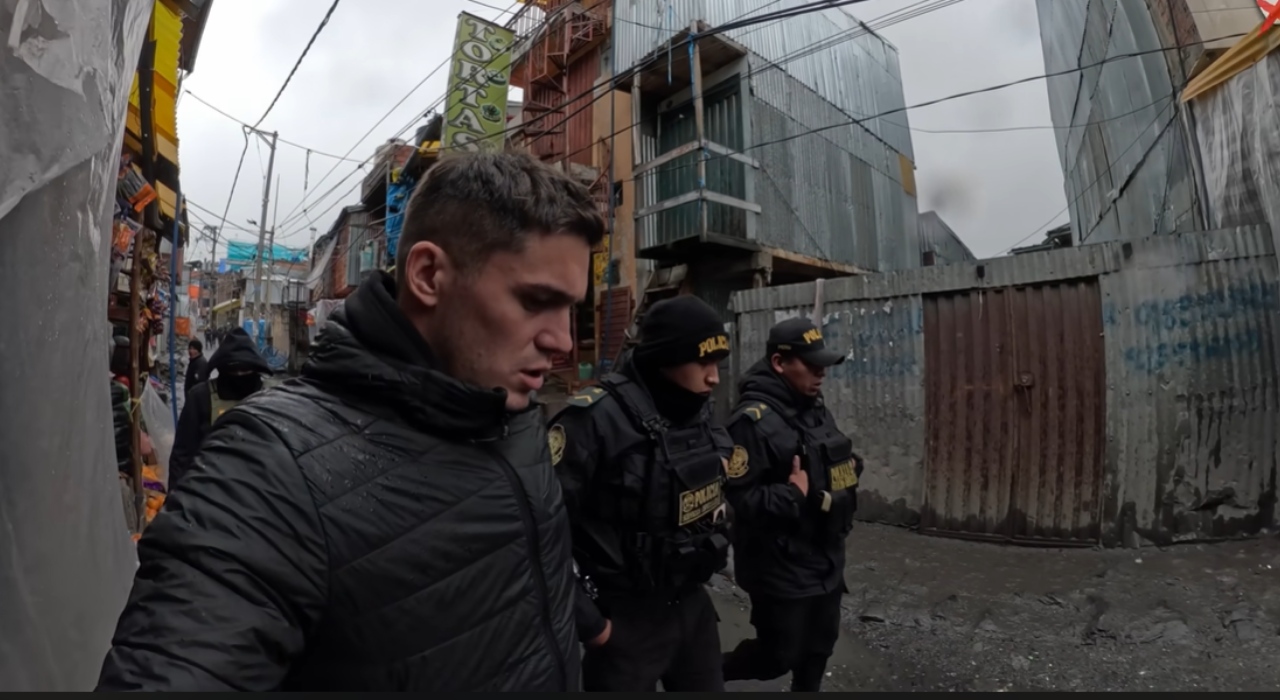
Italian YouTuber Zaza, guided by two policemen, explores dangerous streets, watching fights and miners extracting gold.
A policeman described the situation in the video: “Everything, armed robberies, attacks. There is a territorial issue inside the mine, and that’s where they have conflicts, or disputes over control. They rob pedestrians, steal what the workers earn in the mines, then go away and hide.” He said it is difficult to identify the criminals because they dress like miners. “They can commit any criminal act and it is not easy to identify them.”
City plagued by pollution and destruction
Beyond crime and poverty, mining in La Rinconada has also caused significant damage to the environment. Locals told visitors that the mercury used in the gold extraction process had contaminated parts of the nearby glacier and water supply. The city itself is full of garbage, there is very little system for collecting garbage. The roads are often littered with garbage bags, empty bottles and debris from mining operations.


La Rinconada is buried under mountains of waste and toxic mining runoff, which contains mercury polluted water.
One visitor described seeing “mountains and mountains of garbage” throughout the settlement. Public sanitation is limited, and residents rely on scattered public toilets and makeshift systems.
life in harsh conditions
Work in the mines is physically difficult. Many miners toil 10 to 12 hours a day in freezing temperatures at high altitudes.Because the environment is so harsh and entertainment options are limited, alcohol consumption is common.Reflecting on the environment he witnessed, Zaza said:“And I see a lot of people who…abuse alcohol, I think because there’s not much entertainment here, and life is very hard…I think these are the only moments to forget a little bit about how hard it is to work here.”A local police officer said alcohol has also become part of local mining traditions.“Yes, besides, it’s the custom here. If they drink, they drink a lot.” The more they drink, the more mines they get. A bit strange, but that’s how it is.”Miners also leave offerings to a spirit locally called “Chacha”, who is represented by statues placed near mine entrances.Workers sometimes leave cigarettes or alcohol as offerings, hoping that the spirit will guide them to sleep.
Hazardous areas around mines
The mining areas themselves can be even more dangerous. Private security companies employed by mine operators often patrol the area armed with firearms, while criminal groups also carry weapons. Zaza and the officers accompanying him encountered signs warning outsiders not to enter certain areas. One sign reportedly read: “On orders to shoot to kill, do not stop.” The police told them that snipers sometimes took up positions on nearby glaciers, making the area extremely dangerous for anyone staying there for very long. One officer warned, “You can’t enter, you can’t make a mistake.”
Human stories behind the harsh environment
Despite the city’s reputation, travelers also encountered people trying to survive in difficult conditions. In one example, a man seen digging in wet soil on the roadside in search of gold pieces said he did so to buy food for his family as he had no other work available.In another encounter, a group of miners drinking together after work described their daily routine, with one telling a visitor, “You can work for free and just move on.”Many migrants arrive in La Rinconada hoping to earn enough money to eventually leave, but the reality often proves harsher than they expected.
A place of beauty and difficulty
Despite everything they saw, the Yes Theory traveler said the location itself was captivating. The settlement lies at the foot of a glacier, surrounded by dramatic mountain landscapes. Reflecting on the contrast between scenery and living conditions, he said: “You can be in one of the most beautiful places on our planet, but also see the worst that humans can do to our planet.”
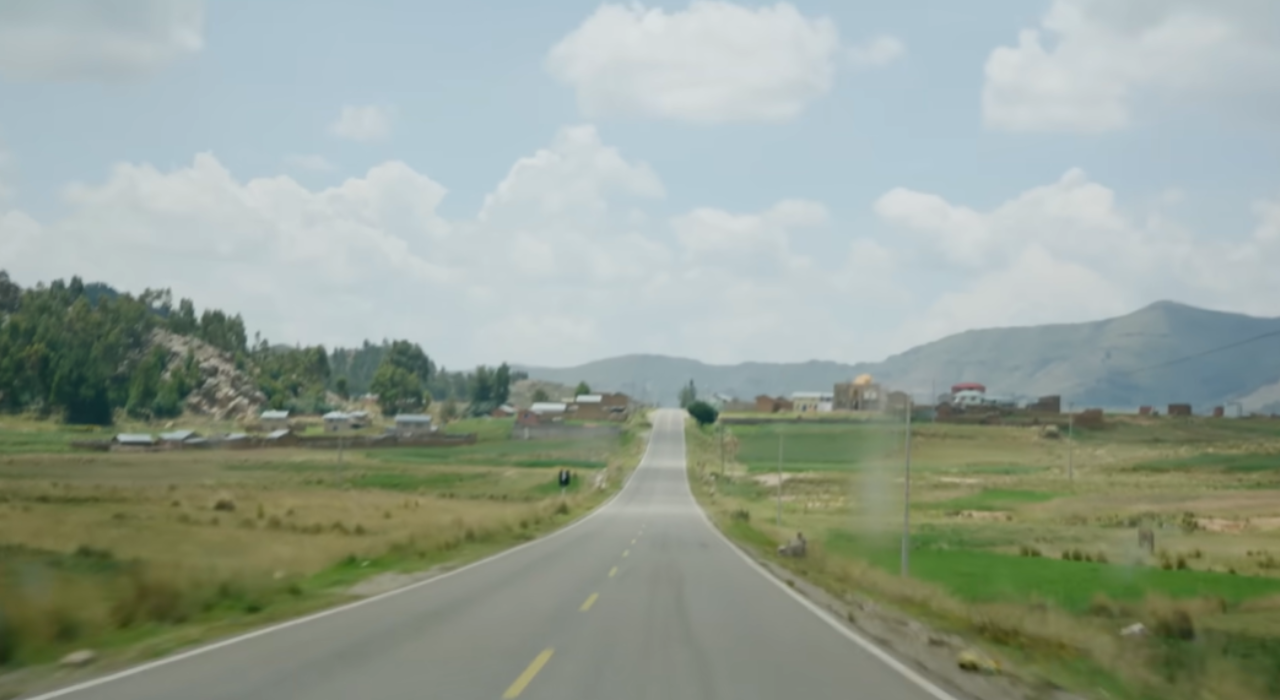
A beautiful Andean highway leads to La Rinconada/Youtube
For visitors, the experience can be overwhelming. After completing his documentary, Zaza described the trip as “one of the most challenging recordings of my life”. Looking back on what he saw at La Rinconada, he simply concluded: “If I think about hell, I believe this place comes very close to it.”