





Is the AI job apocalypse coming? Goldman Sachs warns that AI could soon automate 25 percent of all working hours
Goldman Sachs analysts have warned that artificial intelligence could automate a quarter of working hours, potentially eliminating millions of jobs.

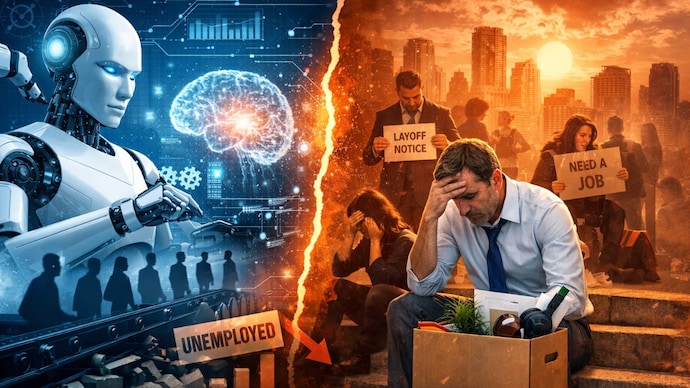


What will the future of work look like in the age of artificial intelligence? As concerns grow around the world about job disruption and machines taking over human roles, a new report from Goldman Sachs suggests that machine-driven disruption could be far-reaching. According to the global investment bank, AI is expected to progress rapidly in the coming years, with the potential to automate about 25 percent of all working hours. Although jobs are likely to be lost, the report says full-scale employment loss is unlikely.
The research, led by Goldman Sachs analysts Joseph Briggs and Sarah Dong, estimates that about a quarter of current work tasks could eventually be automated using AI technologies. Based on data from the US Department of Labor, the report suggests that AI is expected to reshape workplace dynamics, alter job structures, and replace required skills across industries.
AI will hit white-collar jobs first
According to the report, the impact of AI-powered automation will not be uniform. Some sectors, particularly white-collar industries that rely on routine cognitive tasks, are likely to see rapid and deep disruption. Jobs involving data analysis, clerical work, basic coding, accounting and legal research may be especially unsafe.
AI can boost labor productivity
Despite predictions of the scale of automation, Goldman Sachs researchers do not expect a complete collapse of employment. “Our baseline forecast for 15 percent AI-driven labor productivity growth and the historical relationship between technology-driven productivity gains and job losses implies that 6-7 percent jobs will be displaced over the adoption period,” the researchers say.
Unemployment may increase before new jobs arrive
The report also foresees a short-term increase in unemployment as workers are displaced before new roles are fully created. Goldman Sachs estimates that the unemployment rate will peak by about 0.6 percentage points, translating to about one million additional unemployed workers at its highest point.


The analysis places AI in a broader historical context. Researchers argue that technological change has consistently been a major driver of long-term job growth. “Only 40 percent of workers today are employed in occupations that existed 85 years ago, suggesting that AI will create new roles, even if it makes others obsolete,” the researchers said. “More than 6 million workers are currently employed in computer-related occupations that did not exist 30-40 years ago, while another 8-9 million are employed in roles enabled by the gig economy, e-commerce, content creation or video games.”
In conclusion, the report suggests that the end result will depend on how effectively workers, businesses and governments adapt – through reskilling, education and the creation of new types of jobs suited to an AI-powered economy.