





Exclusive: Half Man’s Richard Gad on masculinity, violence, the Emmys and baby reindeer
In an exclusive conversation with India Today, Richard Gad discusses how Half Man deals with masculinity, trauma and male violence. He says the series avoids easy answers while making room for difficult conversations.

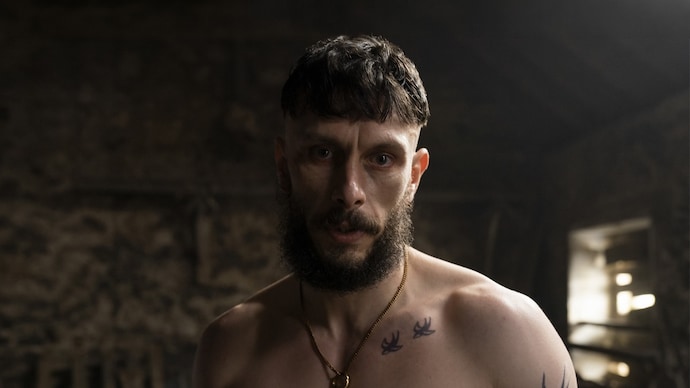


Following the global success of Baby Reindeer, Emmy-winning writer-actor Richard Gad returns with HBO’s Half Man. This limited series explores masculinity, violence and the lasting impact of trauma with the same unflinching honesty that has become his trademark. The series also earned Gad a 2026 Emmy nomination for Outstanding Supporting Actor in a Limited or Anthology Series or Movie. In an exclusive interview with India Today, he opens up about writing Half Man, resisting the pressure of expectations, why the show’s violence needs to feel real, and why complex questions refuse to give simple answers.
❮❯
Part:
Q. Following Baby Reindeer, who deals with a lot of trauma, Half Man explores manhood and goes deeper. What was your headspace like while writing and creating this series?
I wrote about what I thought was creatively interesting. I think there are people who live extremely challenging lives all the time, and when you carry the burden of the past like these two characters do, I always wanted to lean into that. I wanted to write about the loss they’ve gone through and how it plays out in their lives.
It was a challenge to write because its structure is unusual – almost like a mosaic of memories. I really wanted to challenge myself that way. The whole thing was a huge challenge, and there was a lot of time pressure. I had to go deeper, but the subject matter didn’t have to be difficult. The biggest challenge was the ambition of the entire project.

Q. Half Man explores masculinity in a way we rarely see on screen. What does toxic masculinity mean to you, and has your understanding of it changed over the years?
The thing is, when I get involved in projects, I never write with the intention of actually exploring certain topics. I knew that, in many ways, people would use phrases like “toxic masculinity”, “manosphere” and other things like that when talking about Half Man. But I never set out to answer those questions or understand them in any definitive way.
I think masculinity is going through such a state of change right now that it’s almost hard to define something that can be easily explained. I believe this is echoed in Half Man by the fact that it leaves people to draw their own conclusions. Delving deeper into this only confirmed for me that masculinity is a very complex, multifaceted, and ultimately dynamic thing that will continue to evolve over a long time. I don’t really have any clear conclusions about what toxic masculinity is – or even what masculinity is – except that it’s incredibly complex and weighs heavily in society.
Q. The violence in Half Man is extremely disturbing, both physically and emotionally. Was it a conscious creative decision to portray it this way?
Well, this show is about male violence. If you’re exploring male violence in real life – the kind that exists on our streets, in our homes and the kind we read about in the newspapers every day – then you need to show that violence. Otherwise, you’re not really looking for it.
If we’re talking about male violence and the damage it does to society as a whole, the power of the show won’t exist if you hold your punches. People go through violence every day that is much worse than what happened in Half Man. You just have to open a newspaper to see it.
Even with Ruben as a character, he’s already become an almost mythical presence before we even properly meet him. He’s in juvenile detention, he’s bitten a bus driver’s nose – he’s presented as one of the most horrible people imaginable. Creatively, if you didn’t see how capable he was, the mythology around him wouldn’t work. So, from a creative and almost moral standpoint, I thought it was important to show that violence. The violence in Half Man is real, but so is the violence that people around the world experience every day.
Q. After the success of Baby Reindeer, did you feel pressure to live up to people’s expectations with Half Man?
It’s interesting because I knew there were expectations and pressure. But the thing about television is that it becomes a pressure in itself. I agreed to do this project, I wanted to do this project, and I knew I would get a turnaround very quickly. So, yes, there was the expectation, and it was worrying and scary, but then television took over. That became real pressure.
I think some people have great success and then they get scared. They think, “What do I do next? I don’t want to take the risk.” But I couldn’t commit myself to something so quickly, and I would do it again because I’m more interested in exploring, creating, taking risks, and trying new things than preserving my previous work.
I finished Half Man about three weeks before the first episode came out, and I’d almost forgotten what the expectations were there. Then, as the release got closer, I started feeling it again. But I can’t be governed by other people’s expectations. I’ve always had to follow my creative heart.


Q. Did the success and awards of Baby Reindeer encourage you to take even bigger creative risks?
It’s interesting—I always try my best not to be influenced by what’s going on around me. The awards were lovely, and I’m incredibly grateful for them. I loved those ceremonies, but I never used them as inspiration for what came next. In fact, I think it’s dangerous.
I never want to be in a situation where I have to believe my own mythology because something has succeeded. If I’d sat behind the baby reindeer and thought, “Maybe I should ride this wave,” or “Maybe I should draw something like this,” that wouldn’t have been good artistic inspiration. My creative heart was telling me to get back on the horse and make the next show, and I did exactly that.
Q. Do you think your years as a stand-up comedian have made you more comfortable taking creative risks?
This is an interesting theory. I was actually talking to someone about this the other day. Comedy really makes you stronger for life. I’ve had the most amazing shows where I’ve felt completely in sync with the audience, and then I’ve had shows where 20 or 30 minutes go by and you can literally feel people’s spirits leaving their bodies.
What it teaches you is about the ups and downs of life. There are times when you are at your highest and feel completely in your power, and there are also times when you are at your lowest and think things will never end. You’re putting yourself out there in such a vulnerable way every night. Once you get through that, you feel like you can handle a lot of things that come your way. It also helps you think on your feet, move in different directions, and be spontaneous.
Q. Baby Reindeer found a huge audience in India. Would you ever consider building a project here? And what would you like to say to the Indian audience watching Half Man?
I am so grateful that India loved Baby Reindeer. It’s really wonderful to know this. I always wanted to come to India—I just want to say this right away. I hear it’s an incredible place.
If it feels right creatively then I will definitely work on a project in India. I always have to move ahead of the story first. You hear stories about writers who say, “I want to make a show in a beautiful place, so let’s set it there,” but I’ve never worked like that. I would never write a story just because I wanted to visit a place. But if an idea came naturally to me and it was set in India, then of course, I would love to do it. I always have to follow the guidance of creative people first.
For Gad, Half Man is not about prescribing answers but about creating space for difficult conversations. The series is available on Lionsgate Play in India.