





As the UAE prepares to welcome Eid al Fitr 2026, authorities have introduced a significant change to one of the most visible and spiritually unifying rituals of the Islamic calendar. This year Eid prayers will be held exclusively inside mosques, with outdoor prayer places banned across the country.The announcement by the General Authority of Islamic Affairs, Endowments and Zakat comes at a time of heightened regional sensitivities and reflects broader changes in the way public religious gatherings are managed across the Gulf.
Big festive change in UAE: No open-air Eid al-Fitr 2026 prayers
Traditionally, Eid Al Fitr prayers in the UAE are celebrated by mass gatherings in open-air musallas (prayer grounds), where thousands of people gather in the early hours of the morning to mark the end of Ramadan, but for 2026, that familiar scene will be absent. Officials have confirmed that:
- All Eid prayers will be held inside mosques only.
- Outdoor prayer areas and Eid grounds will not be used
- This decision applies to all Emirates
The move is aimed at ensuring public safety and smooth conduct of large gatherings, especially during the period of regional uncertainty. At first glance, the change may seem logical but it has deep cultural and social implications. Eid prayers are not just a religious obligation; They are also a community experience. Open grounds often allow entire families to pray together, overflowing crowds that mosques cannot always accommodate and creating a festive, communal atmosphere unique to the morning of Eid. By shifting prayers indoors, authorities are effectively reshaping how Eid will be celebrated this year. However, officials have assured residents that mosques across the country are fully prepared to handle voting, with coordination between departments in different emirates to ensure smooth execution.
Eid al Fitr 2026 timing still follows tradition in UAE
Despite the change in venue, the timing of Eid prayers remains unchanged. Eid prayers in the UAE are generally held shortly after sunrise, usually between 5:45 and 6:30 am depending on the location, with sermons and greetings immediately following. Authorities have urged worshipers to arrive early, follow mosque guidelines and avoid last-minute crowds.This has become especially important now as space is limited to the interiors of the mosque, unlike open grounds, which can be expanded to accommodate large numbers of people.
Eid ul Fitr 2026 in UAE, Kuwait, Queue: Half moon sighting factor
The exact day of Eid ul Fitr 2026 still depends on the sighting of the Shawwal crescent. Officials confirmed that the moon sighting committee will convene on the 29th of Ramadan. If the crescent moon is visible, Eid will fall on Thursday, March 19. If not, then Ramzan will complete 30 days, Eid will fall on Friday, March 20. Astronomical predictions currently suggest the latter is more likely, adding another layer of complexity, especially with the possibility of Eid coinciding with Friday (Jummah) prayers, a topic already widely trending across the region.
UAE, Kuwait, Qatar on alert amid Iran vs US-Israel war
This decision does not exist in isolation. Across the Middle East, Eid 2026 is being celebrated against the backdrop of ongoing geopolitical tensions amid the Iran vs US-Israel war, heightened security alerts and increased surveillance of public gatherings. Recent reports indicate that the region is observing Ramadan and preparing for Eid “under the shadow of war”, with governments taking precautionary measures to maintain stability.

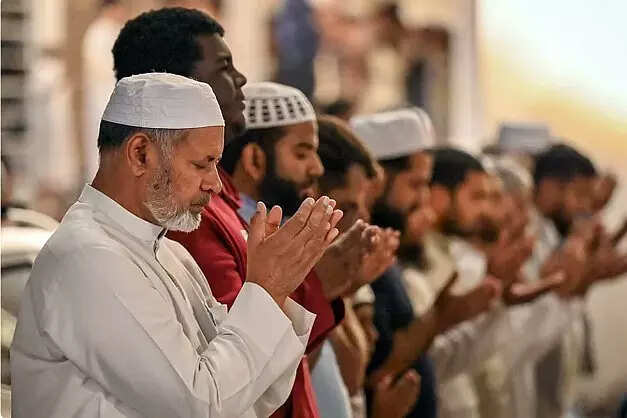
Big change in Eid al-Fitr 2026: UAE bans only outdoor prayers, mosques this year
In this context, limiting large outdoor gatherings becomes less about restrictions and more about risk management. The UAE is not alone in reconsidering the Eid prayer arrangements. Neighboring countries are also adopting similar measures. For example:
- Kuwait has announced to offer Eid ul Fitr 2026 prayers only inside mosques, without using courtyards or open spaces.
- Qatar’s Ministry of Awqaf (Endowments) and Islamic Affairs has also announced that Eid al-Fitr prayers, scheduled for 5:53 am, will be held inside closed mosques across Qatar for the safety of worshippers.


This points to a regional pattern, where authorities are prioritizing controlled environments, easier crowd management and increased security. The UAE has long established itself as a country that balances religious observance with structured governance. This latest directive reflects the same approach. There are full facilities for worship but within the regulated framework.Public safety is prioritized along with religious freedom. Coordination among the emirates ensures uniformity. This is not the first time that such measures have been implemented. Past events, including the national prayer call and unified Friday prayer time, have demonstrated how religious practices can be adapted without altering their core essence.
Kuwait: Eid al-Fitr 2026 prayers only in mosques with fixed timings
Kuwait has implemented a similar directive, with the Ministry of Awqaf and Islamic Affairs announcing that Eid al Fitr prayers will be held exclusively inside mosques where Friday prayers are held, effectively ruling out open-air prayer grounds for 2026. It marks a marked shift from traditional large-scale outdoor gatherings, signaling a move toward controlled, indoor worship environments across the country. Authorities have streamlined venues by limiting prayers to designated mosques to ensure better organization and easy crowd management during the morning rush.Adding to the structured approach, Kuwait has also fixed the exact prayer time of around 6:08 am, cementing a well-coordinated nationwide plan. The move reflects broader regional caution, with officials prioritizing safety, security and military efficiency amid rising tensions. With over a thousand mosques ready for Ramadan 2026 and Eid al Fitr celebrations, the country is relying on its existing infrastructure to accommodate worshipers while avoiding the unpredictability of large outdoor gatherings.
Qatar: Only approved mosques, no open Eidgahs for Eid al-Fitr prayers 2026
Qatar has also issued clear instructions that Eid al-Fitr prayers will be held only inside approved mosques, with no provision for open grounds or temporary prayer areas this year. The Ministry of Endowments and Islamic Affairs has standardized the locations, limiting prayers to mosques that regularly host Friday services, a move aimed at ensuring uniformity and tight monitoring across the country.Authorities have stressed strict adherence to guidelines within mosques, including organized entry, short sermon periods and regulated congregation flows. This reflects a wider Gulf trend where governments are consciously moving towards indoor, controlled religious gatherings in response to regional dynamics. For worshipers in Qatar, this means a more structured but still spiritually intact Eid experience, focused entirely within mosque spaces rather than elaborate outdoor settings.
What should worshipers in UAE, Kuwait, Qatar keep in mind before Eid ul Fitr 2026 prayers?
With the change of prayer arrangements in mosques only, the authorities are emphasizing on some key points:
- Arrive early to secure a spot
- Follow official instructions and crowd management protocols
- Avoid gathering in large numbers outside mosques
- Stay updated only through official announcements
The goal is to ensure that Eid remains spiritually gratifying without compromising on safety. Although the setting may change, the essence of Eid ul Fitr remains untouched. It is also a day of gratitude after a month of fasting, almsgiving and charity (Zakat al Fitr) and family time, community and prayer. The UAE, Kuwait and Qatar’s decision to hold Eid al-Fitr prayers only inside mosques is a clear reflection of the times. This prioritizes security in a volatile regional environment, ensures better organization of large gatherings and aligns with the broader Gulf-wide trend.