



Does the Hum Mard Hai scene from Dhurandhar 2 make you even a little uneasy as a woman?
Dhurandhar: The Revenge makes a powerful visual impact, but one line changes its meaning in an unexpected way. Take a closer look at how language can complicate even the strongest ideas of sacrifice.
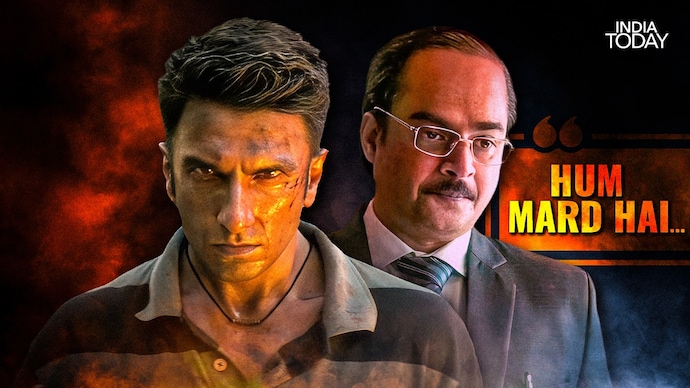

In Dhurandhar: RevengeThere is a line that is meant to decide something within the narrative, perhaps even to define the further life of the hero: “We are men Jaskirat. From birth till death, our duty is to pamper.“
R Madhavan’s Ajay Sanjyal says this to Jaskirat Singh Rangi, played by Ranveer Singh, at a point where the film needs even more emotion. It is a conversation between two people who understand the value of what is being asked. There is no illusion of grandeur here. This dialogue is about stamina and committing to something bigger than yourself without expecting validation.
❮❯
The scene does its job. This explains the rules of this world: Service, especially of this kind, will not come with praise and sacrifice will go largely unnoticed. The film returns to this idea again and again. “Sacrifice is the supreme religion” – it builds itself around itself. That is why the opening phrase – “We are men” – begins Feeling heavier than necessary.
No, we are not saying that this is wrong in the literal sense. What can’t stop resonating in our ears is how it changes the structure of the incoming thought. Let’s see the full conversation:
“We are men Jaskirat. From birth till death, it is our duty to fight. For our cause, dreams, rights and our loved ones and all this without expecting anyone’s victory or medal.”
The rest of the dialogue is about a life defined by duty, purpose, restraint and responsibility. These are not gender based views. Dhurandhar: Revenge He himself does not behave like this with them. It does not make any issue about who will get the service and who will not. Its concern lies elsewhere: in the nature of sacrifice and the discipline it requires.
But the moment the words “Male“The Line enters, it introduces a different legacy. It adheres to something that Hindi cinema has long carried: the idea that endurance is linked to masculinity. Being a man means absorbing pain without accepting it, moving on without expecting an emotional return. It’s a familiar idea but it’s also a move that has been consistently questioned over and over again.
Let’s clarify here. No one is questioning the intent of the scene or the dialogue. The intention of the scene is clear, and it matches the overarching vision of the film. The question is of selection. Why define that stamina as male? What does he add to the scene? Does it accelerate the idea, or limit it?
Because if the purpose is to prepare someone for a life of service, the language must retain that importance without limiting its meaning. A line like this is not just information; This becomes a statement of how the film understands sacrifice. And in cinema, language matters, sometimes even more than intention.
Would this idea have been less effective if it had been addressed differently? What if the emphasis was on role instead of gender? The answer, most likely, is no. The intensity of the moment comes from what is being asked, not from who is being given the credit. And this is where the line starts to feel like a missed calibration.

This is not about reading the film against itself. Dhurandhar: Revenge This is not an argument that only men serve the nation. It is not excluded. In fact, it largely avoids that discussion. But perhaps because it avoids that spot, the line stands out more. This brings a reading that the film would not otherwise pursue.
In a smaller film, this would have passed without much attention. But this is not a small film. Is traveling, will continue to travel, will be repeated, will be quoted. And when a line travels this way, it takes its framing with it. This is where responsibility comes.
Sacrifice, especially in the context the film is dealing with, is never subsumed into an identity. This extends beyond the person who signs up for it. This also includes those who live with the consequences of that choice. The film understands this at several points. Shouldn’t the language used to define that sacrifice need to reflect that same understanding?
However, the scene still stands. Ranveer Singh’s Jaskirat as the detective listens more than reacts, thereby registering the weight of the words. RAW chief Ajay, played by R Madhavan, acts with the authority that the character demands. Nothing about the performance dilutes the moment. The line still leaves a mark.
None of its flaws are hindering the film. However, once you hear it, you can’t easily move on from it – it reminds you of how easily meaning can change, how one word can bring an old idea into a space that’s otherwise trying to move forward. However, does the dialogue work? it happens. The question is whether it could have said the same thing, and perhaps even meant more, without limiting who had the idea.