



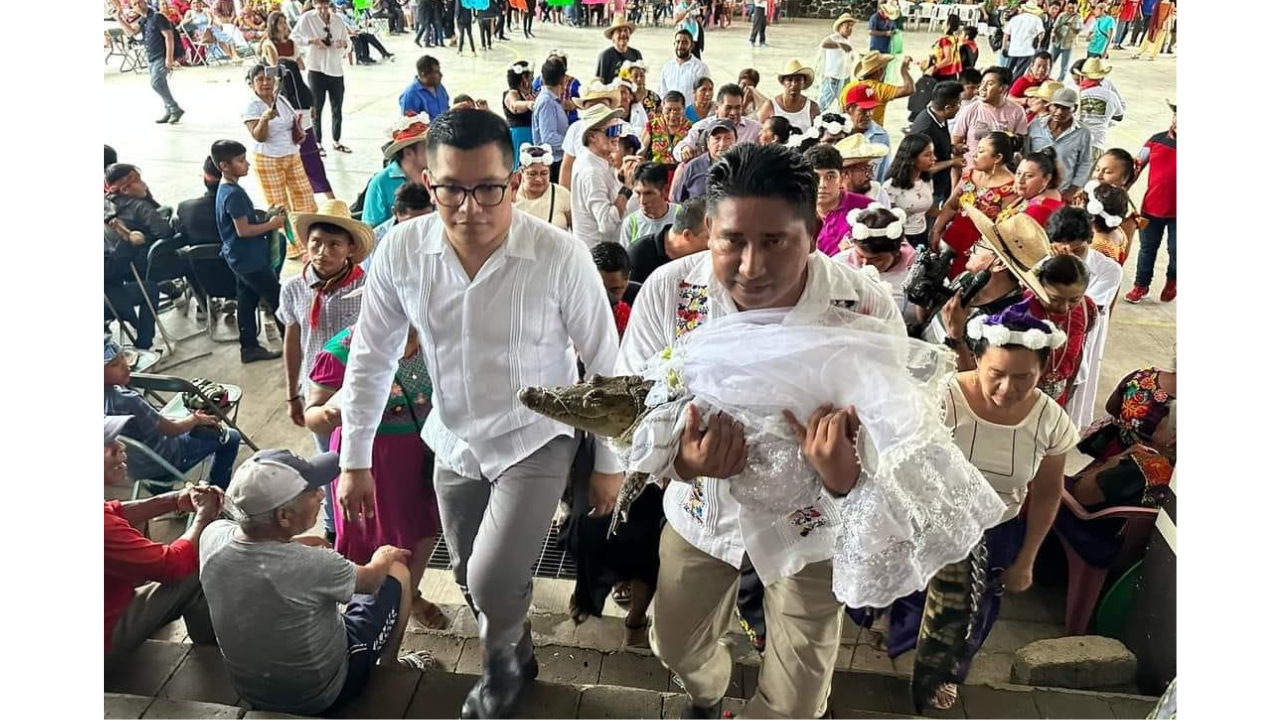
Every year, one of the world’s most unusual wedding ceremonies is held in a small town in southern Mexico. A mayor dresses up for the occasion, a bride wears a white dress decorated with flowers, music plays in the streets and hundreds of residents gather to celebrate. The only difference is that the bride is not a human but a female caiman, a crocodile-like reptile native to Central and South America. At first glance, this ceremony seems strange, but for the people of San Pedro Huamelula in the Mexican state of Oaxaca, it is a sacred tradition that symbolizes harmony with nature, peace between indigenous communities and hope for prosperity in the coming year.
Why does the Mexican mayor marry a caiman every year?
This symbolic wedding is held every year in the coastal city of San Pedro Huamelula in the Mexican state of Oaxaca. The ceremony is believed to be over 230 years old, although local historians say its roots also extend back to pre-Hispanic indigenous traditions.The groom is the mayor of the town, while the bride is a female caiman, locally considered an indigenous princess and a symbol of Mother Earth. This year’s ceremony was led by Mayor Daniel Gutierrez, who symbolically married a caiman named Ana Cintia Ramirez Ahumada.Far from being a publicity stunt, the ceremony is one of the city’s most prestigious cultural events and is part of the annual celebrations honoring the community’s patron saint, St. Peter the Apostle.Despite its unusual appearance, this ceremony is not about marrying an animal. Instead, it represents the bond between people and the natural world.For generations, residents believe that the symbolic union brings good harvests, plentiful fishing, rain, peace and prosperity. These blessings are especially important in a community where many families have traditionally depended on farming, fishing and coastal resources for their livelihood.To the locals, the caiman represents the natural world that sustains them, while the mayor symbolizes the community. Their ceremonial wedding serves as a reminder that people and nature thrive when they exist in harmony.
An ancient peace agreement is still remembered today
The ritual also recalls an old indigenous legend.According to local tradition, the symbolic marriage commemorates a historical alliance between the Chontal and Huave (Ikuts) peoples. Legend says that centuries ago, a marriage between a Chontal king and a Huave princess ended conflict and brought peace between the two communities.Today, the mayor Chontal represents the ruler, while the caiman symbolizes the Huawei princess. The annual wedding celebrates unity, friendship and cooperation between the two indigenous cultures.
bride unlike any other
Long before the ceremony begins, Caiman is treated just like any other bride.She is later dressed in a white wedding gown before changing into colorful traditional indigenous clothing decorated with ribbons, flowers and elaborate headpieces. Residents parade it around town, visiting homes and musicians performing traditional songs and dancers dancing in the streets.The festival attracts people of all ages, turning the city into a festival of music, culture and community spirit.One detail that often attracts attention online is that the caiman’s jaws are gently closed during the ceremony. Organizers say this has been done to protect the animal and the hundreds of people who gathered around it during the procession.
The moment that catches the world’s attention

The ceremony reaches its most photographed moment when the mayor kisses the caiman after the symbolic wedding vows.Every year, photos of the kiss spread rapidly across social media and international news outlets, often leading people to wonder why such a ceremony takes place.However, the residents of San Pedro Huamelula are not only focused on kissing. They see it as a gesture of respect for nature and a symbolic promise to care for the lands and waters that sustain the community.
A tradition where indigenous beliefs meet the Catholic faith
The annual wedding reflects a blend of two different traditions.Long before Spanish colonization, indigenous communities in the area held ceremonies to honor nature and ask for blessings for their crops and fisheries. After the arrival of Catholicism in Mexico, many of these customs became associated with ceremonies dedicated to local patron saints.Today, caiman weddings take place during the celebration of St. Peter the Apostle, combining indigenous beliefs with Catholic traditions in a celebration that has survived for centuries.
More than an unusual festival
For many people watching the ceremony for the first time, a mayor marrying a reptile may seem amusing or even unbelievable. Yet turning it into a strange farce misses its deeper meaning.The annual ritual is ultimately a celebration of coexistence. It reminds the community that rivers, wetlands, wildlife and people are closely connected, and prosperity depends as much on respect for the natural world as on human effort.In an era when climate change, habitat loss and declining biodiversity are impacting communities around the world, the centuries-old ceremony offers an enduring message. Nature is not just a resource to be used, but a partner to be respected. For the people of San Pedro Huamelula, that belief is as meaningful today as it was 230 years ago.