





BTS reveals why they’re prioritizing group over solo stardom with ARIRANG
BTS have once again proven that even after years of solo projects and military service, their group identity remains at the center of everything they do. Their recent ARIRANG tour and documentary beautifully captures this spirit, showing fans around the world the unbreakable bond of the seven members performing together.

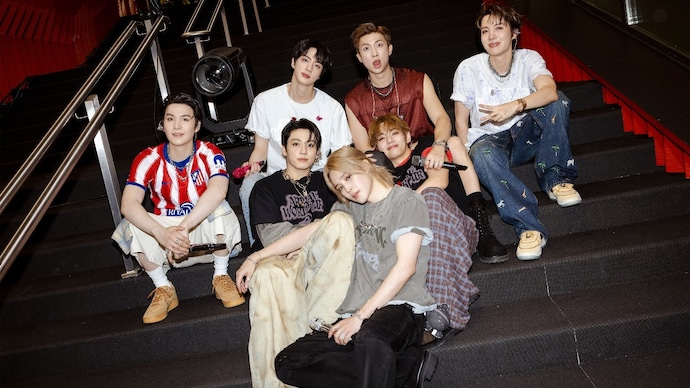


Over the years, whenever members embarked on solo careers, enlisted for military service, or pursued individual creative pursuits, a question hung over BTS: What would happen next for BTS? It seems the answer has never really changed.
With the ARIRANG album, ARIRANG World Tour, and documentary BTS: The Returns, the seven-member group – Jin, Suga, RM, J-Hope, Jimin, V and Jung Kook – have once again made something abundantly clear: their identity as BTS remains central to everything they do.
❮❯
His latest interview with Weverse Magazine offers perhaps the clearest insight yet into that philosophy.
Tour decisions that prioritize the group
The biggest talking point about the Arirang tour is one that has been deliberately left out. Despite all seven members now boasting successful solo discographies, there are no solo or subunit stages at the concerts. Instead, the setlist belongs entirely to BTS – the members say this choice was intentional from the beginning.

“You have proved our intentions true,” Jung Kook told Weverse Magazine. He pointed out that it has become rare for groups to present concerts composed entirely of group songs. “We wanted to remind everyone what BTS is like as a group, and since it’s been so long since our last tour, we tried to focus on what kind of energy we have when we’re all together,” he said, adding that the members wanted audiences to be “immersed in the feeling of all seven of us being on the show together.”
V echoed that sentiment, citing reunion as the driving idea behind the tour. He said, “We all felt that we should focus on the group rather than sub-units or single songs. I think that’s the core of this tour. It feels special to have the seven of us back together after so much time, and it’s also our way of saying that we want to continue doing this together.”
Those comments echo what BTS has repeatedly reiterated over the past few years. Even with acclaimed solo albums, world tours and collaborations, each member has continued to describe those projects as individual chapters rather than replacements for the group.
RM framed the withdrawal as both symbolic and strategic. “We wanted to put more emphasis on the affirmation of the BTS brand that has brought us all this far. We have to do something to show that we are close as a group, now that we are back after so long. After all, we are talking about 13 years of history that we and the seven guys from ARMY have been making together,” he said, calling the comeback an opportunity to reaffirm the group’s identity after a long hiatus.

SUGA perhaps best expressed the group’s chemistry when he commented, “I think it’s so ‘Bangtan’ that the seven of us are still so united.”
a promise made before recruitment
This alignment extends far beyond music. BTS: The Returns reveals that before being recruited, the members had made a promise to each other – not to release more music or plan another album, but to return to the fans they couldn’t meet during the pandemic.
Jin revealed that the commitment came from the members themselves rather than the label. “Before we went to the Army, we said, ‘Once we’re all discharged, let’s go see ARMY in all the places we couldn’t visit during COVID.’ It wasn’t really something we were discussing with the label. It was a promise we made together before we enlisted,” he recalled.
He said that he never wanted the countries where fans did not attend during previous tours to feel that they had been forgotten. He said, “When I see them writing to thank me for getting to where they are, it means a lot to me. It had to happen eventually, and now we’re finally doing it.”
It’s a reminder that BTS has long viewed the military as more than an audience. Throughout their career, the relationship has often been framed as a shared journey rather than a traditional artist-fan dynamic.

That philosophy was perhaps best reflected during the Arirang tour. Speaking about audiences around the world singing the Korean folk-inspired “Arirang” segment of Body to Body, J-Hope described it as the emotional heart of the show.
“I think that’s the core of it – overcoming differences like language, race, geography, gender and all these and coming together through love,” he said, adding that communication with fans matters as much as performance.
balancing the past with the present
The tour also balances the present with the past. With songs from ARIRANG, BTS revisits the music of their early years, giving longtime fans a trip down memory lane while introducing new fans to another chapter in the group’s journey.


Jung Kook admitted that revisiting those songs on stage evokes a different kind of nostalgia than watching old performances. He shared, “There’s a very different feeling of nostalgia when I’m actually performing it live instead of watching a video of it, and I wanted ARMYs to experience the same thing.”
SUGA noted that each fan discovers BTS at a different point in their journey, making those shared moments even more meaningful.

Why does choosing BTS still matter?
Perhaps the biggest takeaway from the interview is that BTS don’t talk about being together as an obligation or contractual commitment. They speak about it as something they really want.
Having promoted and toured by himself during the group’s hiatus, Jin said the experience has deepened his appreciation for performing as BTS. “These guys are the best, you know? I’ve promoted and toured without others before, and there was a lot of pressure. There was this fear in the back of my mind. Performing without them taught me something – how grateful I am that we got to do this together and how much it means to me. When I’m with them, we laugh at everything, and even on stage, I’m so happy I can’t help but smile,” he admitted.
Jimin described the reunion as a vivid reminder of what the group means to him. He said, “Reuniting like this is a reminder of how grateful and happy I am that all seven of us get to perform together. I think seeing all seven of us on stage together from beginning to end during this tour says everything about how we see our group and how we feel about each other.”
For J-Hope, BTS’s greatest strength lies in the fact that each member is irreplaceable. “With our group, you can never replace any member. Each of us has our own role, and there’s a kind of beauty you only get when we’re all together. And more than anything, I think this connection with people around the world only exists when all seven of us are together. Since this tour is the first time we’ve been back with our fans in a long time, we wanted to give them as much time as possible with the whole group. That’s really what it’s all about.” There is something,” he said.

Perhaps this belief is what sets BTS apart. In an era where many successful groups naturally evolve into collections of equally successful solo artists, BTS has shown that individual growth and collective identity don’t have to compete. Their solo years strengthened each member as an artist, but their reunion shows that those experiences ultimately fed back into the group.
His message isn’t just that BTS is back. It’s that after 13 years, military service, record-breaking solo careers, and global success, they’re still making the same choice they always have: choosing BTS.