





Apple may bring back Touch ID with this iPhone in 2026
Apple’s first foldable iPhone could bring back Touch ID in 2026 as the company is testing under-screen camera technology ahead of a fully all-screen iPhone. Here’s everything we know so far.

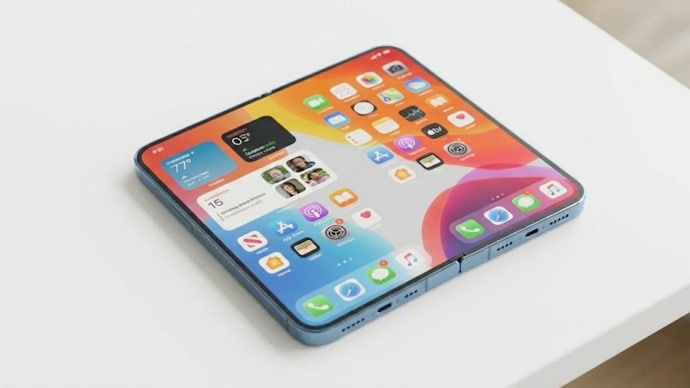


Apple has quietly pursued a design idea for years that it never quite achieved: an iPhone that’s nothing but a screen. No notches, no holes, no islands, just glass. If a new leak emerges, that dream could finally begin to come true in 2026, and it could even bring back a familiar feature, Touch ID, that many users still miss. According to information shared by well-known Chinese tipster Digital Chat Station, Apple is planning to introduce its next big display breakthrough through an entirely new iPhone range, its first foldable iPhone, which is expected to arrive next year. The device is said to serve as a testing ground for the under-screen camera technology before Apple introduces it more widely on a special all-screen iPhone planned for 2027, which will mark 20 years of the iPhone.
Apple may bring back Touch ID with this iPhone in 2026
What makes this interesting is Apple’s decision to skip Face ID on the foldable iPhone and instead rely on Touch ID built into the side button. According to the leak, the reason for this is practical rather than nostalgic. Folded phones tend to have tight internal layouts, and it may not be easy to fit Apple’s full Face ID hardware inside such a design. A side-mounted fingerprint scanner neatly solves that problem, while also freeing up space for an uninterrupted display.
If this proves to be true, the foldable iPhone would become the first Apple device to offer a truly all-screen experience, which Apple has been working towards for years, as suggested by several patents. There will be no dynamic island, no notch, and no visible camera cutout, at least on the internal display.
Apple’s confidence in making such an effort appears to come from two major technology developments. The first is under-screen Face ID. Leakers claim that Apple has figured out a way to hide its TrueDepth sensor under the display by using a special micro-transparent glass layer. This allows infrared light to pass through the screen properly, which is important for Face ID to work reliably.
Reports suggest that this under-screen Face ID system may appear similar to the iPhone 18 Pro models. However, Apple may initially minimize Dynamic Island instead of removing it completely. This cautious approach makes sense, as Face ID sensors are more forgiving when placed behind display layers. Even minor interference is unlikely to be noticed by users, unlike selfie cameras, where image quality issues become apparent immediately.
The second success is more ambitious. Apple is said to have developed a 24-megapixel under-screen front camera for the inner display of the foldable iPhone. This is a huge leap compared to current Android phones with under-display cameras, which typically rely on very low-resolution sensors because the screen blocks light and reduces clarity.


If Apple has indeed managed to increase the under-screen cameras to 24 megapixels, it would suggest big improvements in light transmission and image processing. The leak mentions a six-element plastic lens setup, which could help deliver sharper images and better details than the under-display cameras introduced so far.
Apple’s future plans for the iPhone have been leaked online
Apple’s big plan, as described in the leak, follows a clear sequence. Under-screen Face ID first arrives on high-end Pro models. The foldable iPhone debuted an under-screen selfie camera, paired with side-button Touch ID. Then, in 2027, both technologies come together in a single device, a special anniversary iPhone designed to demonstrate Apple’s long-term vision.
The 2027 iPhone is rumored to have a display that curves at all four edges, with virtually no bezels. The design is said to be close to what former Apple design chief Jony Ive envisioned – a phone that looks like a single, seamless piece of glass.