





A hydroelectric dam under construction in Angola has led archaeologists to one of the country’s most important historical discoveries. Before the area beneath the dam’s reservoir disappeared, researchers discovered Angola’s oldest radiocarbon-dated burials. These cemeteries are the oldest known stone structures in central Angola and the only known ancient urn cremations in the country. The discoveries offer a rare glimpse into how the people of this region lived and buried their dead more than 600 years ago. The findings were published in the Journal of Field Archaeology.According to Science X, the discoveries were made at the archaeological site of Caculo Cabaca in central Angola. The archaeological team had limited time to study the site before it was destroyed. “We prioritized places that we knew would soon disappear,” said Sofia Mateus Simplicio D’Oliveira, a doctoral candidate at the Museum National d’Histoire Naturelle in Paris and one of the study’s authors.These discoveries are significant because they challenge long-held assumptions about the history of stone manufacturing in Angola. Earlier European accounts mostly described the people as living in wooden houses, which decayed over time and left little archaeological evidence. This has led historians to debate whether stone architecture developed locally or was introduced later through contact with European or other African groups.
rock site on dam under construction
According to a report by Medium, stone buildings are famous in parts of sub-Saharan Africa, including the famous ruins of Great Zimbabwe. However, central Angola has received little archaeological attention, and very few stone sites have been properly studied or dated.Before this excavation, no stone structures in Angola were known to date back to the 16th century. However archaeologists found some burial sites with circular stone enclosures along the Cuanza River, most of which date from the 16th to the 19th century. Without reliable dates, it was impossible to know when the stone-building tradition actually began.The Kakulo Kabaka site is located along the Kwanza River, an area that once connected several African kingdoms including Ndongo, Kwaikama, Libolo and Imbangala. From the mid-1400s, European traders, missionaries, and soldiers also traveled through the region. Part of the site is near a village remembered as the homeland of the maternal family of 17th-century ruler Queen Nzinga, who was known for resisting Portuguese colonial expansion.The archaeological site came to light in 2023 when construction workers building a hydroelectric project discovered stone structures. The discovery prompted Angolan heritage authorities and the National Archaeological Museum in Benguela to begin emergency rescue excavations before the reservoir in the area flooded.Before excavations could begin, the land had to be checked and cleared of landmines left during the Angolan civil war.The researchers also followed local customs before starting the excavation. Village elders, known as Sobas, would perform a ceremony to seek permission from the ancestors. Eggs, bread, wine, and juice were offered during the ritual, and a goat was sacrificed to ask for protection before the work began.

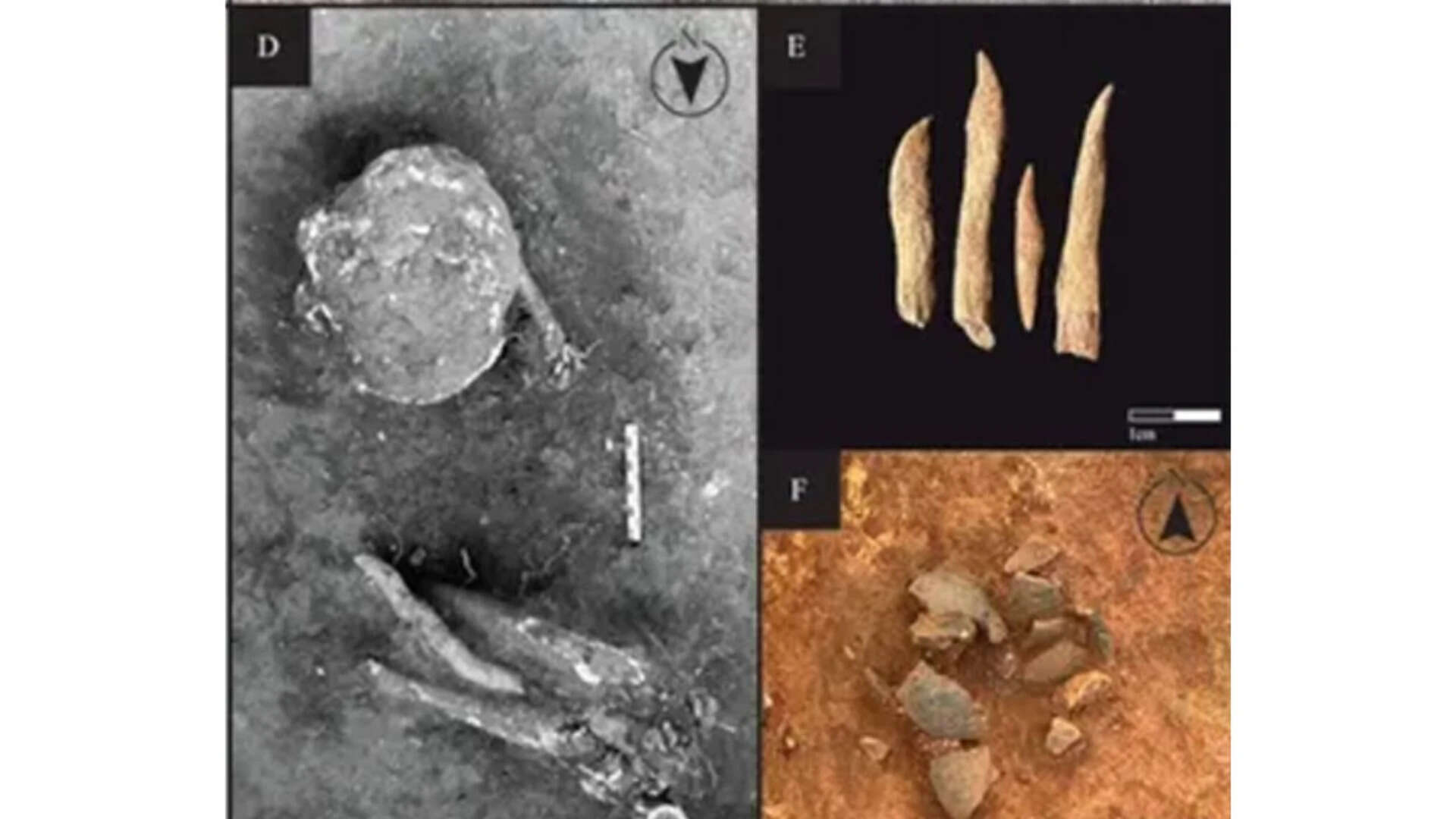
Skeletons found in Kaikulo Kabaka. Credit: D’Oliveira et al.
Burials from the early 1400s
During the excavation, researchers recorded 117 groups of stone structures and excavated 65 individual structures. These include stone platforms, small stone rings, and tumuli, which are stone mounds built over graves.Among the excavated structures were 12 tumuli. Six still contain human remains. For the researchers, this was a turning point as they realized they were looking at a planned burial landscape rather than individual stone structures.“It was very exciting, but also quite overwhelming,” D’Oliveira said. “We were no longer just looking at isolated stone structures; we were looking at a complex human landscape.”To determine the age of the burial, the team used radiocarbon dating. This scientific method measures how much radioactive carbon remains naturally occurring in ancient organic materials, allowing researchers to estimate when a person or object lived.The results showed that the three burials were dated to between 1411 AD and 1481 AD. An urn containing cremated human remains has been dated to between 1404 AD and 1448 AD. These date the burials to the early 15th century, several decades before the Portuguese arrived in the region.These findings make them the oldest radiocarbon-dated burials discovered in Angola. They also show that stone structures were being built well before European arrival, confirming that this architectural tradition existed locally much earlier than previously documented.
various burial conditions


The burials revealed various funerary practices. Some people were buried lying on their side with their legs folded, while others were placed in a sitting position with their knees drawn towards their chest.In Angolan traditions, sitting burials have often been associated with chiefs or other high-status people. However, the discoveries at Kaculo Kabaka suggest that the situation may have been more complex.Sitting burials did not contain expensive jewelery or other prestige items. Instead, archaeologists found grinding stones, pottery, and pieces of iron slag.“Grinding tools are particularly interesting because they are often associated with domestic activities and women’s work in many ethnographic contexts,” D’Oliveira said.Researchers believe that these objects may have been symbolic offerings or reflected a person’s identity, gender, or social role. According to D’Oliveira, the findings “support a more complex interpretation of the situation, possibly including women in positions of social or religious importance.”
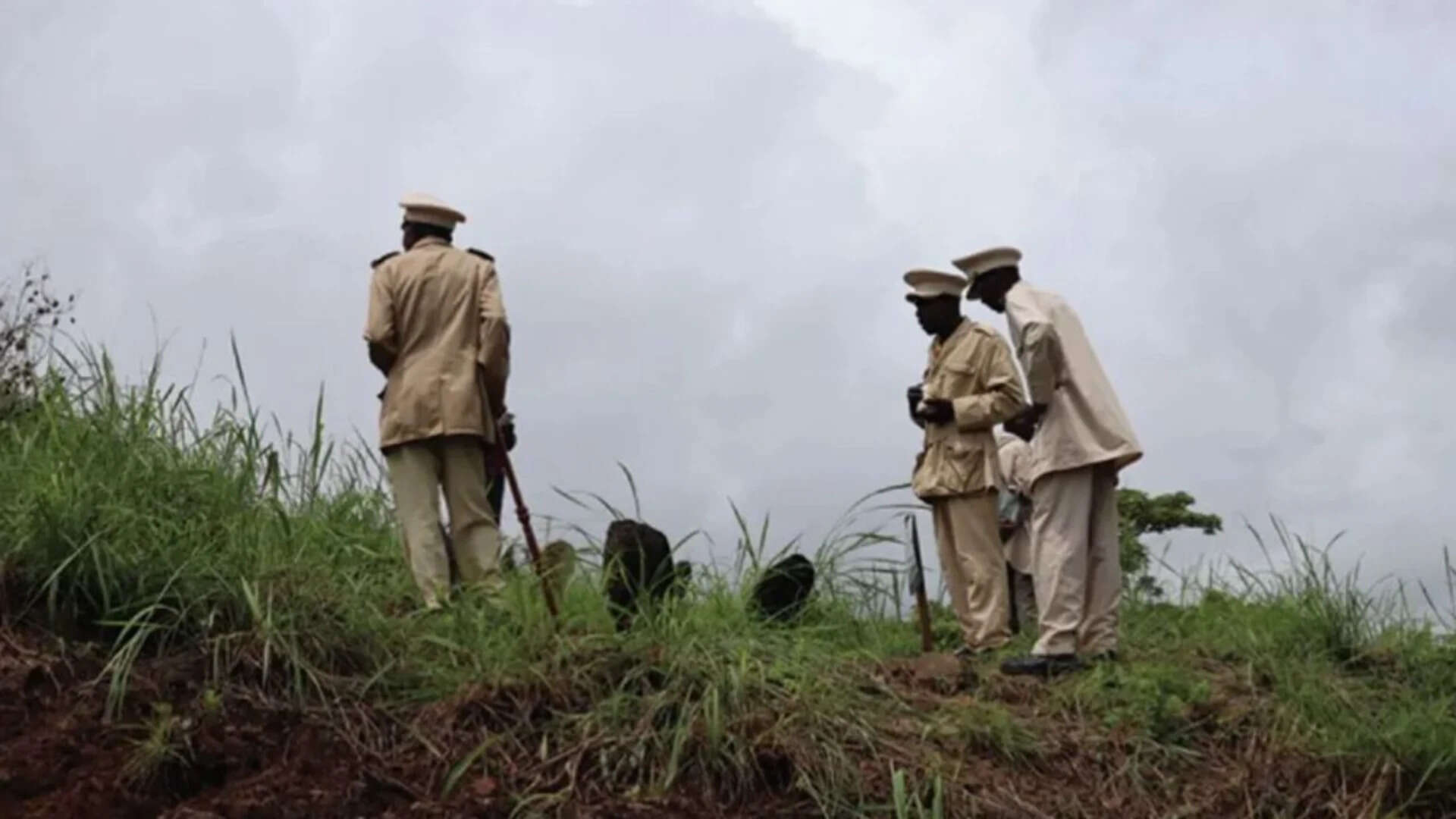
The Sobas are preparing for the ceremony at the graves. Credit: D’Oliveira et al
no known similarity
The most unusual find at the site was a simple clay urn containing cremated skull fragments and teeth. Archaeologists said it is the only known example of ancient urn cremation found in pre-colonial Angola and has no parallel known example in the country’s archaeological record.The researchers found only one possible historical comparison. Paintings made by the Capuchin missionary Antonio Cavazzi in the 1680s repeatedly show the use of pottery during ceremonies involving oaths of loyalty, sacrifices, and other rituals.Although much of Kaculo Kabaka will soon disappear beneath the dam’s reservoir, researchers have already identified additional stone formations outside the flood zone. They hope future excavations will help answer more questions about the communities that lived there before European contact.