





AI risk assessment expert Ajey Kotra says AI could make 10,000 years of progress in just 25 years
AI risk expert Ajey Kotra warns that we are underestimating how transformative artificial intelligence can become. She says that AI could cover 10,000 years of technological progress in just 25 years if it begins to automate research, software, and physical production.

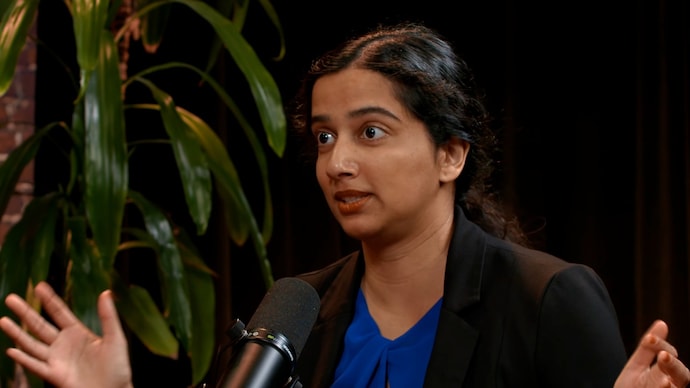


When it comes to artificial intelligence, what we’re seeing today may just be the tip of the iceberg. According to AI risk assessment expert Ajey Kotra, we are probably underestimating how powerful AI can be. He argues that if AI begins to automate everything from software and research to parts of physical production, it could compress the 10,000 years of technological progress humans have normally made in just 25 years.
❮❯
In a recent episode of the 80,000 Hours podcast, hosted by Rob Wiblin, Kotra talked about the rapid advancements in AI and what the future may hold. Kotra, who works closely with METR, a non-profit organization that measures whether AI systems could pose catastrophic risks to society, suggests that although many economists believe AI will bring steady growth similar to the Industrial Revolution in the last century. He suggests that this acceleration could be even more dramatic if artificial general intelligence (AGI) arrives and starts improving itself.
“I think there’s a very good chance that by 2050 the world will look as different from today as it does from the hunter-gatherer era,” Kotra said during the conversation. “It’s more like 10,000 years of progress rather than 25 years of progress driven by AI automating all intellectual activities.”
Kotra estimates that as early as the 2030s humanity could see what she describes as “top-human-expert-dominated AI”, which is an AI system that can perform tasks you can do remotely with a computer better than any human expert can do. In practical terms, this would mean that AI systems would be able to outperform the best human professionals in fields such as software engineering, scientific research or even virology. He argues that at that level, progress may not only be rapid, but also complex.
What would make AI smarter than humanity?
He suggests that the reason behind this potential leap in machine intelligence is a feedback loop. Kotra explains that if AI systems can automate AI research and development, they can design better models faster than human researchers. If combined with advances in robotics and manufacturing, AI could eventually help build the physical infrastructure, including chips and data centers, needed to run even more advanced systems.
Notably, Kotra’s perspective on the potential of AI is not isolated. Many AI leaders around the world have repeatedly talked about how powerful these systems can be. Recently, xAI boss Elon Musk also talked about how powerful the machines will be and how they will change the society.


Speaking at the World Economic Forum’s annual meeting, Musk predicted that AI could be smarter than any human by the end of 2026. “I think we could have AI smarter than any human by the end of this year, and I wouldn’t say before next year,” he said. “By 2030 or 2031, call it five years from now, AI will be smarter than all of humanity collectively.”
According to Musk, real change will not come from software alone. He believes that major economic change will occur when advanced AI is combined with robotics. “If you have ubiquitous AI that is essentially free or close to it and ubiquitous robotics,” he said, “you will have an explosion in the global economy that is truly beyond all precedent.”
In fact, Nobel laureate and Google DeepMind head Demis Hassabis has also talked about how transformative AI could become in the coming years. He has suggested that the technology could usher in an era of abundance, saying it could be “10 times bigger than the Industrial Revolution – and probably 10 times faster”.