





For many, the iron lung is consigned to the history books, a symbol of the years when polio spread through communities before vaccines transformed public health. Rows of large metal cylinders once filled hospital wards, keeping patients alive when damaged muscles could no longer breathe. Most disappeared decades ago due to changes in medical care. Paul Alexander’s life took a different path. He remained dependent on one of those machines from childhood until his death in 2024, making him the longest-lived person to spend his life using an iron lung. His story was never just about medical survival. It became a record of perseverance, adaptation, and normal routine, which he insisted on preserving despite extraordinary circumstances.
life inside the iron lung: what kind of six year old child survive polio Faced obstacles for more than 70 years
As reported by the BBC, Paul Alexander was six years old when he contracted polio in Texas during one of the disease’s most devastating periods. The infection left him paralyzed from the neck down and he was unable to breathe independently after an emergency tracheostomy.When he regained consciousness, he found himself locked inside a large metal cylinder, and only his head was visible outside the machine. Unable to move or speak, the experience was terrifying for a young child. After this, many other children affected by the same virus had to stay in the hospital for a long time.Polio causes paralysis in only a small proportion of infections, yet the consequences can be serious. According to the World Health Organization, about one in 200 infections result in irreversible paralysis, while some patients whose breathing muscles are paralyzed may not survive without respiratory support.

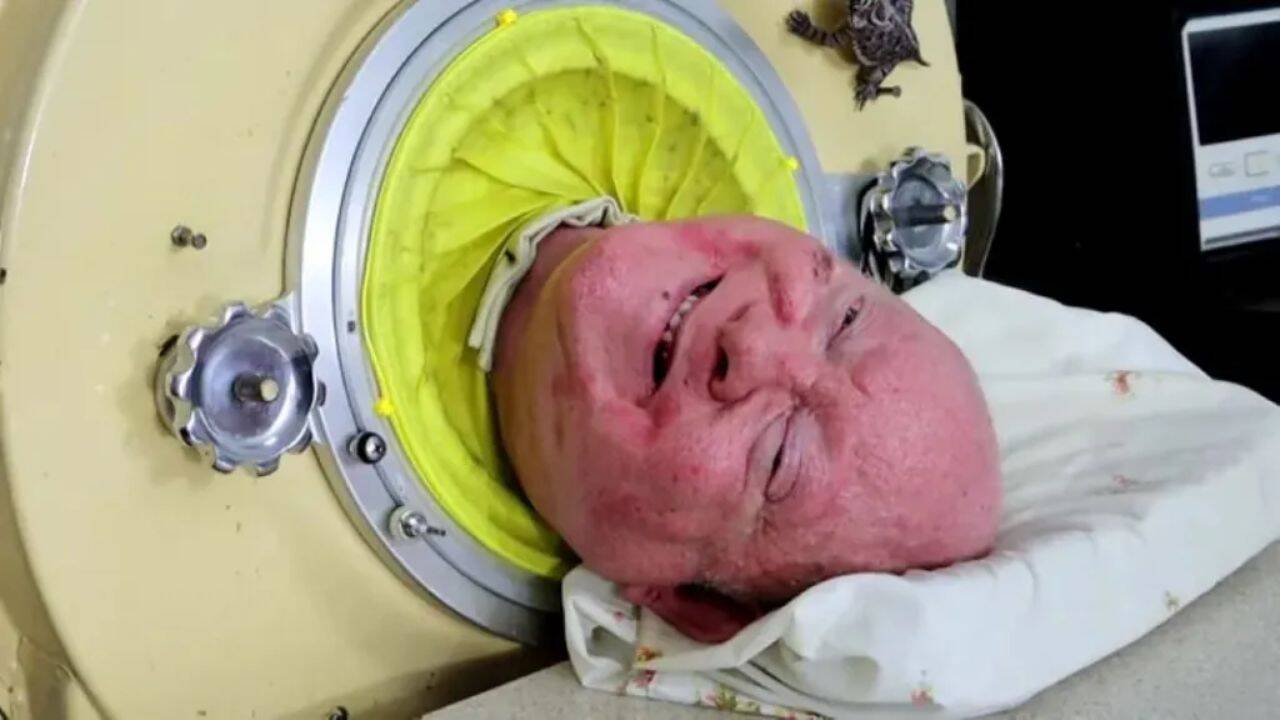
PC: BBC
Why did Paul Alexander’s family bring him home?
After nearly two years in the hospital, doctors began to doubt that Paul would live much longer. Her parents decided to bring her home instead of leaving her in institutional care. That decision changed the direction of his life.Staying at home meant constant attention from my family. Iron lungs require electricity to operate, using changes in air pressure around the body to inflate and deflate the lungs. During power outages, one had to manually pump the machine until power came back on. Sometimes neighbors would come over to help keep it running.Paul’s father also devised practical solutions for everyday emergencies. He devised a system that allowed his son to raise an alarm using only his mouth if he needed immediate help.
How frog breath helped Paul Alexander leave his iron lung
Although the iron lung remained essential, Paul gradually learned a more difficult breathing technique known medically as glossopharyngeal breathing. Many people call this “frog breathing.”Instead of relying solely on the machine, he trained himself to force small amounts of air into his lungs using his throat muscles. It required patience and determination, but each successful attempt allowed him to spend a little longer outside the iron lung.His younger brother Philip later recalled that an unusual promise had helped motivate him during those difficult early sessions. Paul desperately wanted a puppy. His family told him that if he could stay out of the machine for three minutes using the new breathing method, he would get the dog. He managed it.The reward was simple. There was no achievement behind this.
Exploring life beyond the bedroom
As his confidence grew, the hours outside the iron lung gradually became longer.He could leave the house in his wheelchair, spend time with neighborhood friends, and experience childhood activities that once seemed impossible. Whenever he became tired he would return to the machine for respiratory support.Philip never saw his brother as a person defined by his illness.The brothers argued, laughed, attended concerts, and shared normal family experiences. Looking back, Philip often referred to Paul as simply his brother, not someone whose disability dominated his every moment.
Education opened another door
Because it was difficult to go to school in the usual way, Paul completed most of his education at home before gaining entry to university.He enrolled at the University of Texas, where life presented new challenges. His parents helped him set up Iron Lung in student accommodation before he left to start university life. The paid caregiver who was expected to assist him failed to arrive, leaving Paul unexpectedly at the mercy of fellow students.People around the campus gradually stepped forward wherever needed. Classmates pushed her wheelchair, helped with daily tasks and became part of an informal support network that allowed her to complete her studies.Instead of stopping with a university degree, Paul decided to study law.
Some people expected a legal career
After qualifying, Paul set up a legal practice in Dallas.Meeting a lawyer who worked while lying inside an iron lung often surprises first-time clients. The sight of the large metal respirator may be jarring to those who are not familiar with it, yet the conversation soon shifted away from the equipment itself and toward the legal cases that had brought them there.His professional life reflects something he had learned over many years. Independence didn’t always mean doing everything alone. Sometimes this means organizing the right people, understanding what help is needed, and maintaining control over important decisions.He spent most of his adult life living independently, despite requiring assistance with the most basic daily activities.
The people who made freedom possible


The skills needed to support Paul are rarely taught in formal health care.Simple routines like feeding or shaving were simple enough, but taking someone in and out of the iron lung safely required patience and experience. New caregivers usually learned through observation as there was no manual explaining the process. Some stayed only for a short time while others remained a part of their lives for decades.Among those closest to him was Kathy Goins, whose long friendship and care remained central to Paul’s daily life. His death left a significant gap in the network he had built around himself over many years.Philip always considered himself the reserved caretaker of the family, yet he often talked about the friendships Paul built with those who chose to live with him.
Saving the disappearing machine
By 2015, the iron lung had become one of Paul’s biggest challenges.Very few were left in working condition anywhere in the world, and replacement parts had almost disappeared. When the machine began to develop a serious leak, its caretakers immediately looked for someone who understood how it worked.The search eventually led to Brady Richards, owner of a mechanical testing company near Dallas. Several years ago he found two unused iron lungs during the clearance of a building.He had never repaired anything before. Working with the machines he had, Richards rebuilt damaged components, manufactured replacement parts where necessary and restored a unit to working condition. He refused to pay for the work.Even after the replacement machine was installed, an incorrectly fitted neck seal caused another emergency later that evening. Richards immediately returned, discovering that although Paul calmly insisted he was fine, he was already turning blue due to the seal being loose.
Why did he live with an iron lung?
Modern ventilators are small, portable and use positive air pressure delivered through a mask or tube. Many people with long-term breathing difficulties have switched to these systems.Doctors explain that positive-pressure ventilation produces a very different sensation than the negative-pressure breathing produced by an iron lung. Some patients adapt easily, while others prefer the older technology they have been using for decades.Although Paul occasionally had to rely on a portable ventilator during emergencies, the iron lung remained the primary source of respiratory support for the rest of his life.
Speaking for polio survivors
As he grew up, Paul became increasingly visible beyond his local community.He wrote a memoir, published in 2020, in which each word was typed himself using a stick with a pencil held in his mouth to access a computer keyboard. The book introduced many readers to the generation that lived through the global polio epidemic.One goal remained constant. He wanted the disease to be eradicated from around the world so that no child would have to face the experiences he had endured.His life also reflects the changing history of polio. Widespread vaccination has eliminated the disease from most countries, although health organizations continue to work toward complete global eradication.
A record that reflects a lifetime
In 2023, Guinness World Records recognized Paul Alexander as the person who lived the longest while relying on an iron lung.The title acknowledged his extraordinary length of survival, yet those closest to him saw it differently.Philip believed that his parents would never be surprised by this record. They refused to accept the bleak predictions made when Paul would have a child, instead choosing to bring him home and live life around possibility rather than expectation.Paul Alexander died in March 2024 at the age of 78, more than seven decades after being hooked up to the machine that kept him breathing.The iron lung remained a part of his daily life until the end. It was also just one part of a much larger story that included education, legal practice, lasting friendships, and a determination to shape their future despite limitations that some people could not even fully imagine.