





With Bharat Semiconductor Mission 2.0, the government has doubled the focus on creating equipment and intellectual property
With the India Semiconductor Mission 2.0 announced by Finance Minister Nirmala Sitharaman during her Union Budget 2026 speech, the government is doubling its focus on manufacturing equipment and intellectual property locally. This includes critical AI infrastructure.

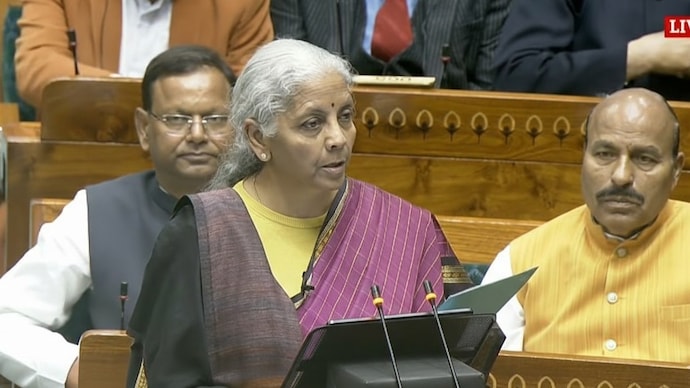


With the India Semiconductor Mission 2.0 announced by Finance Minister Nirmala Sitharaman during her Union Budget 2026 speech, the government is doubling its focus on manufacturing equipment and intellectual property locally. This includes building critical AI infrastructure. The mission is shifting gears from building fabs (factories making chips) to – at the same time – emphasizing domestic manufacturing of semiconductor capital equipment (machines making chips) and specialty materials (raw materials like gases, chemicals and substrates) ultimately paving the way for an end-to-end ecosystem that is both self-reliant and sustainable.
“India Semiconductor Mission 1.0 expanded our sector capabilities. Building on this success, we are launching ISM 2.0 to produce semiconductor equipment and materials, design full-stack Indian IP, and strengthen our supply chains,” Sitharaman said while presenting her ninth budget speech in Parliament. He emphasized that in the new phase, priority will be given to the establishment of industry-led research and training centers to develop relevant technology for an AI-ready and AI-native future and to skill the workforce.
Importantly, the government is increasing the financial outlay allocated to establish the necessary infrastructure to realize these dreams. The allocation for the Electronics Component Manufacturing Scheme (ECMS) will almost double to Rs 40,000 crore to help accelerate domestic production of essential components, reduce import dependence and strengthen the overall electronics supply chain.
The announcement comes as the initial Rs 76,000 crore allocated under ISM 1.0 (which was announced in late 2021) has been committed to key projects including fab plants and assembly and test facilities (ATMPs) by global and domestic players such as Tata Electronics and Micron. ISM 2.0 will expand both the scale and scope of this effort to include design, device manufacturing and materials science in addition to subsidizing chip manufacturing, which will remain a key focus.
Industry reacts
FireAI founder and CEO Vipul Prakash welcomed the government’s “intelligence-first” vision, calling it a “landmark step” that signals a “shift from just adopting technology to deepening our indigenous R&D capabilities”.
Sanjeev Aggarwal, Executive Director and Chief Manufacturing Officer, Lava International Limited, said, “The expansion of the Electronics Component Manufacturing Scheme to Rs 40,000 crore is an encouraging step to strengthen India’s electronics manufacturing ecosystem. For the ECMS to deliver its intended impact, it will be important to ensure that the necessary structural enablers are put in place along with timely and effective implementation. This will be crucial to translate policy intent into outcomes.”
Pankaj Rana, CEO, Hisense India, said, “The continued focus on semiconductor manufacturing, electronics components and AI-based innovation reflects a strong policy commitment to building a resilient domestic ecosystem. Initiatives like India Semiconductor Mission 2.0 and increased outlay for electronics manufacturing are expected to deepen local value creation and strengthen supply chains. For the consumer electronics industry, this creates a stable, growth-oriented environment that fosters long-term investment, innovation and “Encourages localization.”


Also, the government has announced that it will allow global players like Google and Microsoft “tax holidays until 2047” if they choose to set up data centers locally. This is something they are already doing in some capacity, but with the government encouraging more ease of doing business regulations, hopefully we will see even more localization in the coming days.
“The Union Budget 2026-27 clearly recognizes artificial intelligence as a strategic driver of inclusive growth and governance efficiency. The emphasis on AI missions, research funding, semiconductor ecosystem development and capacity building reflects the shift from experimentation to large-scale deployment. By aligning AI with national priorities like infrastructure, public services, logistics and security, the government is creating a strong ecosystem for applied artificial intelligence,” said CEO of Stack Technologies and said co-founder Atul Rai.
Calling it a bold policy decision, Manoj Kumar Singh, Director General, Digital Infrastructure Providers Association (DIPA), said, “The tax holiday till 2047 for cloud providers leveraging Indian data centers further positions us as a global hub while furthering our ambition of a $3 trillion digital economy.”
