





Why did India and the world watch Dhurandhar 2 despite propaganda claims?
The four-hour cinematic experience dared audiences to sit inside theaters and enjoy cinema as a community viewing experience – not just in India, but across the world. This is the era of Dhurandhar: The Revenge which continues to hold the box office lead even after 30 days. But why? Why couldn’t you ignore this Aditya Dhar chariot?

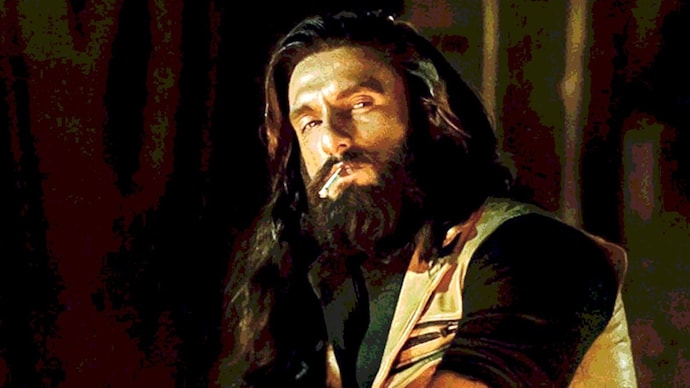


Terror spread again in April 2025. An Islamist attack on tourists in Pahalgam killed 26 civilians. Gunshots were heard, yes, but so were the questions the terrorists asked before pulling the trigger. Less than a year later, nothing has faded. No anger, no sadness, no need to make sense of it.
So when a movie decided to revisit that wound – more poignant, more intense, less apologetic – we just didn’t watch it. We internalized it. We took it to conversations outside the theatres. outcome? Dhurandhar: RevengeDirected by Aditya Dhar crossed 30 days at the box office And it’s still not completely over.
❮❯
Was it propaganda, as some claimed? Perhaps. But here’s the more uncomfortable question: Is this the only way to read it?
And another, more intense: If publicity alone can do it, why don’t all “agenda movies” work?
Because inconveniently, the numbers don’t argue. They sit there and stare at you. Dhurandhar 2 One of the highest-grossing Indian films globally, and it got there without China or the Gulf markets. That difference matters. This tells you that it wasn’t just pushed, it was pulled. by audience and in different geographical areas.
So what were people really reacting to?
No balance. Edge doesn’t pretend to offer it. Their world is not interested in moral uniformity. It never ceases to soften its gaze. Pakistan’s long-standing relationship with terrorism has not been kept secret, and the consequences of that ecosystem have not been depicted in ambiguity. The film does not hesitate to present India as both the victim and the counter-attacker. The victim and the executioner – uncomfortably, unapologetically.
And really, that’s the whole point. The audience was looking for liberation, not restraint.
Dhurandhar: Revenge Feels like both an endgame and a reset. Not just for scale, but for intent. A reminder that cinema, this thing we’ve reduced to a weekend distraction, still a weapon of ideasEmotion, and impact. Cinema can provoke, can choose to say something and can say it without lowering its voice.
If this sometimes sounds like an echo of the government, that’s okay – ask the tough questions: Did it keep you on hold for four hours? Were you sitting there, shoulder to shoulder with strangers, reacting together – gasping, clapping, whistling as if you were part of some collective thing?
Because promotion does not guarantee immersion. Does craft.
And how do you explain if it was just publicity paid preview recording Historical numbers? Who tries to sell something to an audience that hasn’t even decided to buy it yet?
Dialogues like “This is new India (This is the New India)” reflected a certain mood that refused to dilute itself for comfort as the film kept circling back to a core idea: This is not about Pakistan, This is about Pakistan sponsored terrorism. That difference was reiterated and underlined, letting us know that Dhar knew exactly what he was doing.
He was never interested in candy floss cinema. No decorative lyrics to soften the blow, no larger-than-life flashiness to distract you from the point. The ambition was much clearer than that: create a world, make it airtight, and force the audience to sit inside it. No easy exit.
And the audience stayed.
What other explanation is there for a four-hour movie turning into meme culture? In shorthand on social media? People keep quoting something, dissecting it, revisiting it? What else motivates a film to dominate markets like North America and UK-Ireland, where emotion alone doesn’t sell tickets?


And what compels the audience to pick it apart in detailLike they’re trying to decode something bigger than what’s on the screen?
It was not easy to see this. And maybe that’s why it worked. Because cinema has never been a one-note experience. It says one thing, means something else, and does something else entirely. In fact, the best kind of cinema leaves you so unsettled that you can’t move forward immediately.
Dhurandhar 2 Have done this. It refuses to leave the room. Even now, when its theatrical run is almost complete, the conversation has not slowed down. If anything, it’s gotten faster and it’s rarer.
For that generation of Hindi film viewers who hesitate before naming the films they actually like, this feels like liberation. Like finally having something to point to without any qualification.
Now there is at least one film that gets most things right: direction, performances, music, editing, Writing, but above all, narrative creation. The feeling of entering a world and wanting to understand it, even when it bothers you – that’s what it’s all about. At least for cinema lovers.
or the like dark knight Reminds us, “Either you die a hero or you live long enough to see yourself become the villain” – except. Dhurandhar 2 Turns that gaze upside down. It does not wait to be judged. It chooses its side, owns it, and gives you the courage to question why it makes you uncomfortable.
Ask any cinema lover what impact strong filmmaking makes on them, and they won’t give you a clear answer. They will circle around it, fight it. Because it’s like an orgasm that slowly builds, takes over your senses, and leaves you sitting in stunned silence – trying to understand how something so abstract affects you so badly.
We may never be ready to give it up stalwart. At least not yet. Why? Because endings like this don’t close doors. They leave them slightly open – just enough to allow a third of the meat to go inside.