





Ustad Bhagat Singh review: Another film from Pawan Kalyan that surprises the audience
Ustad Bhagat Singh Movie Review: Pawan Kalyan starrer Ustad Bhagat Singh offers fans moments of charm but struggles with the dated story.

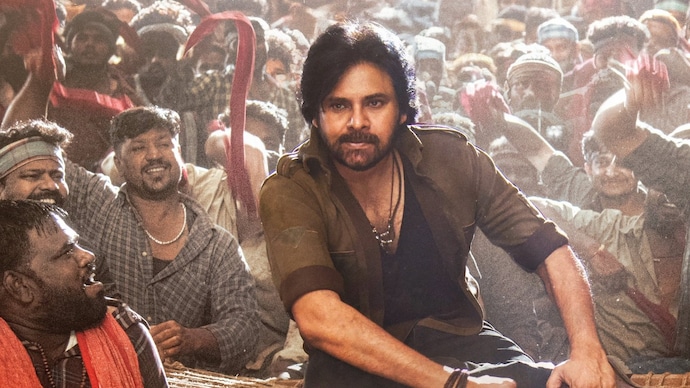


It’s kind of become the norm now. After years of being told “don’t expect logic, expect entertainment”, commercial cinema has gradually trained its audiences to settle for low prices. First the logic is gone, then the story, and now even basic filmmaking coherence seems optional. If everything is meant to be left outside the theatre, one wonders what remains inside. Step into one of these screenings, and the answer is clear. It is mostly the fans, loyal and patient, who are taken for granted, who enjoy some nostalgia-inspired highs and glimpses of their favorite star.
he brings us Ustad Bhagat SinghStarring Pawan Kalyan and directed by Harish Shankar. A film that came with the exact fear of being such a product, and in many ways lives up to that expectation.
the story is like this Ustad Bhagat SinghA character created using every familiar business template. It has a tragic past, philosophical one-liners, a moral high ground and a personality that fits easily into every situation. The narrative includes everything that could possibly happen – terrorism, politics, drugs, nationalism, not because the story demands it, but because these elements are now largely seen as shortcuts. It checks all the parameters of commercial cinema – comedy, punchy dialogues, hero worship and a strong family angle, except for the one item song.
At its core, there is a conflict that involves attacks and a larger conspiracy, but the film never develops it into a compelling narrative. Instead, it feels like a collection of moments strung together.
What immediately stands out is how dated the writing feels. Scenes don’t flow into each other, they just exist. Conversations lack organic connection, often feeling like setups for punchlines or lectures rather than meaningful exchanges. Dialogue tries hard to be catchy, chasing tikka-lekka rhythm from Gabbar SinghBut without the intelligence or time that carried it out. The result is a film where even serious moments seem staged and basic conversations seem forced.
Sometimes, conversations become so detached that characters ask questions not out of context, but merely to determine the protagonist’s reaction. There is a moment when someone suddenly asks what “Jai Shri Ram” means, clearly not out of curiosity, but to prompt a mythology-laden monologue.
To be honest, Pawan Kalyan is in form here. After a series of restrained roles, he appears more spontaneous and playful, especially in lighter parts that briefly remind you of him Gabbar Singh phase.
The film also gives him some oddly repetitive quirks, like randomly firing bullets into the ground every few minutes, which quickly turns from a character beat into a distractingly random habit.
There are many dull parts in his screen presence, and there are also moments where his charm, timing and spontaneity make routine scenes watchable. He finds room to do comedy, action and emotion and even when the writing doesn’t support him, his conviction keeps the film afloat in parts.
However, this can only go so far. Comedy in particular becomes a major issue. It’s loud, forced, and often tests patience more than entertainment. The film constantly tries to generate humor through exaggerated writing rather than situational flow, and it rarely succeeds. Even emotional scenes, which could have added weight, feel incomplete as the narrative never slows down to build them properly.
Director Harish Shankar sees it as a spiritual expansion Gabbar SinghBut this time it feels like it is trying to recreate that magic by using the same tools without updating them. The result is a film that feels stuck in the past. When the most inventive moment in the film turns out to be the design of the interval card, it tells you everything about how dated the overall approach is.
The supporting cast does what is required, but have little to contribute. Srileela plays a familiar bubbly act with predictable beats. Raashi Khanna appears for a short time and disappears without leaving an impact. R. Parthiban has a presence as the antagonist, but lacks character depth, making the conflict feel weaker than it should be. The rest of the supporting cast acts in familiar patterns, without adding anything memorable.
On the technical side, the film remains serviceable. Devi Sri Prasad’s music does not match the expectations set by this combination, although some songs work on screen. The background score follows a loud, familiar template without adding much identity. The cinematography is good in some parts, but the overall presentation feels dated.


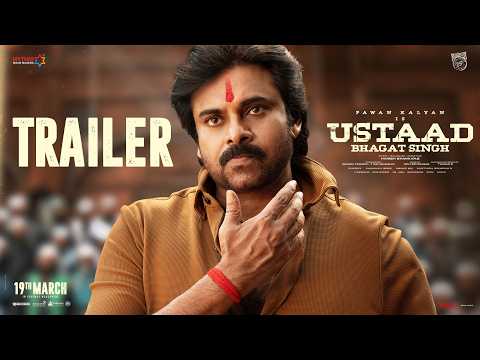
Here is the trailer:
What Ustad Bhagat Singh Ultimately this represents not just a movie, but a pattern. A pattern where star-driven cinema relies heavily on familiarity, nostalgia and presence, while expecting audiences to ignore everything else. The issue is not just about style. Large-scale commercial cinema has worked and will continue to work when handled with clarity and conviction. The problem here is that the film seems to be satisfied with the bare minimum.
❮❯
overall, Ustad Bhagat Singh There is a regular, old commercial entertainment that depends almost entirely on the presence of Pawan Kalyan. It provides a few moments for fans, but very little more than that. For those looking for a star, it may be delivered in parts. For everyone else, it feels like a movie that expects you to leave a lot outside the theater before you go inside.