



There is patriarchy behind the bodice: Madhuri Dixit’s blouse in Maa Behen fights sexism
In Maa Behen, Madhuri Dixit’s Rekha is harassed for refusing to stop wearing a sleeveless blouse. The garment becomes the most visible symbol of resistance to widowhood norms and moral policing in the film.
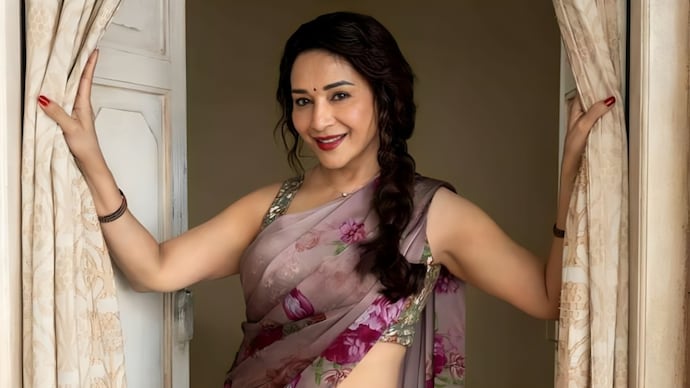

This is not new. Women all over the world are judged on their appearance – the hem of their skirts, their height stoleThe depth of their neckline and the design of their sleeves often decide their character in the eyes of society. So when Madhuri Dixit was branded a woman with loose moral values for wearing a sleeveless blouse in her latest film mother sisterYou know where the story is going. The Netflix film is a fight against patriarchy — subtle, in its own entertaining way, not always the most effective kind, and yet a notable one. And that blouse, compared to everything else, emerges as the strongest symbol of the fight.
❮❯
Dixit plays the role of Rekha, a single mother who has to endure criticism from society after her husband dies in an accident. Rumors that she murdered her husband and buried him in the backyard, that she is a witch who uses black magic to seduce men, and that her youthful appearance is the result of the same sinister forces spread through the neighborhood like wildfire. Soon, the same woman who is trying to raise her two young girls by opening an internet café becomes the source of everything supposedly happening in the society. He is ridiculed, vilified, his café is destroyed and he is left to start over from scratch. The trauma that their daughters have to endure throughout their lives is a different story. But one thing is still not torn – her sleeveless blouse.
The blouse is a symbol of her stubbornness. The idea that Rekha would not succumb to society’s whims and fancies about how other people wanted to see her. Despite everything she has endured, Rekha refuses to stop wearing the one thing that probably reflects her independence more than anything else. She was wearing a sleeveless blouse when she first moved into the neighborhood, and she continues to wear it a year later—when she daughters have grown upGot married and settled somewhere else.
Rekha’s relationship with the sleeveless blouse serves as a constant pillar of support and, at the same time, symbolizes her rebellion, not bowing before society’s standards of morality – standards created without her permission or will. In many ways, all she has left is her blouse. His daughters have run away from the nest. Her husband has gone. Her reputation in the society is that of a witch, a home breaker and an unruly woman. He doesn’t care. She is only left with the freedom to choose what she wants to wear.
What makes the blouse such an attractive symbol is that it is not provocative at all. In any other film, the sleeveless blouse would probably be filmed as an object of desire. Here, it becomes a matter of discomfort because of what it refuses to reveal. It refuses to express embarrassment.
Society expects widows to become younger versions of themselves. Lighten their colors, lower their voices and communicate the loss visually. Rekha refused to be associated with any of them. Her sleeveless blouse is not rebellion in the traditional cinematic sense. This is much more extreme. It is his search for normalcy, his insistence on living life on his own terms.
She refuses to let tragedy rule her wardrobe, and this upsets everyone around her.
Think about the allegations made against him throughout the film. No one questions her abilities as a mother or her ability to run a business. Instead, they attack his character. His body becomes public property. Their clothes become a subject of public debate.
Why?
Because the patriarchy has always understood one important thing: It’s easier to control women when you first make them doubt themselves. The blouse therefore becomes a battleground between ownership and moral policing.
Indian cinema has a long history of conveying morality through costuming. A faithful woman is covered. A rebellious woman is glamorous. The “good” wife dresses differently from the “other” woman. Even on television, the vamp almost always wears more glamorous clothes than the ideal heroine. Generations of movies and TV shows have taught audiences to read character through clothing.
mother sister Changes that perception.
Rekha’s sleeveless blouse tells us nothing about her morals. This is the point.
Think about it: if Rekha can wear whatever she wants and still be a good mother, a hard-working woman, and a decent human being, then the moral framework that society has built around women’s clothing begins to disintegrate. And that’s a scary thought for the patriarchy.
No one asks the men in the film to change. There is no discussion about his attire. There’s no question about their character based on how much skin they show. No one tells them that respect must be earned by showing off. That burden is especially that of women. Here, especially for Rekha.

A widow must dress a certain way. A mother should dress a certain way. A woman of “good character” should dress a certain way. Who says?
The film asks that question again and again without explaining it. Rekha’s blouse becomes the easiest thing to attack because of how visible it is. He doesn’t have the strength.
For decades, Indian cinema has treated the blouse as an object of voyeurism. Entire songs have been composed around him. The cameras are focused on them. They have become addicted to selling desire, glamor and fantasy. mother sister Does something fresh and different. This turns the blouse into a political statement: a woman refusing to change herself to make other people comfortable.
This is also radical. because in the fight mother sister In reality it is never about sleeves, but about who gets to decide how a woman’s existence should be in the world.
For Rekha, the answer is simple. Neither the society nor the neighborhood has the right to take decisions on his behalf. It’s hers.
by the end of mother sisterThe blouse symbolizes something bigger than the line. It is a celebration of women that they should not receive any visible evidence of their virtues from society. They don’t need to hide their grief in any particular way or put on a respectable display to be respected.
The tragedy is that this remains a revolutionary idea in 2026. The victory is that Rekha never stopped believing in it.
mother sisterAlso currently streaming on Netflix Features Dharna DurgaTrupti Dimri, Ravi Kishan, Geetanjali Kulkarni, Arunodi Singh and Paresh Rawal star in other lead roles.