



The Quiet God Within: How Lalo, a Radical Gujarati Film, Reminds of True Devotion
Lalo: Krishna Sada Sahayate, a stunning Gujarati hit, exudes divinity in its devotion to the transformative conscience of a flawed auto driver. In ordinary ruins, it whispers: The light you seek lives within.
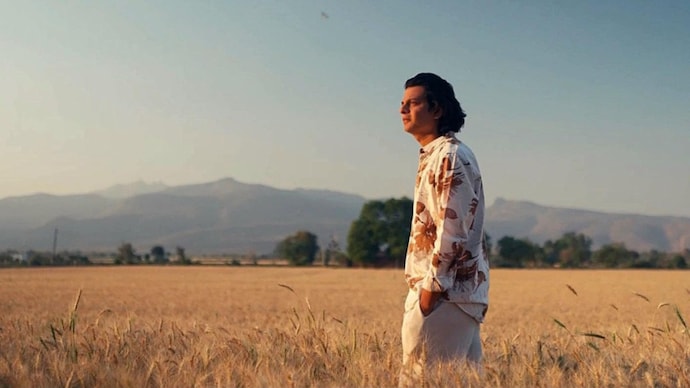

Movies have shown us God dividing oceans and lifting mountains. We have seen him blowing conch shells and silencing armies. From the explosive epics of our mythology to devotional serials DoordarshanPop culture has always liked its gods big, invincible, and reliably awesome. Such a big God lives comfortably on a screen or in a temple. He demands our astonishment, not our sincerity. Maybe this is necessary. But it’s also conveniently far away.
The one place where cinema has rarely dared to find him is the only place where the wise have always said he lives: inside a normal, flawed and failed human being.
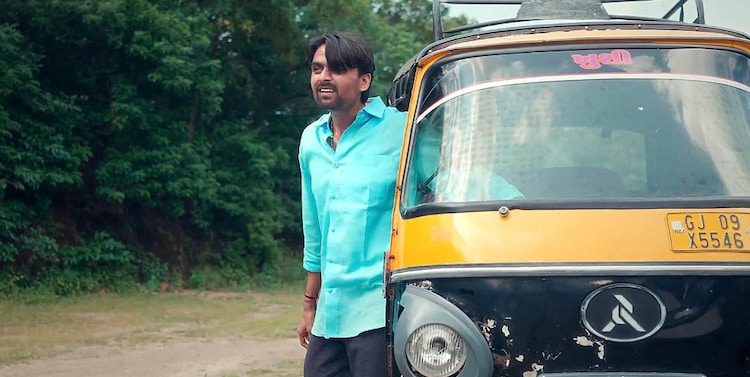
and then comes LaloA small Gujarati film based on borrowed faith and fifty lakh rupees. No army. no miracles. No divine spectacle. Just an auto rickshaw driver deep in debt, making bad choices, numbing himself, and slowly destroying everything and everyone he loves.
❮❯
And yet, this broken, bumbling, completely normal man is the one who ultimately brings us face to face with the God we were always told lives within us. Which we somehow kept searching for everywhere.
Devotion: From Transaction to Transformation
We use the word ‘bhakti’ freely, displaying it in songs, rituals and temple visits, without realizing its real meaning.
Most of our relationship with God has become one of conversation. We light lamps and hope for promotion. We keep a fast and wait for the wish to be fulfilled. We go on pilgrimage and hope that our sins will quietly go away.
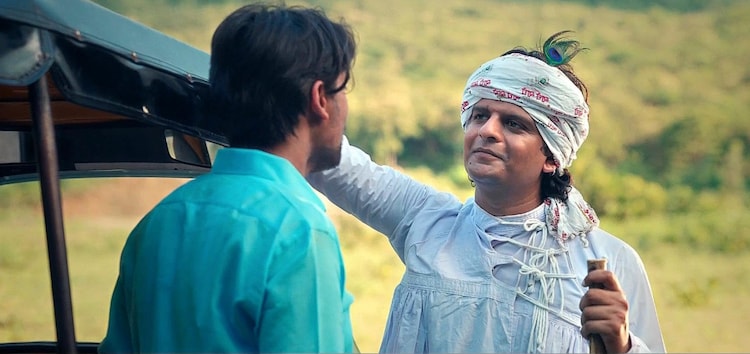
But devotion This is not the performance we have been taught. It is not the folded hands or the ritual flame or even the tears that sometimes fall in a moment of unexpected grace.
At its core, devotion There is a relationship. The unique, transformative connection between who you are and who you are capable of becoming. And the bridge between those two selves is surrender. It is the dedication of a man who has seen the smallness of his calculations and actions, and has chosen to connect himself with something greater. A higher ideal. Call it God, call it religion, call it conscience. Because the name is less important than the change.
The dedication that this high ideal demands is not passive. It doesn’t say: sit still and wait to be saved. It says: Act rightly, without attachment to the result. Do the work you have to do. and wait.
Lalo understands all this. Not as a philosophy. As a lived experience.
inner light
On the surface, the story is simple. Lalo Is an auto rickshaw driver. He is not a hero, not a seeker, not a person on a conscious spiritual journey. He is a man burdened by debt, bad choices, and the slow decline that comes from living too long in the comfort of darkness, bad company, and bad habits.
His failures are not dramatic. They’re the normal kind that just stack up. A truth was postponed there. A loved one hurt, a principle silently betrayed. A life below its potential, its morality, wasted day by day.
There are no grand villains. No twist has been made to surprise. The film simply whispers: You already know this story. Sit with it anyway.
The film does not present any new truth or knowledge. We have kept the knowledge of karma, duty, what we sow and what we reap with us throughout our life. In the stories of our grandmothers, in the corridors of the temple, Geeta We memorized the verse and kept it somewhere where we rarely visit again.
message from Lalo The point is simple: no honest effort goes in vain. The way back to yourself is always open. We’ve heard this before. Many times. In many forms. But knowing something in the mind, feeling it in the chest and making it a part of your life are three very different things.
Lalo Understands this with calm maturity. It doesn’t lecture. It does not dramatize its philosophy. It simply puts a man in front of you and lets you watch him stumble and suffer pain and slowly turn towards the light. To trust that something in you will recognize the journey. Because Lalo’s The journey is your journey too.
Krishna is in the form of wisdom, not in the form of spectacle
Lalo’s bad choices bring him to the brink of ruin. And here, at the bottom, Krishna finds him. But Krishna does not come as a revelation in this film. He does not perform miracles or make proclamations. He simply stands at the edge of Lalo’s awareness like a lamp that never turns off, without any urgency, waiting for the man to stop running away from him.
Krishna tells Lalo that he can be released only if he corrects his karma.

“But what should I do?” Lalo answers. “No one ever told me.”
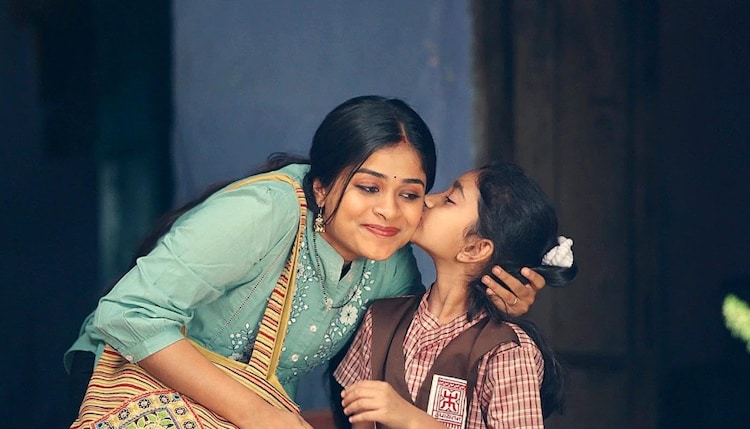
In that one unwritten, unseen moment, the film ceases to exist Lalo Completely. Because he is not a rickshaw puller. That is, everyone who ever sat in the wreck of their choice was actually puzzled by how they got there. It is the cry of someone who was handed a life without any rules, who performed rituals without understanding, who heard wisdom without being told how to live it. That is us.
And Krishna’s response is not a sermon. He does not overwhelm Lalo with the universe, as he did Arjuna on the battlefield. He just lives. Present Patient. Waiting for Lalo to take the next step.
This is neither a warrior God of the battlefield nor a preacher God of the pulpit. It’s something older, quieter and much more intimate. The Upanishads have pointed towards this God: Tat Tvam Asi, You are He. He who lives not in heaven or temples but in the marrow of your being.
Lalo This is perhaps the first Gujarati film, and one of the rare Indian films in any language, that has the courage to bring that God to the screen.
why it touches the heart
Director Ankit Sakhiya makes this film like a man who has personally walked its path. There’s no pretense, no pressure for depth. His camera roams across the landscapes of Junagadh and Girnar in the same way the morning light roams through nature.
Made at a fraction of the expense of most productions, released without the machinery of commercial spectacle, Lalo quietly and seamlessly took off, eventually crossing Rs 100 crore, not because it overwhelmed anyone, but because it reminded them of something they were missing. This still forced people to leave. It made people cry. Not through shock or spectacle, but through recognition, introspection, self-assessment.
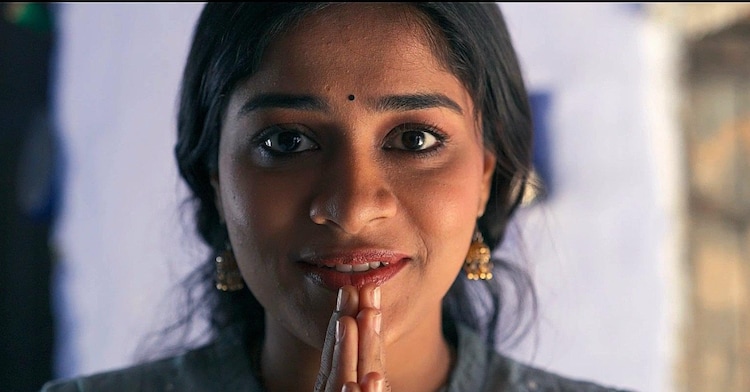
When? Lalo By the end, you don’t leave energized or entertained in the traditional sense. Whatever settles down on you is close to peace. A quality of peace that feels less like the absence of noise and more like the presence of something you had forgotten about.
Film holds up a mirror. And in that mirror, behind the tired face of the rickshaw puller, behind the debt and the drift and the long detour from yourself, you see the light. The same light that is in you.
In the difficult and difficult circumstances of daily life, in the functional pressures of ritual, in the exhausting hustle and bustle of living an unexamined life, many of us had forgotten that it was there. Lalo returned it to us.
And sometimes, in a world that keeps selling us louder, bigger Gods, that quiet retreat is the most revolutionary thing a movie can do.