





Ramayana’s VFX overload: A big blow to Indian cinema or a big risk for Ranbir’s film?
Nitesh Tiwari’s Ramayan is India’s biggest shot so far at VFX-loaded storytelling on a global scale. However, it comes at a time when many high-profile filmmakers internationally have moved away from heavy reliance on digital tools.

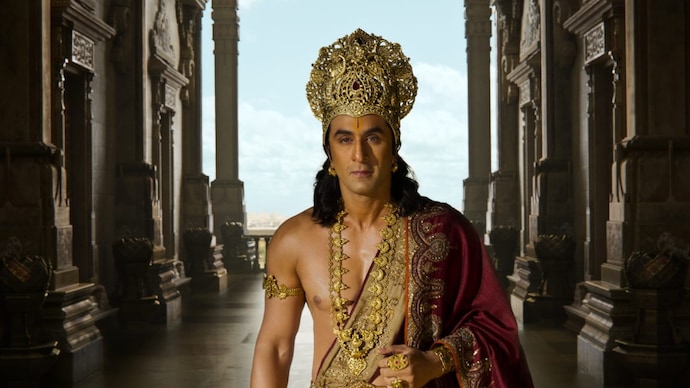


When the first glimpse of Ranbir Kapoor as Lord Ram was seen Ramayana Released on 2 April, the film was presented as an effort that would introduce global audiences to Indian storytelling and cinema. However, this divided the room.
While some viewers appreciated the ambition and the visuals geared for the global market, others questioned the look and feel, calling it “too synthetic”, “over-processed”, or not rooted enough in the culturally rich story. Ramayana.
❮❯
The mixed reaction has since turned into a larger conversation: In an era when some of the biggest filmmakers are moving away from excessive digital manipulation, Ramayana Moving in the opposite direction? India Today spoke to experts to get a clear picture.
Why is the reaction divided?
At the center of the debate is not just VFX but perception. For a section of the audience, the teaser represents a leap. Backed by international visual effects giant, DNEG and led by producer Namit Malhotra, the film directed by Nitish Tiwari promises a scale rarely attempted in Indian cinema.
However, for others, there is a growing concern over authenticity, both emotional and physical, which only increases given the emotions associated with the Ramayana – an epic that every Indian has grown up hearing and watching. What happens when mythology becomes too reliant on digital imagery?
Does this risk losing emotional authenticity? That doubt is nothing new. Indian audiences have historically responded best to spectacle when it feels grassroots, when the extraordinary is condensed into something tactile. Baahubali For example, films worked not just because of the scale, but because of the world they depicted. Despite being larger than life, Baahubali The films felt rooted and emotionally legible.

early glimpse of RamayanaOn the contrary, it appears to prioritize visual ambition, leading to skepticism among many on social media as to whether the final film will strike a balance with narrative depth. The mixed reaction stemmed from specific visuals in the teaser, which audiences found overly sophisticated, particularly the golden skies, floating landscapes and Rama’s shiny, symmetrical frames, which to some people seemed “too clean” or video game-like.
comparison with prabhas Lone man This quickly came to light, with audiences questioning the texture and lack of realism. For many, the issue is not one of scale, but whether these worlds feel alive and sacred, making the debate about emotional authenticity as much as visual beauty.
What the VFX community is saying
Of course, industry insiders are excited about Ramayana. He believes that if this film is successful then it can change the way films are made in India. Artist Naveen Shetty, founder of Nube Studios, describes it Ramayana The glimpse marks a potentially defining moment – hinting at a product that could finally put Indian cinema on par with international VFX powerhouses.
Similarly, VFX supervisor Debdoot Ghosh, who has worked on films like Kantara And hey romeopoints out that such teasers are often designed as standalone showcases. “These promos are usually meant to show scale (and not necessarily) part of the final film,” he says of the teasers, “Producing something like this so quickly means moving the planning stages to allow for quick turnaround.”
Specifically on the use of AI, Ghosh described it as a necessity rather than a shortcut. “Using A.I. Ramayana This is actually a very smart move. The complexity is huge and AI helps manage the scale efficiently. But the craft still has to be humane,” he says, “If the audience believes in the world, only then has the technology done its job.”
The debate also draws attention to how leading filmmakers view spectacle.

Globally, many high-profile filmmakers have recently moved away from excessive reliance on digital tools. The latest example of this is the sci-fi drama project hail maryDirected by Phil Lord and Chris Miller and starring Ryan Gosling. christopher nolan’s oppenheimer became the subject of discussion for a practical recreation of the Trinity test, while Denis Villeneuve’s Dune: Part 2 It relied heavily on real locations and physical sets, using VFX as an extension rather than a crutch.
Even action-heavy films like George Miller’s Mad Max: Fury Road Priority is given to actual stunts over CGI spectacle. The prioritization of physical action by the maverick filmmakers who have globally shaped the visual grammar of contemporary cinema has subtly changed audience expectations. There is now a premium on what feels “real” even within fictional worlds.
That’s why, for some people, RamayanaThe heavily stylised, VFX-forward glimpse feels like a deviation from that trend.
scene in india
In India, SS Rajamouli, despite his reliance on VFX Baahubali movies and RRRcontinues shooting extensively on real locations for his upcoming magnum opus VaranasiBuilding a physical foundation before layering digital enhancements. Sanjay Leela Bhansali, on the other hand, creates ultra-elaborate sets to control every visual element, ensuring that even the most stylish frames maintain a sense of physical reality.


it’s right here Ramayana Investigation is being done. Could a film of this scale, potentially powered by AI-assisted workflows, achieve the same tangibility?
A bigger debate than a movie
reaction of Ramayana Ultimately reflecting a major change in audience sensibilities.
Today’s audiences are more visually literate. They can tell when something seems “unpleasant”, even if they can’t always articulate why. Therefore, in the era of film production full of high-level scenes, credibility has become more valuable than scale.
Also, the demand for modern film production, especially on the scale of Rs 4000 crore (rumored to be a two-part joint budget). Ramayana franchise), making the use of AI and advanced VFX almost inevitable.
“What is this happening Ramayana What is it is that AI is not completely replacing artists but giving a mix of VFX and AI. If used correctly, it will simply make the world Ramayana Feel effortless and truly epic,” shared Debdoot.
this is rope Ramayana It is going on. At the moment, the film is at the center of an interesting paradox. It represents India’s biggest effort towards VFX storytelling on a global scale. And yet, here comes a moment when parts of the industry are rediscovering the power of the physical.
whether Ramayana Ultimately closing or widening that gap will depend not on how much technology it uses, but on how well it hides it.
Because if there’s one thing both sides of the debate agree on, it’s that audiences aren’t limited to just the visuals. They stay for the stories. He remembers the stories. And yet no algorithm knows how to feel.