



OpenAI fixes bad US military deal after ChatGPT surges nearly 300 percent
OpenAI CEO Sam Altman has admitted that the AI startup seemed opportunistic and lazy in rushing to make a deal with the Pentagon following the US government’s decision to terminate Anthropic’s contracts.
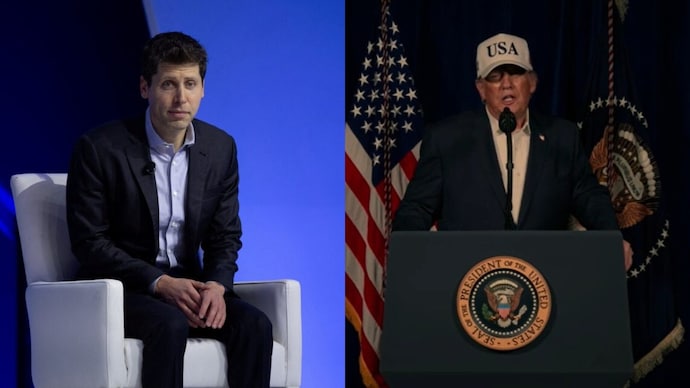

OpenAI CEO Sam Altman has admitted that the AI startup should have taken more time before reaching an agreement with the US Department of Defense on the use of AI. OpenAI initially announced a deal with the Pentagon just hours after Anthropic lost its contract, which led to a massive backlash online.
At X, Altman revealed that OpenAI has updated its contract with the Pentagon to ensure that its “principles” are clear.
❮❯
Why did OpenAI sign a deal with the Pentagon?
Sam Altman said that the real intention in rushing into the agreement with the Pentagon was to ensure that things did not escalate further between the US Department of Defense and the AI industry. Anthropic’s contract with the Pentagon was terminated after the AI company refused to remove its safeguards for unrestricted AI use.
However, Altman acknowledged that the whole situation looks “opportunistic and bad” for OpenAI. Altman stressed that he would keep this experience in mind in the future. “It’s a good learning experience for me because in the future we will be faced with high-risk decisions,” he said. Earlier, Altman had acknowledged that the prospects for OpenAI’s agreement with the Pentagon were not good.
The OpenAI boss said Anthropic should not be labeled a “supply chain risk” by the US government. He further said, “We hope that DoW will provide them the same terms and conditions that we have agreed upon.”
ChatGPT uninstalls surge as people switch to the cloud
Following OpenAI’s settlement with the Pentagon, users in the US began uninstalling ChatGPT. According to Sensor Tower, uninstalls of ChatGPT increased by 295 percent day-over-day on February 28. Anthropic’s cloud chatbot, on the other hand, saw an increase of up to 51 percent in downloads. The cloud also reached the number 1 spot on the Apple App Store in the US.
Pop star Katy Perry also shared a screenshot of a cloud with a heart on the

What has changed in OpenAI?
Sam Altman shared an internal memo stating that OpenAI’s systems could not be used for large-scale domestic surveillance on American citizens based on laws including “the Fourth Amendment to the United States Constitution, the National Security Act of 1947, the FISA Act of 1978, and the FISA Act of 1978.”
“The Department understands the extent of this prohibition of intentionally tracking, monitoring, or surveillance of U.S. persons or citizens,” the OpenAI chief said. Altman stressed the importance of protecting civil liberties and focusing on commercially obtained information.
Another thing in the agreement is that no intelligence agency of the US Department of Defense, such as the National Security Agency (NSA), will use OpenAI’s systems. He added, “Any services those agencies require will require subsequent amendments to our contracts.”
Although Altman does not explicitly mention autonomous weapons in this addition, he explained, “There are many things the technology is not yet ready for, and in many areas we do not yet understand the tradeoffs required for safety.”
The OpenAI CEO also said that he will not accept any unconstitutional orders from the US Defense Department on his AI systems, even if it means going to jail.