





Meet former meta AI scientist Soumith Chintala, who joins Mira Murati at the Thinking Machines Lab
PyTorch co-creator Soumith Chintala has joined Thinking Machines Lab, founded by Mira Murati. The move signals a new wave of innovation in AI research focused on human-AI collaboration.

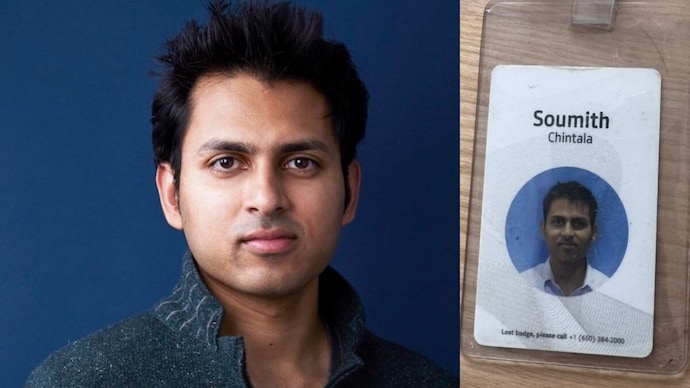


Soumith Chintala, one of the most recognized names in artificial intelligence and a major force behind PyTorch, has found a new home. The former Meta AI researcher has joined Thinking Machines Lab, the ambitious startup founded by ex-OpenAI CTO Mira Murati. The move is Chintala’s first major move since leaving Meta earlier this month, and it’s already making headlines across the AI world. He confirmed the news on


He also updated his X bio and LinkedIn profile to reflect his new role at the company. The appointment adds yet another boost to the rapidly expanding AI venture that has become one of Silicon Valley’s most watched projects of the year.

Meet Soumith Chintala: From PyTorch pioneer to the new AI frontier
Chintala’s name is practically synonymous with PyTorch, the open-source AI framework he co-created during his time at Facebook’s AI Research (FAIR) Lab. The platform became one of the most widely adopted tools in both academia and industry, powering research and production systems at major technology firms and universities.
In a farewell post earlier this month, Chintala reflected on her 11-year journey at Meta, writing that PyTorch has evolved into a framework used “in almost every major AI company in production” and “taught in classrooms from MIT to rural India.” He said he was ready to do “something small, something new, something uncomfortable”.
His decision to join Murati’s startup comes as Meta is undergoing significant restructuring within its AI divisions. Over the past year, the company has been hiring aggressively, pulling talent from rivals like OpenAI, Google DeepMind and Apple, while reshaping its research teams under a new “Superintelligence Labs” division led by former Scale AI CEO Alexander Wang.
Meanwhile, Meta’s chief AI scientist Yann LeCun, FAIR’s founder and one of Chintala’s longtime advisors, is reportedly preparing to exit the company, signaling the end of an era for Meta’s AI research wing.
A new chapter with Mira Murati
The Thinking Machines Lab, unveiled by Mira Muratti in February following her departure from OpenAI, describes itself as an “AI research and product lab” focused on advancing human-AI collaboration. Although still in its early stages, the startup has quickly become a magnet for top AI minds across industry and academia.
Chintala’s arrival adds to an already star-studded roster that includes figures such as ChatGPT co-creator John Shulman; researcher Alec Radford; and Bob McGrew, former chief research officer of OpenAI. According to Business Insider, Thinking Machines is offering salaries of up to $500,000 for technical roles, with many employees reportedly earning between $450,000 and $500,000, excluding bonuses and equity.


According to Bloomberg, the company made headlines earlier this year when it raised a seed round of $2 billion at a valuation of $10 billion and is now in talks to raise funds at a staggering valuation of $50 billion.
Murati’s venture has already launched its first tool, Tkinter, a system that simplifies fine-tuning large language models. The product is currently being tested by researchers at Princeton and Stanford, as well as early enterprise customers.
For Chintala, joining the Thinking Machines Lab represents both a new beginning and a return to practical experimentation. In his farewell post, he indicated that the timing felt right: PyTorch, he wrote, had reached a point where it “could flourish without him.”
With their deep technical expertise and Murati’s product vision, the partnership could shape the next phase of AI research, focused less on scale and more on how humans and machines can think together.