





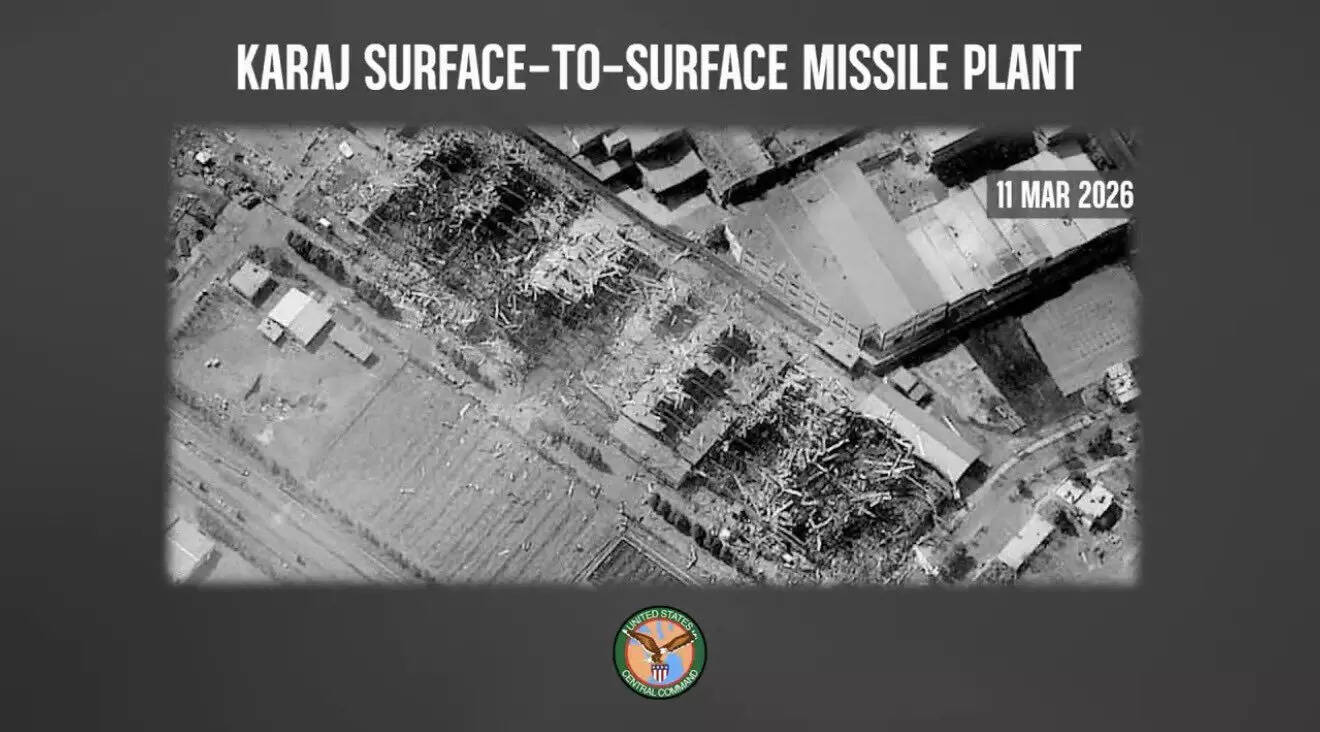
Satellite images released with the statement showed that structures visible on March 1, including long assembly halls and supporting buildings at the Karaj plant, were reduced to debris by March 11, with many buildings completely collapsed.


The extent of the damage suggests that the facility is no longer operational. The attacks appear to have been precisely targeted, with no impact visible beyond the site in the available frames.

The development comes amid a broader US campaign against Iran that includes counter-proliferation strikes, maritime security operations and cyber and electronic warfare efforts, along with coordination with allies to destroy Iran’s fighting capabilities. As part of these operations, the US has also deployed B-1 bombers using 5,000-pound warheads to target threats to commercial shipping in the Strait of Hormuz.The strategic waterway, which handles about 20% of global oil shipments, has been affected by the ongoing conflict. Several countries, including the UK, France, the Netherlands, Italy and Japan, have expressed willingness to support efforts aimed at ensuring freedom of navigation in the area.Military assessments based on open-source data show that Iran’s missile launch capability has declined significantly since late February. According to Gulf News, estimates indicate cumulative launches of about 1,100 to 1,700 missiles, with an initial increase of over 400 on the first day, followed by a decline of 86–94% in early March and lower daily figures. Analysts say this reduction points to a “harassment-level” capability, with sporadic missile launches likely to be hampered by the low number of operational launchers and low production capacity. Continued American and Israeli air operations are seen as contributing to this decline.However, the risk remains. Iran is believed to maintain a diffuse network of facilities and capabilities, including proxy forces and cyber equipment, that can be used in a response below the level of conventional war.Meanwhile, Israel launched fresh strikes on Tehran early Friday after Iran fired missiles overnight. The Israeli military said its forces had “launched a wave of strikes targeting the infrastructure of the Iranian terrorist regime in Tehran”, without giving further details, AFP reported.Officials caution that these assessments are based on publicly available information and may be affected by the “fog of war”, meaning actual figures may differ. Nonetheless, current trends indicate a continued decline in Iran’s missile capabilities unless there is a cessation of hostilities.