



How Asha Bhosle became the queen of Indiapop?
Remembering Asha Bhosle’s transformational journey across Indian musical genres. Read on to know why this legendary singer was called the Queen of Indipop
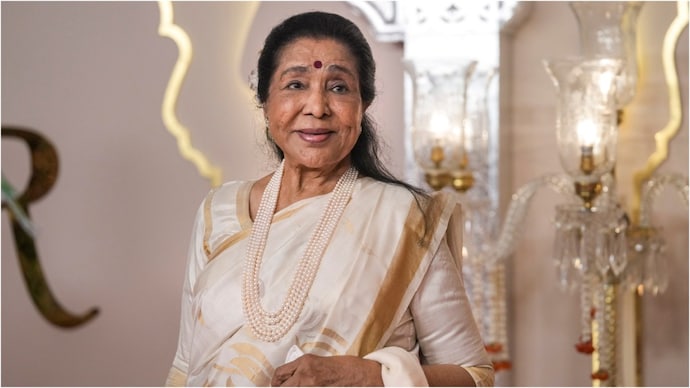

Asha Bhosle died on Sunday at the age of 92 at Breach Candy Hospital in Mumbai. He was admitted last evening after suffering from extreme fatigue and chest infection. The last great voices of the golden age of Hindi cinema are gone. But if there is one thing that Asha Bhosle’s story tells us, it is that she was never satisfied with just one era or just one style.
❮❯
Most people know her as the playback queen of Bollywood. What is often overlooked is that in the 90s, when most singers of her age were closing in, Asha Bhosle was once again breaking out as a pop icon.
Why is Asha Bhosle called the queen of Indiapop?
The 1990s were a strange and exciting time for Indian music. From cabaret songs of the 60s and 70s to ghazals of the 80s, Asha had dominated the film music landscape for many decades. But when the Indipop wave hit and non-film albums started selling independently, MTV India launched and audiences suddenly wanted music that didn’t need a film to accompany it. Asha did not move even a single step. He stepped inside.
She was released in 1997 please understand darlingA personal indipop album created with musician Leslie Lewis. It was a huge hit and won him an MTV Award that year. Here was a woman in her mid-sixties, sharing time on the MTV stage with artists half her age and winning.
However, what made her the queen of the genre wasn’t just an album. It was the fact that she understood what pop music needed: energy, playfulness, and the ability to connect across generations. His work ranged from classical to popular, fusion Indipop and Bhangra projects, and he recorded songs with artists such as Boy George and Michael Stipe. She was a veteran Bollywood actress who was actually also a pop star.
How did she move from Bollywood to pop music?
Asha Bhosle never really stopped making changes. His entire career was one long, restless reinvention.
She began singing professionally as a child, along with her elder sister Lata Mangeshkar, to support her family after their father’s death. In the early years of his career, he was handed songs that no one else wanted – vamp numbers, cabaret tracks, B-movie stuff. He took them and made them his own.
By the 1960s and 70s, such songs had become his identity. She became the voice of Helen, Bollywood’s most iconic dancer. their collaboration on songs like Piya you come now, O beautiful lady with beautiful hair And this is my heart Stay dear till today. Then came the time of his life with RD Burman, where he completely mastered a new western-influenced sound. Then came the ghazals. Then classical collaboration. Then pop.
Her pop transformation wasn’t a sudden leap. It was the natural next step for a singer who refused to be put in a box for decades.
Which albums made them pop icons?
Four albums, in particular, defined her pop legacy:
please understand darling (1997) – This is the one that changed the conversation. Made with Leslie Lewis, one of Indipop’s most renowned producers, the album was a major success and was awarded several music awards. This showed that Asha’s voice not only fits into pop, but elevates it.

make eye contact sometime (1997) – This duet with Adnan Sami became one of her most famous pop collaborations, the pairing of their voices created a classic that is still played at weddings and playlists across the country.
Rahul Aur Me (2000) – More More than a pop album, it was more of a tribute. The album consisted of remixed versions of RD Burman’s compositions and brought an entirely new audience to music that was originally recorded decades earlier. Young listeners rediscover Pancham-da through the voice of Asha.
hope for you (2002) – Often overlooked in conversations about his pop work, this album deserves more credit than it gets. we would not have died It became one of its standout tracks – a song that found its way into living rooms, radio stations and mixtapes with equal ease. The album showed a softer, more intimate side of Asha’s pop sensibility, which contrasted with the energy of her please understand darling But equally tolerant.
Apart from specific albums, he also collaborated with international artists – British band Cornershop also dedicated their 1997 song Brimful of Hope to him, which topped the UK Singles Chart in 1998. A Bollywood playback singer who topped the charts in Britain. This is the scale of what he created.