



Google Brain founder warns of AI talent shortage, shares 3 tips to get a job in 2026
While fears of AI replacing human jobs are growing, Google Brain founder Andrew Ng says the real challenge is the lack of people who can actually build AI systems. He shares 3 tips that can help engineers and researchers get jobs in cutting-edge technology.
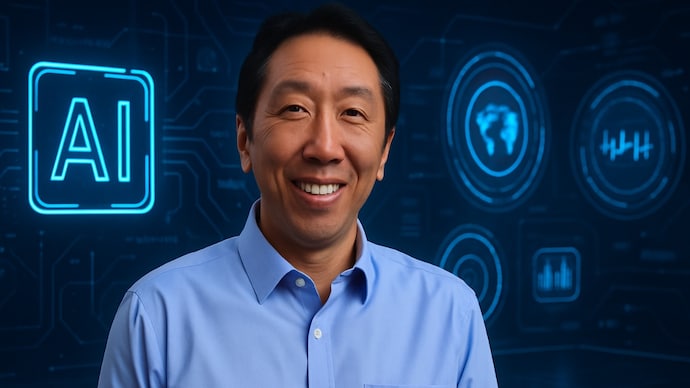

While the world is worried about artificial intelligence taking over human jobs, Google Brain founder Andrew Ng believes the real problem facing the industry is the opposite. According to Ng, there simply aren’t enough people to build AI systems. In a recent post on X, he argued that the tech industry is actually facing a serious talent shortage, even as companies are pouring billions of dollars into building AI.
Andrew, one of the most influential voices in Silicon Valley, emphasizes that AI is becoming smarter and more powerful, but it still relies heavily on human expertise, especially in engineering, system design, and real-world deployment. However, even though AI adoption is increasing, he says there is not enough talent to meet that demand. Andrew revealed that every year he hears the same question from students and early career professionals: Does learning AI still make sense when automation is advancing so rapidly? And the answer is always a straight yes.
According to Andrew, the increasing use of AI in industries has actually created more demand for engineers, researchers, and system builders. They wrote, “Another year of rapid AI progress has created more opportunities than ever for anyone – including those just entering the field – to build software. In fact, many companies can’t find enough skilled AI talent.”
In his post on X, Andrew – who is also the founder of Coursera – also shared three practical recommendations for anyone hoping to get an AI-related job by 2026.
Three Tips to Get AI Related Jobs
The first suggestion is to build an AI system, not just a prototype or demo. Andrew cautions that many people stop at doing surface-level experiments, like running pre-trained models or piecing together APIs. While these skills are useful, he suggests that employers are increasingly looking for candidates who understand how AI systems function from start to finish, including data collection, model training, evaluation, deployment, and maintenance in real-world environments. He says that the focus should be on this.
His second recommendation is to constantly practice building AI systems. Andrew cautions against jumping straight into building without understanding the fundamentals, but he is equally critical of those who only study the theory. Without practical experience, he believes developers often “re-invent the wheel” or create fragile systems that fail en masse. According to Andrew, regular practice turns theoretical knowledge into job-ready skills.

The third tip he shared is more optional, but still valuable: read research papers selectively. He points out that research is not mandatory for everyone entering this field, but it can be a huge advantage for those who want to work on cutting-edge problems. He says that reading papers helps developers understand why certain technologies exist and how they evolved, especially when combined with practical building.
Interestingly, this is not the first time Andrew has vehemently opposed the idea that AI will take over human jobs. Speaking to NBC News in an interview on the sidelines of its AI developers conference in November, he argued that today’s systems still require enormous human effort to train, fine-tune and deploy, making artificial general intelligence a distant prospect.
“I look at how complex the training methods are and how manual AI development has become today, and there’s no way it’s going to get us to AGI on its own,” he told NBC News. “When someone uses AI and the system knows some language, it takes a lot more work than is widely appreciated to prepare the data, to train the AI, to learn a set of things,” he said.