





The remote Greek island of Gyros, once synonymous with isolation, imprisonment and political persecution, is today gaining recognition for a dramatically different reason. The uninhabited island in the Cyclades, which was used for decades to deport and imprison political dissidents, has become a vital refuge for the endangered Mediterranean monk seal, one of the world’s rarest seal species. With human activities around the island strictly managed and the waters around it protected, Gyros now supports monk seals along with rich underwater habitats and sea bird colonies. Its transformation from a place of feared confinement to a protected marine sanctuary represents a remarkable intersection of difficult human history and ecological recovery.
How a terrifying Greek prison island became a haven for rare seals
Gyros is located in the northern Cyclades, surrounded by the blue waters of the Aegean Sea. Its isolation and harsh landscape once made it an ideal location for officials seeking to keep prisoners away from the rest of society. Thousands of political prisoners and dissidents were imprisoned there in the 20th century, particularly during periods of political turmoil in Greece.Today, the absence of permanent human settlement has left wildlife with an unusual level of space. Mediterranean monk seals use the island’s coastline, including sea caves and open beaches, to rest, breed, and raise their young. Gyros has become a place where monk seals can raise their pups while sea birds nest on its inaccessible rocky cliffs.Gyros has been associated with exile since ancient times, but its modern reputation was formed by its use as a prison island during the 20th century. Political prisoners were sent there during the turbulent years surrounding the Greek Civil War, and the island was later used again under Greece’s military dictatorship.Its remote location, limited resources, and adverse conditions made imprisonment particularly harsh. The abandoned prison complex and other remains still remind of this difficult period of Greek history.The island has remained uninhabited since the prison era ended, leaving behind a landscape where physical traces of human suffering now coexist with increasingly important wildlife habitats.

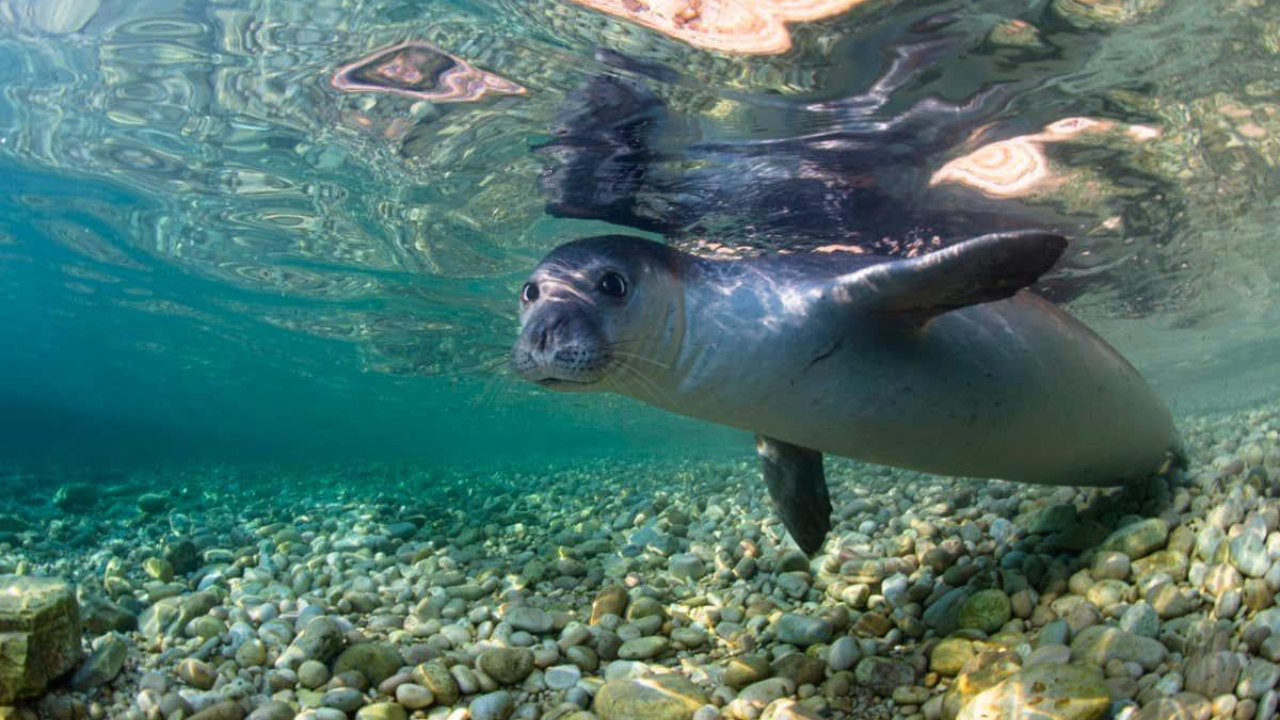
One of the world’s rarest seals finds refuge here
The Mediterranean monk seal, Monachus monachus, is one of the world’s rarest pinnipeds and remains a conservation priority throughout the Mediterranean. Once widespread, the species suffered severe declines due to deliberate killing, habitat disturbance, entanglement in fishing gear, and loss of suitable coastal habitat.Gyros has emerged as an important habitat for this species. Its relatively undisturbed coastline provides the privacy that monk seals need to rest and breed, especially during sensitive periods when mothers are caring for pups.It is especially important to protect these areas as disturbance near breeding and resting sites can place additional pressure on vulnerable seal populations.
The waters around Gyros are also rich with life


Gyros’ ecological importance extends far beyond the seals seen on its beaches. Beneath the surrounding Aegean waters are Posidonia oceanica seagrass meadows, an important Mediterranean marine habitat that provides shelter and nursery grounds for many species.There are also coral formations in the deeper waters, while the island’s reefs provide nesting habitat for sea birds. Together, these environments make Gyros valuable as an interconnected marine and coastal ecosystem rather than simply a refuge for an endangered species.Recognizing this ecological importance, the marine area around Gyros was included in Europe’s Natura 2000 network in 2011. In 2019, Gyros and its surrounding waters became the first marine protected area in the Cyclades with specific management measures designed to protect its natural wealth.
Conservation efforts are helping protect the sanctuary
Protecting an isolated marine area presents its own challenges, especially when it comes to controlling activities such as illegal fishing.Monitoring systems using new technologies have greatly helped in reducing illegal fishing activities in the protected area. Scientists continue to collect information about the area’s ecology and fish populations to assess how effectively conservation measures are working.The conservation effort involves government officials, conservation organizations, scientists, local municipalities, and fishing communities. This collaborative approach aims to balance the long-term conservation of the island with the interests of communities in the wider Cyclades.
From symbol of isolation to oasis of life
Few places exhibit such a surprising reversal of purpose as Gyros. For generations its remoteness was used to isolate people from society. Today, that same isolation has helped create conditions in which vulnerable wildlife can find refuge from certain types of human disturbance.The history of the island has not been lost. The ruins of its prison remain part of the political and cultural memory of Greece, and conservation efforts are increasingly recognizing that Gyros has both historical and ecological importance.What was once chosen as a place of exile because it was remote and inaccessible to humans has become valuable partly for the same reason. Its calm shores now provide a place for Mediterranean monk seals to breed and raise their young, while its surrounding waters harbor seagrass beds and other marine life.So Gyros’ journey from prison island to protected marine sanctuary is not just a story of nature reclaiming an abandoned place. It is an example of how a landscape marked by a painful human past can acquire a new role, becoming a haven for some of the Mediterranean’s most threatened wildlife, while preserving the memory of those who once suffered there.