



From Phalke, Bahubali to KJO: Raja Ravi Varma’s legacy lives on in Indian cinema
Karan Johar’s Met Gala debut in a Manish Malhotra outfit was straight out of Raja Ravi Varma’s paintings. The tribute highlighted how the artist’s imagination continues to shape Indian cinema, costume design and popular culture.
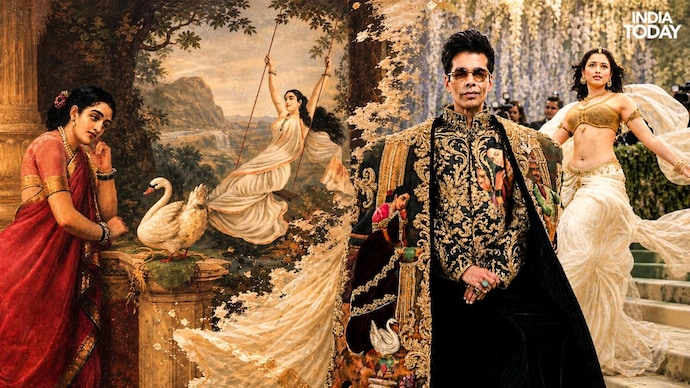

When Karan Johar walked the red carpet at the Met Gala 2026, his outfit caught everyone’s attention. Designed by Manish Malhotra, this look is directly inspired by the work of Raja Ravi Varma. It was a reminder that Indian cinema, fashion and classical art have long been closely linked, even if we don’t always notice it.
Raja Ravi Varma has shaped popular culture for over a hundred years. He was one of the first artists to depict Indian mythological characters in a way that feels grand but still relevant. He combined Indian stories with European painting techniques to create images that people could easily relate to. Over time, his work became the reference point for many mythical gods, monarchies, and epic stories.
❮❯
This visual language also influenced early Indian cinema. Filmmakers needed a reference point for what their characters should look like, and Varma’s paintings provided exactly that.
Influence of Raja Ravi Varma on Phalke
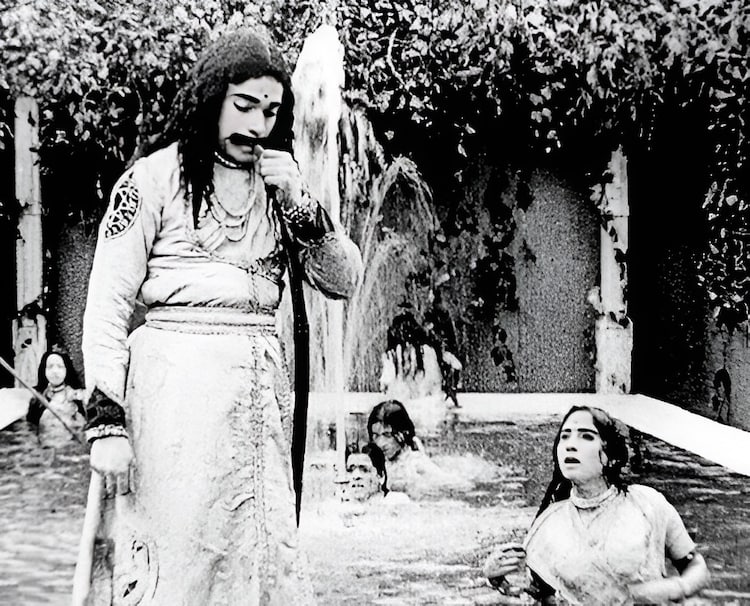
Raja Ravi Varma played an important role in shaping the work of Dadasaheb Phalke. Before becoming a filmmaker, Phalke worked at Varma’s printing press in Mumbai, where he observed how mythological stories were transformed into popular mass-produced images. It stayed with him. When Phalke, known as the father of Indian cinema, later made films like Raja Harishchandra And Mohini Bhasmasur, The costumes, poses and overall look clearly reflect the painter’s style.
That influence hasn’t really gone away. Even today, many filmmakers return to the same visual style. Take Sanjay Leela Bhansali for example. His films often look like paintings. In Devdas, Bajirao Mastani And padmavat You see rich colors, dramatic lighting and carefully rendered characters that feel close to Varma’s style of work. The overall presentation has the same sense of detail and drama.
You can also see it in mythological and fantasy films. In Baahubali: The Beginning And Baahubali: ConclusionDirector SS Rajamouli creates a world that feels both grand and familiar. The way the royal characters look and the larger-than-life moments on screen reflect a visual style perhaps partly shaped by Ravi Varma.
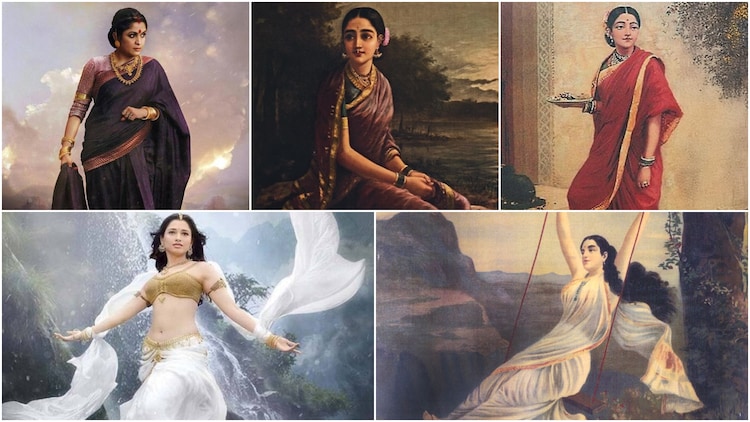
The royal feel, costumes and lighting, all shaped by Ram Rajamouli, have his touch. The characters of Sivagami and Avantika, played by Ramya Krishnan and Tamannaah Bhatia, are reminiscent of the strong, beautiful women seen in Varma’s paintings. From the nine yards of flowing sarees to the rich colors and dramatic lighting, the film feels as if his art has been brought to life on screen.
Ravi Varma’s legacy in film fashion and beyond
Fashion has also silently followed suit. Costume designers in films have long taken inspiration from her paintings – from the way she wore the saree to the choice of jewelery and clothes. These details, though often subtle, help shape the way audiences recognize a “period” or “traditional” look on screen.
This is what made Karan Johar’s Met Gala appearance different. Wearing outfits inspired by iconic Ravi Varma paintings, she brought that long-standing influence into clear view. The design translated elements such as drape, lighting and ornament into modern form, showing how the painter’s work can still be reimagined today.
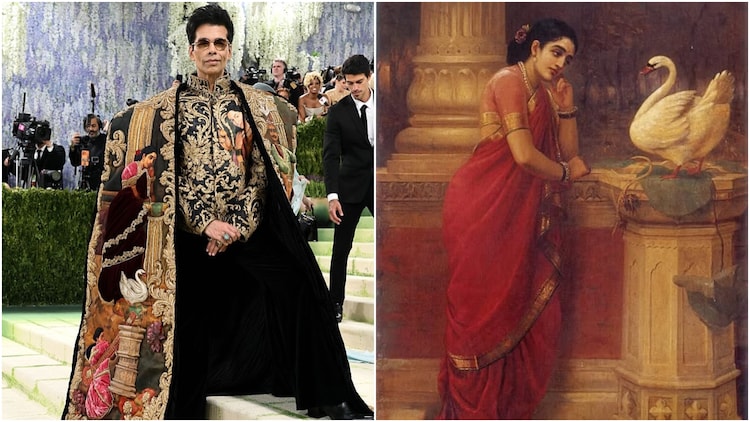

The costumes featured paintings including Hamsa Damayanti, Kadambari, Arjuna and Subhadra, and There Comes Papa. Its surface features gold details hand-painted by traditional artisans, applied directly to the garment like brushwork on canvas.
Raja Ravi Varma remains relevant because his images are deeply part of everyday life. His versions of figures like Goddess Lakshmi and Goddess Saraswati are not just paintings, but images that people instantly recognise. For cinema, which relies heavily on visuals, this has been extremely important.
When Bollywood told its story of Ravi Verma
Interestingly, Bollywood has not only borrowed from Ravi Varma’s style but has also tried to tell his story. Rang Rasiya, starring Randeep Hooda, is based on his life, exploring both his artistic talent and the controversies surrounding his work. Directed by Ketan Mehta, the film explores how Varma’s bold portrayals, especially of women, challenged the social norms of his time. Its release was delayed and sparked much debate.
His presence has continued in other forms as well. In 2020, Chennai-based photographer G Venkat Ram created a calendar that re-imagined Ravi Varma’s paintings as photographs. It included popular names from the South film and dance world like Shruti Haasan, Samantha Akkineni, Ramya Krishnan, Shobhana and Lissy Lakshmi.
In many ways, Ravi Varma’s work has been shaping how India sees itself, on screen, on stage and even on the red carpet. From early films to contemporary fashion, the connection remains strong, even when it is not always acknowledged.