





A farming family in Northern Kentucky has turned down a $26 million offer from a Fortune 100 company seeking to build a massive AI-linked data center, instead opting to keep the land they say is worth far more than the money.The Huddleston family’s decision has drawn attention as the clash between expanding digital infrastructure and long-occupied agricultural land continues to fuel tensions in parts of the United States.
A generational farm at the center of growing controversy
The Huddleston family’s 1,200-acre farm in Mason County, Kentucky has been raising cattle for generations, supplying a wide area. The land has lived through major historical periods, including the Great Depression, when the family helped feed local communities. That continuity is now under pressure. According to Delcia Baer, a family member, an unnamed company approached them last April with an offer of $26 million for the approximately 900-acre property located just outside the Maysville city limits. The plan is to build a large-scale data center campus. “The pain in the heart that she could go (to the ground), that’s the first thing I feel. It’s really a pain in the chest right where the heart is,” Baer told Live 5 WCSC.

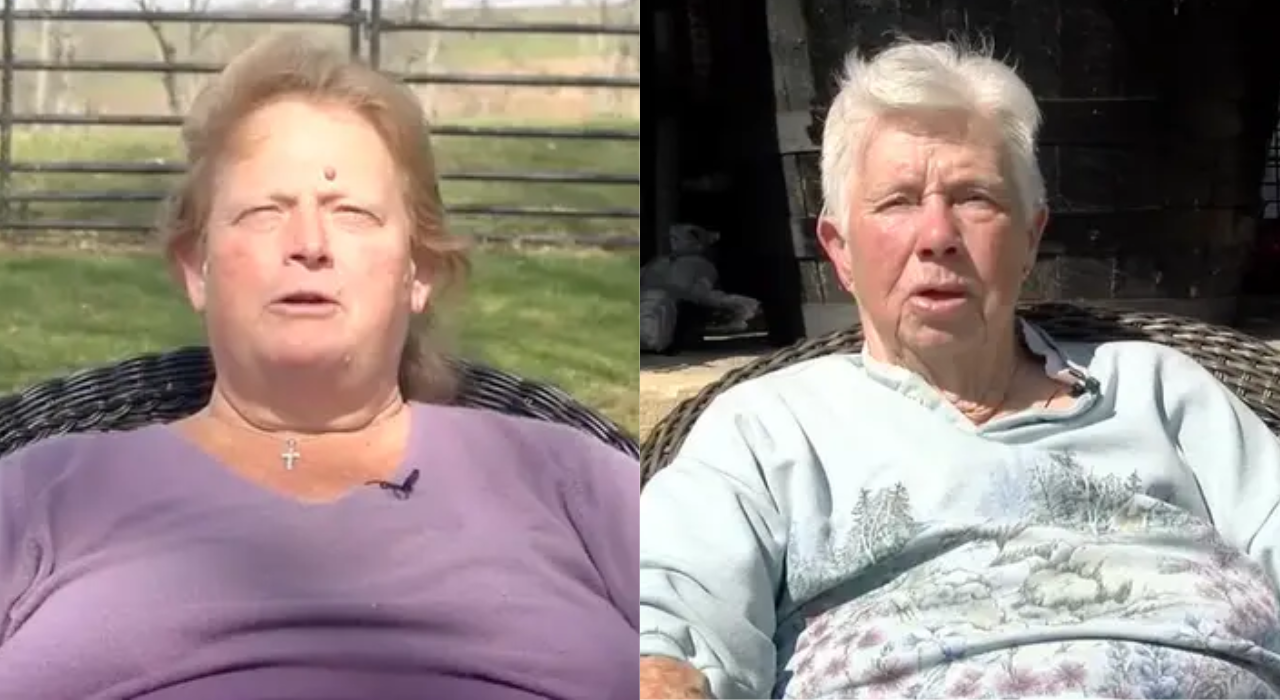
Delsea Baer and her mother, Ida Huddleston, rejected a $26 million offer, calling the generational Kentucky farmland priceless/ Image: Fox 19
His mother, Ida Huddleston, rejected the proposal outright. “I said, ‘No, mine is precious.’ I want to carry forward what I have got here. What God asked me to do was to keep it with me until I pass away and then pass it on to the next generation,” she said.
a project of economic importance


The proposed development would extend beyond the Huddleston land. Plans indicate the rezoning of 28 properties, covering more than 2,000 acres in total.Matt Wallingford, Maysville city manager, told the outlet that the scale of the potential project is significant, calling it “a big deal for us.” Wallingford said the data center could generate more than 1,000 construction jobs over eight to 10 years, as well as more than 100 permanent roles averaging $100,000 per year. He also said the state tariffs would require the company to finance additional infrastructure. “I know it’s a lot, but I know the state of Kentucky passed a tariff under which the project must pay for all the power, so that means building a second power plant equivalent to the power plant we have now, at no cost to the taxpayers. There will be no rate increase for those receiving power from RECC,” he said. He said the facility would use a closed-loop water system to reduce the risk of contamination, and its waste output would be comparable to existing large retailers or factories.
Concerns about land, water and long-term impacts
For the Huddleston family, the matter extends beyond a sale. They have raised concerns about pressure on water systems, pressure on the electricity grid and permanent loss of fertile agricultural land. “They call us all stupid farmers, you know, but we’re not. We know when our food is disappearing, our land is disappearing,” the family said. Wallingford acknowledged those concerns but suggested that the value of the land could still be retained even if its use changed. “I would agree with that,” he said. “But that doesn’t mean the buildings can’t be reused with the infrastructure there. Our industrial authority will recruit a new business to come in, so I think that land will be valuable regardless of whether the data center is there.”
“Mine is precious”
For Ida Huddleston, the decision is also personal. Her house on this land was built by her late husband, and she says she wants to live there. “He’s here with me all the time and tells me what to do with the farm the next day and the next day, exactly how he wants it. He was something else,” she said. Both she and Baer have made clear that any financial proposal will not change their position. The family has said it will continue to oppose the proposed development, even as pressure grows from a project that local officials say could reshape the area’s economy.