



Dhurandhar 1 vs Dhurandhar 2: Which movie owns the war that started it?
Is Dhurandhar: The Revenge better than its prequel? Aditya Dhar returns just a few months after the first film hit the screens, but does the sequel change the way we look at this cinematic world? Here’s a closer look.
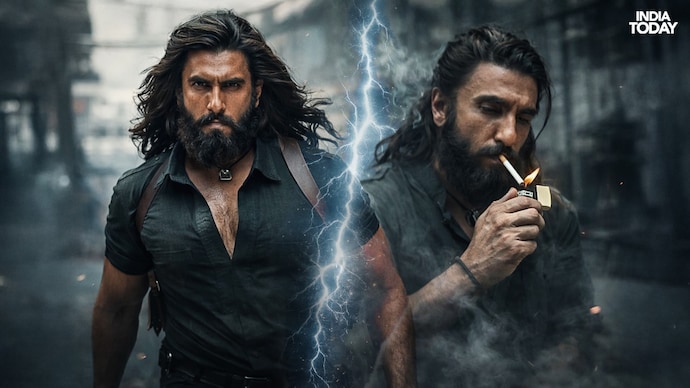

Dhurandhar: Revenge It comes across exactly as it was expected: loud, political and exactly what it wants to say. Aditya Dhar does not back down. If the first film introduces a world, the second steps into it with much more authority. But the real question is not of scale. It’s about this change. What changes between the two films, and how that change impacts the larger narrative.
❮❯
in its heart, Dhurandhar: Revenge it’s a great movie. More violence, more emotion, more confrontation and far more visible politics. It traces the rise of Ranveer Singh’s Hamza Ali Mazari – from a young Indian soldier named Jaskirat Singh Rangi to a man who not only infiltrates Pakistan’s criminal-terrorist network but begins to control it. The change is not considered as a turning point. It is stretched, tested and pushed until it becomes the most intense force in the film.
There was a big field, there are 2 big games
where first stalwart Lean in style and set-up, vengeance Moves towards results. The previous film was more interested in building a world – introducing its players, establishing its tone, and laying the groundwork. There was a certain sleekness, even restraint, about it. The second film ends that restraint. It takes that same world and pushes it into a harsher, more direct space. If the first part sets the board, the second plays the game, and plays without mercy.
Technically, the language of both the films is similar. Dhar often keeps experimenting with visual form in this sequence. A tight, almost uncomfortable close-up will suddenly give way to a wide, sweeping top shot, which will change perspective without warning. This is not done just for effect. This becomes part of how the film communicates tension. Both films are equally assured on this front, with a visual grammar that is deliberate and controlled.
music and more
The music follows a similar pattern. The first film had the advantage of familiarity – tracks that were easier to connect with were easier to remember. vengeance It doesn’t have that advantage, but it understands placement. Its music works best when it supports the narrative, especially in the latter half where the film relies heavily on pace.
What really separates the two is intention. stalwart It seemed as if he was preparing to say something. Dhurandhar: Revenge It says it – directly, and without hesitation. It places greater emphasis on the state approach, linking the fight against terrorism to the larger political message. It names events, references real changes, and creates a series that sees its story as a “changing new India”.
From demonetisation to the Babri Masjid verdict, from the murder of gangster Atiq Ahmed to the emergence of a certain “tea seller“And one more”honest“Leadership in Uttar Pradesh, the film draws from recent history and juxtaposes it with its own imagination. The unmistakeable allusions to Prime Minister Narendra Modi make it hard to ignore the film’s political leanings. The references are not subtle, and the film makes no attempt to do so. What works is that they don’t disrupt but get absorbed into the narrative.
world of stalwart has always been driven by men, and this remains unchanged. But the second film takes it further. Masculinity is more intense, more visible, sometimes overwhelming. The story is still about a man and his quest for revenge, but the scale of that quest feels larger here. The stakes are no longer just personal; They are presented as part of something larger, more symbolic.
more character-driven
The second film gives its supporting cast more room to exist. Sanjay Dutt, Arjun Rampal and Rakesh Bedi are no longer just part of the setup. He is an active participant in the story. Each performance has its own weight – Dutt has a grounded presence, Rampal holds back enough to remain effective, and Bedi brings an unexpected layer to her part. It’s not just the casting but where the writing allows them to capture.

Ranveer Singh remains at the center of all this. His performance in the second film is less about holding back and more about letting go. There is a clear shift from control to release from the first part. It works because the movie demands it. The character has moved beyond the conflict; He is now defined by it.
Writing also reflects this change. The first film dealt with the inside story, focusing on the infiltration and the movement that had just begun. The second film turns outwards. It is more assertive, more direct and more inclined to confrontation. At times it even feels like the film is asking you to engage with it beyond what you see on screen – to read its references, to question its alignment, to respond to its certainty. And then comes the final stop.
the end is more
Dhar saved his most effective moves for the end. The film builds towards a revelation that at first glance seems predictable and almost expected. But what it offers is something else. The surprises that were anticipated fade into the background – something that proves Dhar’s control over the narrative, proving that he knows exactly when to withhold information and when to release it. The film brims with anticipation and often triumphs.
Dhurandhar: Revenge No interest in remaining neutral. It takes a position, sticks with it, and builds its story around that certainty. It talks of a “new India” but also attempts to define a new kind of mainstream Hindi cinema, one that is comfortable being direct, even divisive to some.
If stalwart There was preparation, Dhurandhar: Revenge Is execution. Creates a land. The other one claims it. And somewhere in between, it becomes difficult to draw the line between cinema and statement.