



Boong review: A gentle Manipuri coming-of-age film with a lot of heart
Boong will re-release in theaters on March 6 and this is an opportunity for cinema lovers to give the film its due. The film, which recently won the BAFTA Award for Best Children and Family Film, is much more than just a children’s film. At a time when strong storytelling is often confused with meaningful filmmaking, Boong stands out for its warmth and honesty.
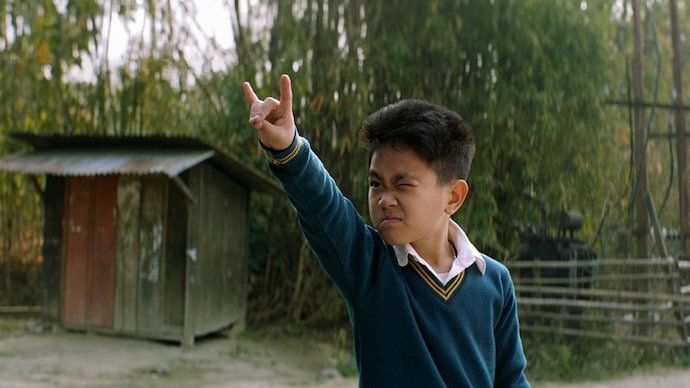

Directed by debutant filmmaker Lakshmipriya Devi, this Manipuri up-and-coming drama revolves around a 9-year-old boy named Brojendra Singh aka Boong, played by the charming Gugun Kipgen. The story centers on her stubborn, innocent search for her missing father near the Myanmar border, even when the adults around her have already accepted the worst-case scenario.
what makes boong The special thing is how simple it is. There’s no grand spectacle here, no dramatic background score telling you when to cry. Instead, the film slowly gets into your heart through small, everyday moments. A mischievous schoolboy, a concerned mother and a friendship that feels beautifully real.
❮❯
Many years have passed since Boong’s father disappeared. Despite unanswered phone calls and voice messages, Boong is convinced that he is alive. He wants to surprise his mother Mandakini with the ‘gift’ of his father’s return. While the village has accepted the father’s death, Mandakini’s refusal to accept it boosts Boong’s determination. And, accompanied by his best friend Raju (Angom Sanamattam), Boong ventures into the unknown, traversing the complexities of the border town of Moreh and even crossing into Myanmar.
on the surface, boong Plays like a classic coming-of-age adventure. A boy believes his father is alive and decides to prove it. But the film quietly presents that innocence against the tense social and political backdrop of Manipur. Boundaries, identity and belonging exist in the background, never shouted, always felt.
It’s a delicate balance, and Lakshmipriya Devi handles it with surprising maturity for a feature film debut. His story is based on lived experience and authenticity shines through in every frame. The Manipuri landscape is not just a beautiful sight but becomes part of the emotional existence of the film.
The story is told from Boong’s innocent point of view. Because of this, the serious issues surrounding them, such as ethnic tensions, separatist conflicts, and cultural stigma, seem to be a normal part of daily life. The camera shows small moments of their world, where prejudice and patriarchy are visible in everyday situations without over-dramatization.
His actions, such as changing the name of his school board to ‘Homo Boys School’, reciting Madonna like a Virgin Saying morning prayers or calling a scoundrel a “second-hand foreigner” makes you laugh, but it also shows what kind of environment he’s growing up in. The film handles these topics gently, choosing a quiet, thoughtful style rather than directly preaching its message.
boong Also touches on the internal-external debate. Raju’s father Sudhir (Vikram Kochhar) is warned to stay away from local matters after helping Mandakini in dealing with the village head. Despite his family having lived in the area for over a century, Sudhir still faces discrimination due to his Marwari heritage. The situation reflects how immigrants from the Northeast are often treated in other parts of India (not long ago, three women from Arunachal Pradesh and Manipur were subjected to racial insults in Delhi).

The bond between Boong and Raju really drives the film. Both boys are struggling with losses. Boong is growing up without his father, while Raju lost his mother in his childhood. Their friendship progresses through constant arguments and reconciliation, much like childhood friendship.
The performances are unscripted and feel real. Gugun Kipgen, who plays the lead role, imbues the film with a sweet mix of mischief and vulnerability. She is the USP of the film. Then there is Bala Hijam as Boong’s mother Mandakini. His performance is restrained but quietly devastating. In a film full of children’s curiosity, innocence and optimism, she represents the weight of reality.
boong Doesn’t try to impress you. It simply tells a story – tenderly, honestly and with a lot of heart.
At a time when mainstream cinema often prioritizes scale over soul, boong Reminding you that sometimes the most powerful stories come from the smallest voices. And in this case, that voice is that of a stubborn little boy who refuses to stop believing.
And by the time the movie ends, you’ll realize that you’re supporting him just as intensely.