





Anurag Doval’s ‘Final Drive’ gets 80,000 views: What it says about the cost of living online
After YouTuber Anurag Doval’s car crashed during a livestream watched by thousands of people, questions emerged about the pressures of living a life online. From Armaan Malik to creators like Kusha Kapila, the influencer economy is forcing deeper conversations about the personal cost of constant visibility.

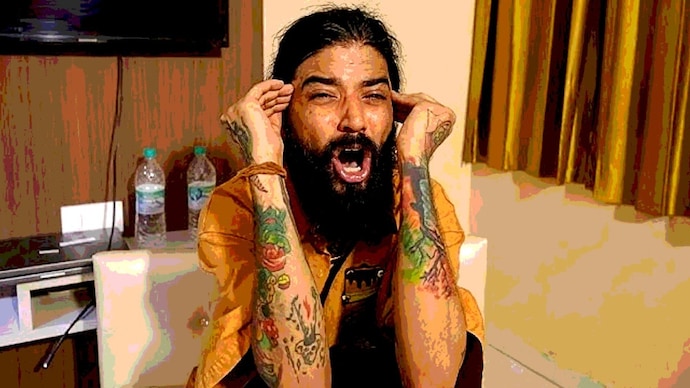


When YouTuber Anurag Doval’s car met with an accident during his recent livestreaming He called his “final drive”, Thousands of spectators were watching. The incident quickly became another viral moment in the influencer ecosystem. But beyond shock value, it also opened up a difficult question about the culture created by social media: What happens when a person’s entire life becomes complacent?
For many influencers today, there is barely a boundary between the personal and the public. Relationships, family fights, celebrations, breakups – everything can be transformed into a video.
❮❯
And once audiences become accustomed to that access, it’s not easy to go back. Doval’s life has been conducted online for years. His followers have seen everything He was talked about everything from family differences to his marriage. Recently, those conflicts turned into public allegations against her parents and brothers, whom she claimed were trying to torture and disown her.
The live-streamed accident added another dramatic chapter to a life that was already steadily taking shape in front of the cameras. But Doval is not alone.
Influencer Armaan Malik has gained a massive following on YouTube by sharing his personal life with two wives. The videos bring in millions of views, but they also invite constant criticism and moral policing online.
This is how comedian and creator Kusha Kapila got it. His personal life became public discussion When viewers noticed that she had stopped appearing in videos with her husband Zorawar Ahluwalia. Even before the couple confirmed their divorce, speculation was widespread on social media.
How quickly even creators like Ranveer Allahabadia have experienced this. Online attention can turn into scrutiny. The pattern is clear. The more life is shared online, the more viewers feel entitled to it.
life? Yes. Display? Also, yes
Actor, Mister India International 2017, Commonwealth Global Youth Ambassador and mental health advocate Darasingh Khurana believes that this culture is slowly changing how people experience their lives. Khurrana, a close friend of late actor Sushant Singh Rajput, started working actively in the field of mental health after Rajput’s death in 2020. Soon after, he launched a facility aimed at making psychological support more accessible and affordable.
From that perspective, he sees something worrying in the influence economy. “Yes, the line between life and content is blurring,” he says, “Social media has created huge opportunities. Someone from a small town can suddenly reach the whole world. That part is amazing. But the problem starts when people stop living moments for themselves.”
He gives a simple example.
“If you’re sitting at dinner with your parents and instead of enjoying the conversation, you’re thinking about the next reel or camera angle, there’s already something wrong. Life should come first. Content should come later,” he explains.
According to him, constant exposure can create emotional dependence on public approval. “When ideas and choices begin to dictate how you feel about yourself, it becomes a very unstable place to be. One day you feel coveted. The next day you feel completely rejected.”
When pain goes viral
Another worrying change, Khurana says, is how the crisis may change online content itself. He recalls the aftermath of Sushant’s death: “After losing Sushant, I started noticing how mental health conversations happen online. Sometimes a person’s pain becomes something that people keep seeing.”
In real life, a breakdown will invite concern and support. Online, it could turn into a trending clip.
“If you see a friend struggling, you’ll sit with them, listen to them, help them,” says Khurana, “but on the Internet, that same moment can become something that people broadcast and comment on.”
He emphasizes that mental health struggles are extremely private moments and should not become a public spectacle.
The audience also plays a role
The Internet operates carefully. The more people watch, the more the platform pushes that content. This means that the audience is not just a spectator. Their reactions dictate what creators continue to share. “If extreme or emotional moments get millions of views, then naturally more of that content will be seen,” says Khurana.


This is a cycle. Creators learn quickly what works. The audience reacts to the drama and intimacy. The algorithm rewards it.
With time, normal life itself starts following the same pattern.
to be under constant judgment
For influencers, this constant attention can be exhausting. “Imagine living in a house with thousands of people standing outside your window giving opinions about your life,” says Khurana, adding that social media can feel like that.
Breakups, family disagreements, mistakes, events that were once private can suddenly become national conversations. The Internet rarely forgets. And online criticism often comes faster than sympathy.
So where should the line be drawn? There is no need to share everything. Some moments belong only to you and the people closest to you.
The real cost of online fame
Social media has made fame accessible in ways that did not exist before. Anyone with a phone can reach millions. But that visibility comes with a different kind of pressure – the pressure to remain visible.
For influencers whose income depends on attention, stepping away from the spotlight can seem risky. Yet the alternative is a life that is constantly open to decision. At some point, every creator living online faces the same tough choice: How much of their life are they willing to give up to stay relevant?
Because the Internet can reward consistent performance. But real life rarely survives well under permanent surveillance.