





A day in the life of an India taxi rider, what it’s really like to ride with co-operative Uber and Ola Challenger
With a 296% increase in two weeks, the government-backed service is booming on paper – but how is it on the road?



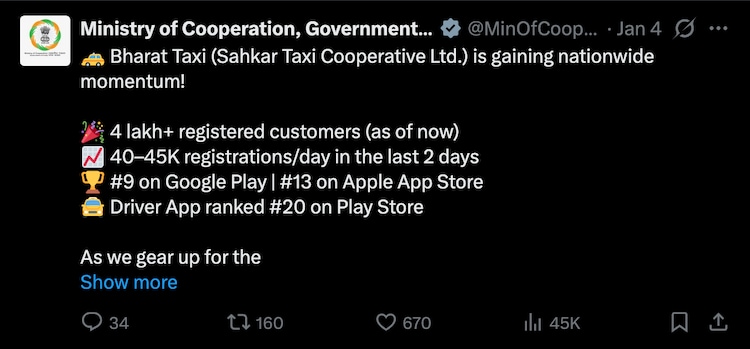
Bharat Taxi was officially launched in India on December 2, 2025. In a tweet posted on December 20, the Ministry of Cooperation called it a soft launch. It said 1.01 lakh users had registered for the cooperative-based ride-hailing service in 16 days. As of January 4, 2026, it had registered more than 4 lakh customers, which means it had achieved a growth of approximately 296.04% in just about two weeks.
Bharat Taxi app was released on Google Play Store on October 31, 2025 and has been downloaded more than 5 lakh times since then. Apple users have given it an average rating of 4.9, which puts it at number 38 among travel apps on the App Store (this is at the time of writing). These numbers are pretty impressive for a service that is yet to be fully launched to the public and is looking to take on established players like Uber and Ola. But as impressive as these figures are, they don’t tell the whole story.
Bharat Taxi’s work on the road is still in progress. ETAs are long, glitches are real and driver density is still increasing. But what is even more surprising is the lack of awareness. Very few drivers know about Bharat Taxi. By and large, they seem unaware of how it could change their lives. The word “co-operation” does not raise alarm bells for many people. Most of the people who have some idea and have started using it would prefer to wait and see what happens rather than jumping to any conclusions so quickly.
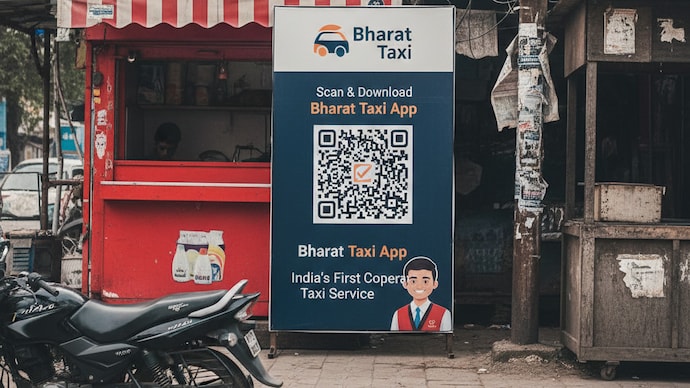
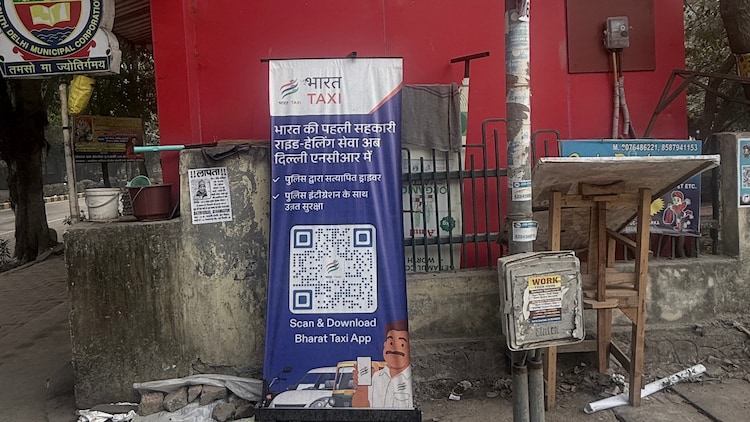
To be fair, Bharat Taxi doesn’t have the billion-dollar marketing budget of its competitors. The co-op model may seem like Amul – and in some ways it is – but it lacks a mascot and has not yet dipped its toes in the waters of witty, timely advertising. Recently, we have started seeing Bharat Taxi banners outside or next to Amul stores and flyers being distributed inside RWA societies encouraging people to download the app.

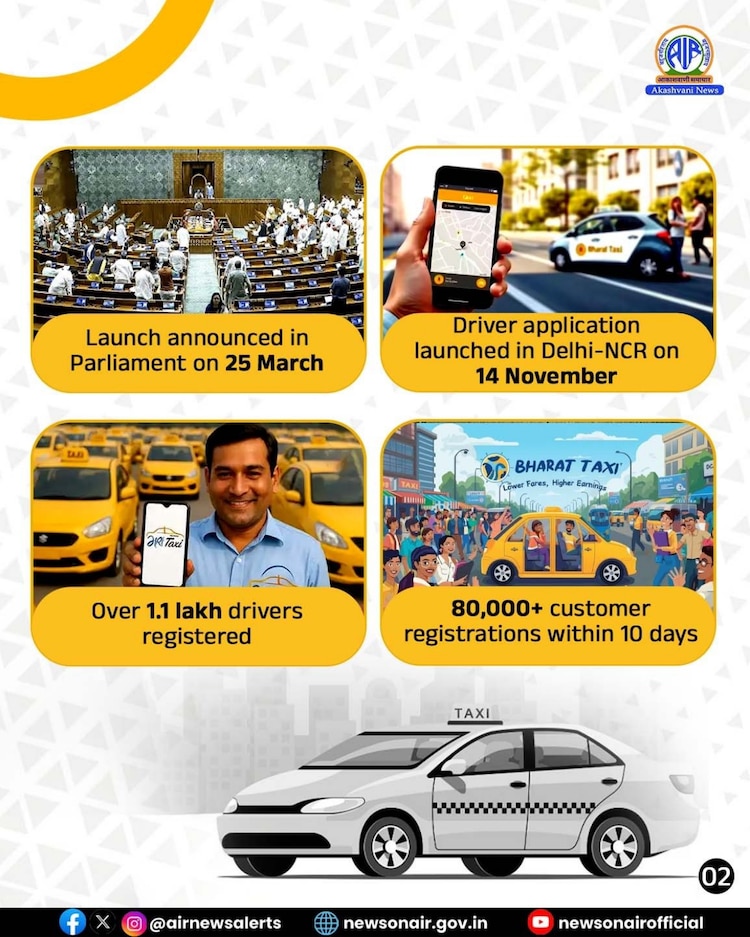
This education is important as there are many India Taxi apps on Google and Apple stores. One Bharat Taxi app in particular has confused many people, with even the official account of All India Radio’s news service division mistakenly using the logo of this other app in one of its posts. But that’s only the tip of the iceberg. This Bharat Taxi app, which is developed by Inspiron Technologies Pvt. Ltd. as per the description given on the App Store, may have the copyright of “BharatTaxi”, so there may be some legal implications in the future. Sahakar Taxi has not officially commented on the naming confusion. The government-backed Bharat Taxi app is built by Moving Tech Innovations, also the makers of the ONDC-backed Namma Yatri app.
A day in the life with Bharat Taxi
For a rider, the experience starts with a familiar, orange-accented interface. Arman, a regular traveler to Delhi-NCR, was one of the early adopters, curious to see if the co-op dream matched the digital reality.
“I booked a cab first, but it got canceled immediately,” recalls Arman. “Still a lot longer wait time than Uber. When I finally got the bike request accepted, the icon on the map wouldn’t move. Then the driver called me and asked to cancel it. He said he was just ‘testing’ to see if the app actually worked. It’s annoying, but you realize these guys are learning about their own business.”
Ultimately persistence paid off. Arman’s second attempt got him a ride, but the trip was not without “beta-stage” quirks. “The map launch stopped midway through the trip. I had to close and restart the app to see where we were.”
Despite the glitches, the conversation inside the car was a far cry from the usual transactional silence. Despite being logged in for ten hours, the driver told Arman that it was his second ride of the day on the Bharat Taxi app. The number of riders is still tiny compared to the influx of big players like Uber and Ola, but for the driver, the stakes are personal. He showed Arman his second phone, where Uber was pinging with “zero-percent commission” offers, a clear sign that the giants are probably feeling the heat and are temporarily subsidizing drivers to keep them from jumping ship.
According to data released by the Government of India, the service had more than 1.2 lakh drivers as of December 20, 2025. While hundreds of thousands of drivers have registered on Bharat Taxi, many are currently on “wait and see” mode. Take the case of an experienced driver who currently drives for Uber, Ola and Rapido. He is registered on Bharat Taxi, but his status remains “offline”.
“I have not accepted the ride yet,” he says candidly. “The rates that Bharat Taxi is offering right now are not as good as what I get from Rapido or Uber on busy mornings.”

It’s the classic chicken and egg problem. Drivers want high fares and no commission, passengers want low fares and discounts.


The development, another persistent rider, echoes the concerns of many market analysts. “It won’t be easy,” he says. “If India keeps rates high to satisfy taxi drivers, they can’t compete with Uber’s discounts. If they keep rates low and don’t charge commission, how will they sustain business?”
Amul works because they control the entire supply chain from cow to carton. In Bharat Taxi, the ‘product’ is a human being with the option of three other apps. While the cooperative is backed by eight giants including the National Cooperative Development Corporation (NCDC), Indian Farmers Fertilizer Cooperative Limited (IFFCO), and Gujarat Cooperative Milk Marketing Federation (GCMMF) with decades of experience in cooperative management, the platform will ultimately need to find a balance between being a social service and a functional business.

If it can find this balance – after ironing out its technology – then there’s no reason why it can’t be another huge Co-op success. The ingredients are all there. At its core, Bharat Taxi wants to solve two of the biggest problems of modern-day ride-hailing: lack of trust for riders and greater sustainability for drivers.
For riders, the biggest attraction is the end of surge pricing. We’ve all been there, standing in the rain as a Rs 200 ride miraculously turns into Rs 600. Bharat Taxi promises a future where a trip to office will cost you about the same every day. For the driver, it’s about making them the driver of their own destiny. Two professional drivers, Dhara Vallabh and Kishan Bhai Ji. Patani already sits on the board of directors of Sahakar Taxi Cooperative Limited and votes on how the cooperative’s profits will be distributed.
If done right, India’s roads could be on the verge of its “white revolution” moment.