



Jasbir Jassi recalls meeting policeman KPS Gill when Satluj was discussing the legacy of Punjab Police
Singer and actor Jasbir Jassi supported Diljit Dosanjh on the removal of Satluj river and recalled being forced to sing in front of KPS Gill. His account adds another personal memory to the renewed debate on Punjab’s insurgency years.
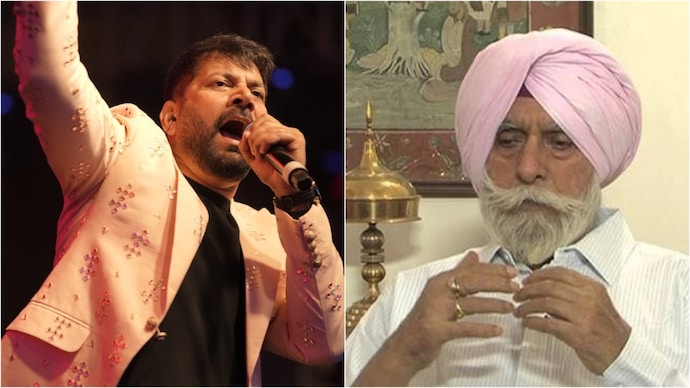

Punjabi singer and actor Jasbir Jassi recalls his meeting with former Punjab DGP KPS Gill Satluj has reignited the conversation about Punjab’s years of militancy and the legacy of the Punjab Police.
The controversy surrounding the Diljit Dosanjh-starrer, which was pulled from Zee5 within 48 hours of its release, has put a renewed focus on the life of human rights activist Jaswant Singh Khalra and figures associated with Punjab’s most turbulent times.
❮❯
While the film focuses on Khalra’s campaign to expose enforced disappearances and illegal cremations in Punjab during the 1990s, it also depicts the role of KPS Gill, whose tenure has increasingly divided opinions.
Amid controversy, Jasbir Jassi has publicly supported the removal of singer-actor Diljit Dosanjh Satluj. Along with his support, Jassi has also recalled his own experience with the former police chief.

Jassi, who worked as a young constable in the Punjab Armed Police (PAP) during the 1990s before rising to fame as a singer, said he too had met KPS Gill in person. According to Jassi, he and fellow personnel were once picked up and taken to Gill’s residence, where they were asked to sing for the DGP.
Recalling the incident, Jassi said that they would sing while Gill was allegedly under the influence of alcohol and listen before eventually falling asleep. He said the group later objected to performing in front of someone who was intoxicated and told them they could not continue performing under such circumstances.
Jassi’s account comes at a time when Satluj has drawn renewed attention to the personalities, events and unresolved debates surrounding Punjab’s insurgency period. Along with victims and families who have long demanded accountability, many individuals who served in the police force during that era have also begun to share their experiences, reflecting the complex and disputed legacy of that period.