



Is Anurag Kashyap now a Bollywood nationalist?
Bollywood’s biggest rebel has a new complaint: not enough screens. But when does a person fighting for his rights start feeling as if he is owed something? Here’s more about Bandar and Anurag Kashyap’s most intriguing argument ever.
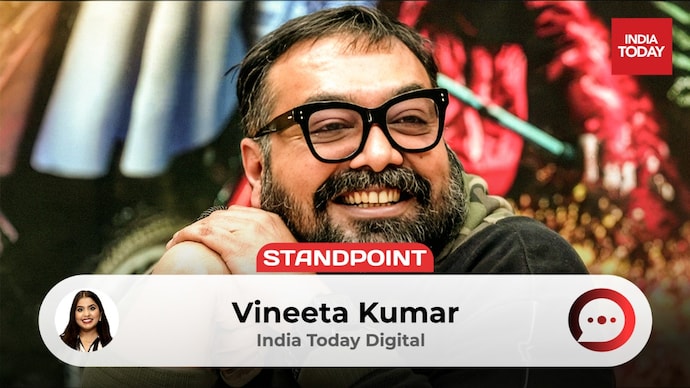

Filmmaker Anurag Kashyap MonkeyThis film, which was released a few days ago, could not do much at the box office. Then, like many things that have changed in the post-Covid world, film reception is one of them. Let’s be honest – no one really knows what works anymore. There’s no formula, no guaranteed audience, and certainly no surefire marketing strategy. One film may arrive with immense hype and collapse within days, while another may emerge out of nowhere and become a phenomenon.
❮❯
This is why there was a reaction to this MonkeyThe failure of has been more interesting than the failure itself.
Instead of accepting that audiences did not connect with the film, Kashyap chose a different explanation. He argued that Monkey faced with Because it got less screens what is called a short american film Passion. And from there the conversation took a familiar turn. Suddenly, it wasn’t about a movie failing. It became “our cinema” versus “their cinema”.
“I completely understand that everyone wants to see PassionBut it could still go on longer with fewer shows. If we don’t give priority to our films with better performance, I don’t understand how we will move forward?” he said.
Now look, under normal circumstances, this might seem like a harmless appeal to support local cinema. Fair enough. Except that it becomes more entertaining when it comes from Anurag Kashyap.
Because over the years Kashyap established himself as Bollywood’s biggest critic. He mocked its creative bankruptcy, criticized its obsession with profits and openly talked about distancing himself from Mumbai because he believed the industry was dying creatively. Bollywood was hardly “his” industry when he was attacking it.
But suddenly, when one of his own films fails, Bollywood becomes “our cinema”. interesting.
The system they rejected for years has now become something that needs protection. The industry he has repeatedly described as creatively exhausted is now being presented as a cultural cause worth defending.
The flexibility almost has to be admired. But more importantly, what exactly is the logic here?
That the audience should choose the film considering it as a national duty? Should exhibitors abandon business logic and allocate screens based on geography rather than demand? Should audiences ignore what they’re really interested in and watch something just because it’s made close to home? Because if Kashyap is not saying so, then what is he really saying?
If there is no problem with that argument, then there should be no problem with Shiv Sena demanding that jobs in Maharashtra be given to Maharashtrians first, regardless of who is actually better qualified. Think about it.
Actually, this is not even the first U-turn. Not long ago, Kashyap was talking about leaving Mumbai and seeking more creative freedom in the South as Bollywood had become too obsessed with profits. He then returned to direct a film arguably directed by Bobby Deol one of the hottest bollywood stars Now in business. That was a turning point. Now, projecting yourself as a savior of Hindi cinema because an American film got more screens than your film is one thing.
Listening to Kashyap, he argues that he likes films. Monkey Should have got more screens instead PassionOne can’t help but wonder: Has Bollywood’s biggest rebel become a “Bollywood nationalist”?
Let us understand one thing. The audience doesn’t owe the filmmakers anything.
You can spend years making a film. You can pour your heart into it. You can create what you believe to be the real Taj Mahal. And the audience may still look at it and say, “Sorry, not interested.” They may find your Taj Mahal less dazzling. They may also find it fake.
This is their right. This is the deal. Cinema is not a welfare scheme. Theater is not a cultural rehabilitation center. Screens are not distributed as donations. Exhibitors put movies on screens because they want people to buy tickets. If the audience is coming Passion and is not visible for MonkeyThe exhibitor is responding to consumer behavior, not committing an act of cultural betrayal. Simple math.

In fact, the moment we start arguing that films deserve to be shown because of where they are made, rather than whether people actually want to see them, we enter dangerous territory. This argument is similar to every other form of protectionism and gatekeeping that we commonly criticize.
Now, Kashyap’s frustration is understandable. Honestly speaking, every filmmaker wants his film to get an audience. Every director gets disappointed when years of work don’t add up. There is nothing unusual in this. What is unusual, however, is turning the audience’s disapproval into a moral argument.
Because the thing is: the audience didn’t boycott MonkeyThey just chose something else. there is a difference.
For most of his career, Anurag Kashyap was an outsider challenging the system. The rebel challenged the accepted wisdom. That same rebel now sounds remarkably similar to the established figures he spent years criticizing. Even more interesting?
Kashyap’s entire career was based on trusting the audience to make unconventional choices. He believed that audiences were savvy enough to discover films beyond the mainstream. He supported freedom of choice. He wanted the audience to think for themselves. That’s why he argued for years that the Central Board of Film Certification (CBFC) should certify films, and not decide what audiences can and cannot watch through cuts and edits.
Now that same freedom has produced a result he doesn’t like. But instead of accepting the feedback gracefully, he thinks the problem is the screen. This story is, quite frankly, about a filmmaker struggling to accept that people had every opportunity to see his film, and They just decided not to do it.
That is not discrimination. That is called market. And you know what’s the most ironic thing about all this? The man who raised questions on eligibility for years is now asking for priority because a film belongs to “our cinema”. If anything, it seems to be the most’Monkey‘ Everyone’s logic – swinging from one branch of convenience to another.
(Disclaimer: The views expressed in this article are the author’s own)