



Elon Musk and Sundar Pichai are building data centers in space, Arvind Srinivas says they are in danger
Perplexity CEO Arvind Srinivas says the race to build large-scale AI data centers could face disruption. That’s why he said this in the podcast.
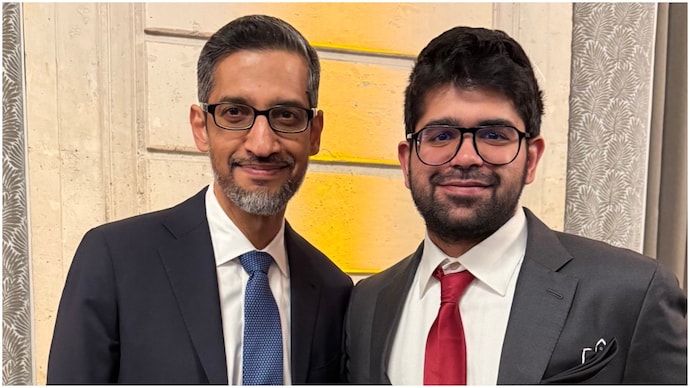

At a time when the world’s biggest tech companies are racing to build bigger and more powerful data centers, Perplexity AI CEO Arvind Srinivas offers a completely different perspective on where artificial intelligence is headed. While companies led by Elon Musk, Sundar Pichai and others are investing billions in massive infrastructure projects and even exploring space-based data centers, Srinivas believes the real future of AI may quietly move away from these massive facilities. According to him, the next big change could be putting intelligence directly into the hands of users instead of energy-hungry server farms.
Arvind Srinivas talks about the risks of having a data center
Speaking on a podcast with Prakhar Gupta on YouTube, Srinivas said the biggest risk facing data centers is the rise of powerful on-device AI. He argued that if advanced intelligence could be compressed directly into chips running on phones, laptops or personal devices, the need for centralized cloud-based inference would rapidly diminish. In simple terms, AI will no longer need to constantly talk to a remote server to work.
Today’s popular AI tools like ChatGPT, Gemini, and Perplexity rely heavily on large data centers to process user requests. These facilities consume enormous amounts of power, require complex cooling systems and rely on a steady water supply to keep the servers from overheating. Srinivas suggested that this model may not make sense in the long run if AI workloads can be handled locally on personal devices.
“The biggest threat to the data center is if intelligence can be packaged locally onto a chip that runs on a device and then there is no need to infer it like in a centralized data center,” he said. He said such a change would make AI more decentralized and potentially more personalized, especially if models could adapt to individual users over time.
Srinivas also talks about better privacy
Beyond infrastructure costs, Srinivas also pointed to privacy as a key benefit of on-device AI. If processing occurs locally, sensitive user data will not need to leave the device, reducing reliance on external servers and reducing the risk of data misuse. He also said that local AI can respond instantly, avoiding the delays caused by sending queries back and forth to distant data centers.

He described this vision as a kind of personal “digital brain” that belongs entirely to the user. Srinivas explained, “This way you don’t have to repeat it. It’s your intelligence. You own it. It’s your mind.” In his view, this model could fundamentally disrupt the economics of the data center industry, raising questions about whether it makes sense to spend hundreds of billions or even trillions of dollars on centralized AI infrastructure.
However, Srinivas notes that this future has not yet arrived. He acknowledged that no company has yet shipped an on-device AI model that is both highly capable and efficient enough to reliably handle complex tasks on local hardware. “That hasn’t happened yet,” he said, adding that when such a breakthrough occurs, it could transform entire AI systems.