


With new office for 20,000 people in Bengaluru, Google aims to work around H1-B visa issues for Indian IT workers
Google’s plan to expand its Bengaluru operations shows how US visa barriers are prompting the tech giant to make more key hires and work in India. Here’s the full story.
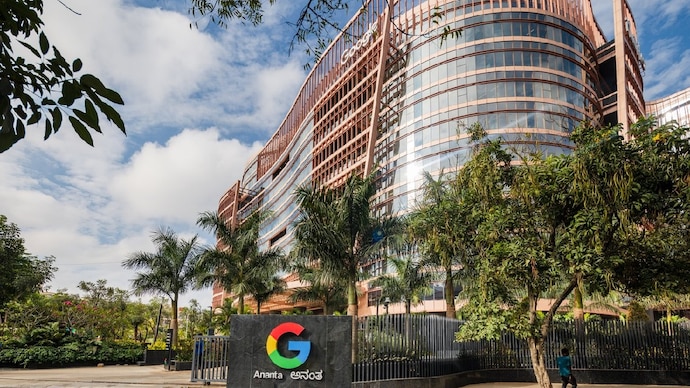

As the US makes it harder and more expensive for companies to hire foreign workers on H-1B visas, Google has been quietly deciding where its future workforce will be based. Instead of waiting on visas and approvals, the tech giant is betting big on India, starting with a massive expansion plan in Bengaluru that could eventually house more than 20,000 employees, Bloomberg reports. At the heart of the scheme is Alembic City in Whitefield, one of Bengaluru’s busiest tech corridors. Google’s parent company Alphabet has already leased one office tower here and secured options on two others. The three towers together span approximately 2.4 million square feet.
A campus that could double Google’s presence in India
The report claims that the first tower spread over approximately 6.5 lakh square feet is going to open for employees in the coming months. Construction of the remaining two towers is scheduled to be completed next year. While Alphabet has officially confirmed the lease of only the first building, people familiar with the plan say the entire complex could accommodate 20,000 employees if all options are exercised.
That number is big. Google currently has around 14,000 people in India. The fully occupied Whitefield campus will double its local workforce, bringing India closer to the center of Google’s global operations.
Alphabet, responding to Bloomberg’s questions, said it already maintains a strong presence in several Indian cities, including Bengaluru, but did not comment on additional towers or its total Indian headcount.
US H1-B visa problem is creating more jobs for people in India
Behind this expansion is a growing challenge for American tech companies, which is immigration. Changes under the Trump administration have made it harder to bring skilled foreign workers to the US. The proposed increase in H-1B visa fees, reportedly up to $100,000 per application, has forced companies to rethink long-term hiring plans.
For Google and its partners, the answer is pretty straightforward. Instead of taking Indian engineers to America, create big teams in India itself. This approach avoids visa delays, cuts costs and ensures companies don’t lose access to critical talent. The report suggests that this recalibration is no longer temporary. It is becoming a core part of how global tech companies plan their workforce.
Why are Indians important for tech companies to win the AI race?
As companies rush to build and deploy AI products, India has emerged as a major destination for advanced engineering work, not just supporting roles.
Google rivals are moving in the same direction. AI firm Anthropic recently set up operations in India and appointed former Microsoft executive Irina Ghosh to lead its local business. Speaking earlier this year, Ghosh said, “India has a real opportunity to shape how AI is created and deployed at scale.”

For US companies stymied by domestic immigration rules, India offers both talent and flexibility, especially at a time when AI teams need to move fast.
Google is constantly building ground. Last year, it opened its largest campus in Bengaluru, featuring recreational spaces and large cafeterias. Since then, recruitment activity has increased rapidly. The company has advertised hundreds of roles in the city, including positions in cloud computing, AI leadership, machine learning, chip design and advanced research. Many of these roles require deep expertise, with some listings requiring a PhD. Google’s video platform YouTube is also expanding its engineering teams in India to work on generative AI tools.
Additionally, recent data from staffing firm According to Kamal Karanth, co-founder of Xpheno, this increase is closely linked to companies reworking talent plans in response to changes in immigration policy.