



Which language is the oldest? Javed Akhtar shuts down Urdu vs Sanskrit debate
Javed Akhtar shared insights on language, family and emerging trends in the film industry during a recent session. The popular poet-lyricist schooled a man and asked him to choose between Sanskrit and Urdu as the oldest languages.
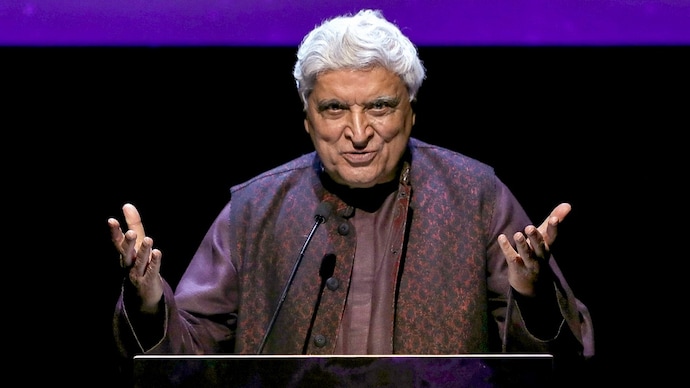

Renowned poet and lyricist Javed Akhtar addressed a public session where he reflected on language, family and the changing landscape of Bollywood. Answering a provocative question about the age of languages, Akhtar clarified the historical context of Urdu and Sanskrit, and talked about the importance of linguistic heritage. He also shed light on his family background, his formative years and the ways in which cinema reflected social change.
The conversation started at the Jaipur Literature Festival when an audience member asked which language was older – Urdu or Sanskrit. Akhtar, looking surprised, replied, “What kind of question did you ask me?” He explained with the same skepticism, “Urdu is the younger sister of Sanskrit (younger sister). Sanskrit is the second oldest living language in the world. Urdu is not even a thousand years old.” Later the discussion also included Tamil, which Akhtar said is recognized as the world’s oldest living language, while Sanskrit is the second oldest.
He concluded his response by suggesting that a more sensible question would be which of the languages, Latin and Greek, is the oldest.
When Akhtar was asked about her mother, she gently redirected the conversation, saying, “At this age I should be talking about my granddaughter,” but then explained how her mother’s death the day after her eighth birthday deeply affected her. He described the five years before his death as “very formative”.
Akhtar remembered how his mother made the language an enjoyable experience by teaching him words and their meanings. He remembered her as a “voracious” reader of novels, saying, “That’s where my interest in language arose.” “I’m sure he edited out the romantic parts,” he joked, adding, “Even today when I write a script, something comes to my mind that came to my mind when I was six or seven years older than him, from some novel.”
This appreciation for language and culture was created Akhtar’s perspective on his literary family. He rejected the notion that such a legacy was challenging, saying, “You have to appreciate people for their talents,” and “Being afraid means you’re comparing yourself.”

He encouraged self-improvement rather than comparison with others, “It’s the way of life, someone will always be better than you, and you will always be better than someone. Your competition should be with yourself,” he advised a young audience member concerned about academic comparisons. Akhtar also challenged The idea of ”a golden age”, given that nostalgia for the past, is unfounded.
The 80-year-old further described the concept of secularism as a natural “way of life” and not a political lesson. “If one day you are lectured, and you remember points A, B and C, it is artificial,” he explained, but, “but if it is your way of life, the way you have seen your elders live, then it comes within you.” He recalled the moment in his childhood when his grandmother stopped giving his grandfather money to memorize religious verses, saying, “That was the end of my religious education.” He described her as, “She was a woman who couldn’t write her name, yet she had this sensitivity.”
Turning to cinema, Akhtar pointed out the difference between his early career and present-day Bollywood. He said, “Today’s assistants are on first-name terms with the stars,” and, “Assistant directors call the hero by his name, we never imagined that.” He regarded these changes positively. He also commented on the development of Hindi cinema, seeing it as a reflection of changing values and the rise of “lower middle class aesthetics” in both art and politics since the 1980s.