



The current AI boom is leading to shortages for some and massive profits for others. reuters It is reported that in a presentation earlier today, TSMC predicted that the global semiconductor market will reach $1.5+ trillion by 2030 – for context, the previous forecast was $1.0 trillion.
And it’s clear that demand for AI silicon is driving a huge increase in sales – according to TSMC, 55% of the $1.5 trillion market will come from AI (and other high-performance computing), while smartphones will account for only 20% and cars will account for only 10%.
We won’t even have to wait until 2030 to see the market change – the company estimates demand for AI accelerator wafers will grow 11x this year compared to 2022. It’s only been four years calendar time, yet AI has gone from being a curiosity to something every business executive talks about.
Naturally, the company is making hay while the sun shines – it’s building new production facilities faster than ever before. And not just in Taiwan.
TSMC has a plant in Arizona and received a $6.6 billion grant from the US a few years ago. That first plant is already producing chips – not cutting-edge silicon (TSMC keeps it in Taiwan), but it is making 4nm chips and will move to 3nm and 2nm over time.
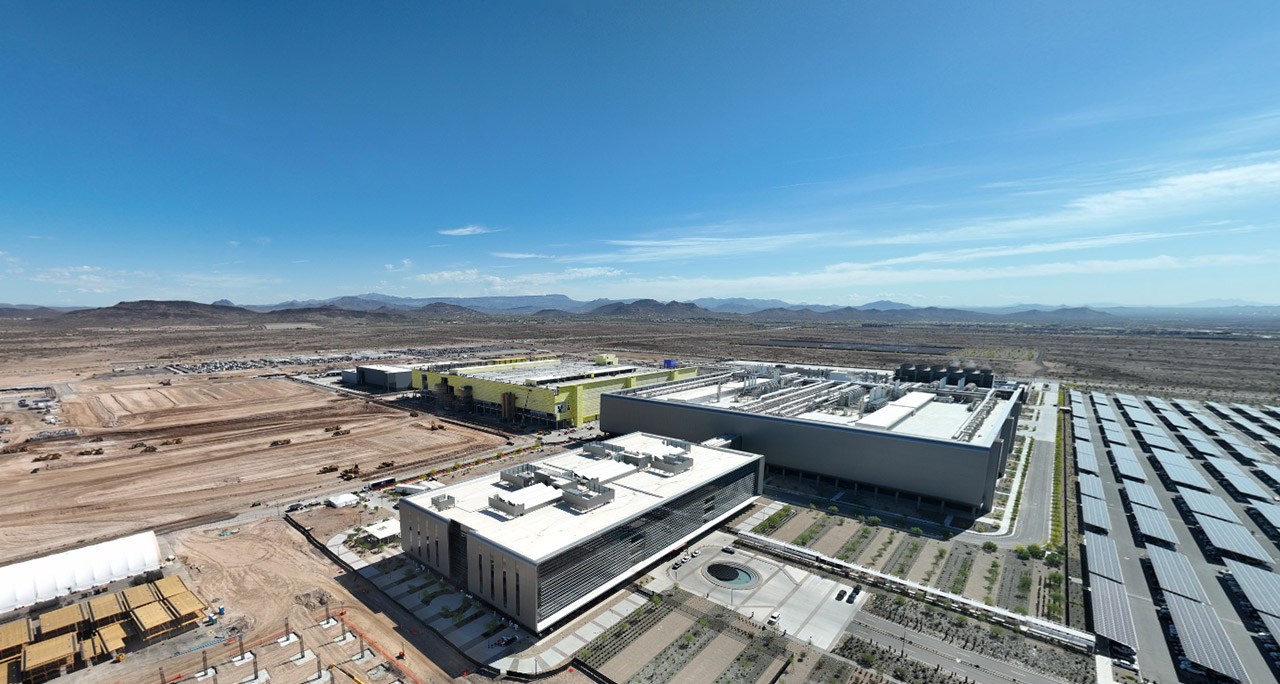
TSMC’s fab in Arizona

There is a second fab that is almost complete – TSMC will bring in the expensive and delicate machines that make the chips later this year. A third fab is under construction and a fourth is coming soon, as well as an advanced packaging facility. The company is also considering purchasing more land for future expansion. According to TSMC, production at the Arizona fab this year will increase by 1.8 times year-on-year and yield will be similar to that at the Taiwan fab.
TSMC also has a fab in Japan – it makes older 22nm and 28nm chips. Of course, these are not suitable for high-performance compute parts, but these nodes are popular for automotive parts and various low-power components. The company plans to start 3nm production at a second Japanese fab.
A plant is also being built in Germany – it will also start with 22nm and 28nm parts (which will please German car companies) with plans to add 16nm and 12nm capabilities later.