





The US has moved to deploy nearly 3,000 troops from its elite 82nd Airborne Division to the Middle East, according to a report in The Wall Street Journal, signaling increased military preparedness at a time of rising regional tensions. Officials have stressed that the move does not ratify the decision to send ground forces to Iran, but it significantly expands Washington’s ability to respond at short notice. The 82nd Airborne is not a regular unit that shuffles between bases; It is a force built for immediacy. When it moves, it shows preparation, not posture.At the heart of this development is a division that for decades has defined what rapid military response looks like. From parachuting into hostile territory during World War II to leading early operations in modern conflicts, the 82nd Airborne has built a reputation as the unit that often arrives on the ground before fully understanding the situation. Its deployment is as much about capability as it is about signaling readiness.
What makes the 82nd Airborne Division different
The 82nd Airborne Division holds a unique place in the US military structure. It is a light infantry division, but designed for global reach and immediate action. Based at Fort Liberty in North Carolina, it keeps elements on constant alert, ready to move within hours of receiving orders.Its defining feature is its aerial capability. Soldiers are trained to land by parachute in areas where there are no safe landing zones, allowing them to enter environments that are otherwise inaccessible. This gives the division a significant advantage in the early stages of the operation, when speed and surprise can determine the outcome.A brigade-sized force of approximately 3,000 soldiers could be deployed within approximately 18 hours, supported by coordinated airlift and pre-positioned equipment. This level of readiness allows the US to respond to crises without the delays typically associated with large-scale military mobilization.

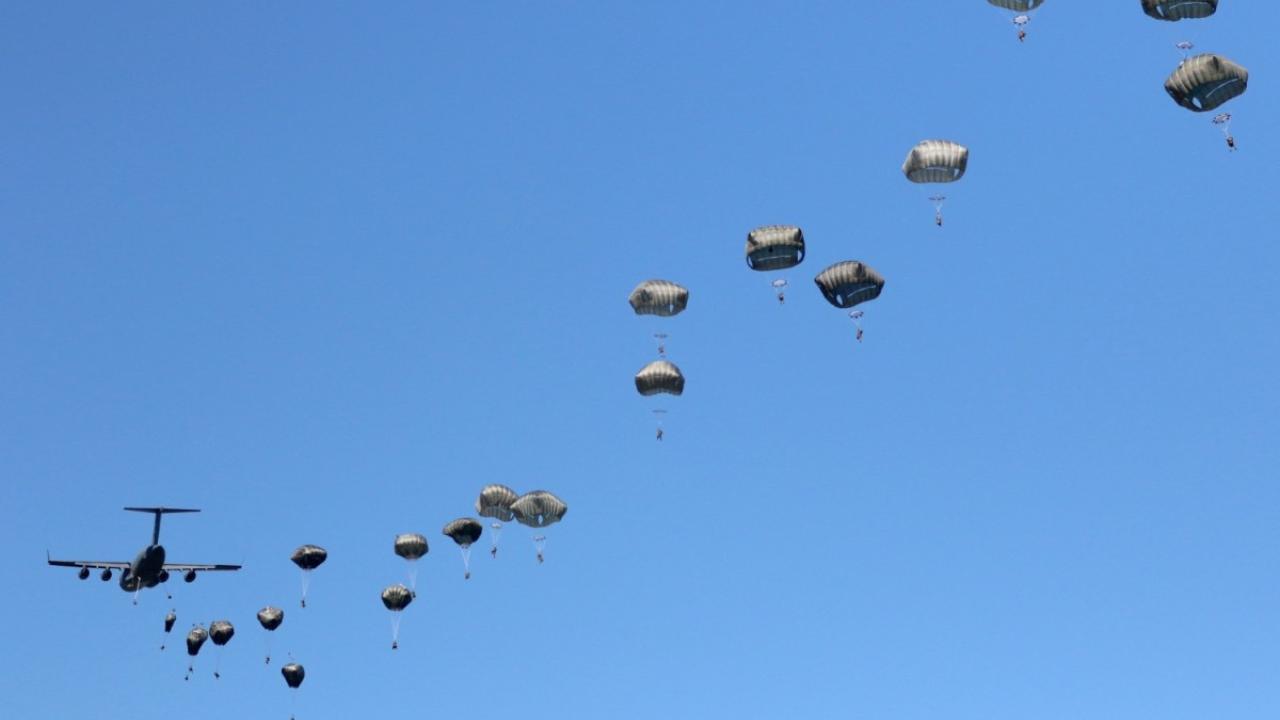
82nd Airborne Paratroopers perform a mass jump during Exercise Swift Response 16 in Torun, Poland, June 7.
From World War II to modern conflicts
The division’s identity lies in its role during World War II, particularly the Normandy landings. In June 1944, thousands of paratroopers from the 82nd were dropped behind enemy lines in Nazi-occupied France just hours before Allied forces were to storm the beaches.The mission was complex and dangerous. Paratroopers were scattered throughout the countryside, often landing far from their intended drop zones. Yet their objectives were clear: capture bridges, disrupt German forces, and create confusion. Despite the chaos, their actions helped to weaken the German defenses and paved the way for the invasion’s success.That operation cemented the division’s reputation as a force capable of operating in uncertainty, a characteristic that still defines it today.In the decades that followed, the 82nd Airborne was repeatedly deployed into situations requiring rapid intervention. During the United States invasion of Grenada, it was used to stabilize conditions after the initial attack. In the Gulf War, it provided a ready force for offensive operations. In both the War in Afghanistan and the Iraq War, the division conducted numerous deployments, including urban operations and security missions.In these conflicts, a consistent pattern emerges: the 82nd is used when time is limited and conditions are uncertain.
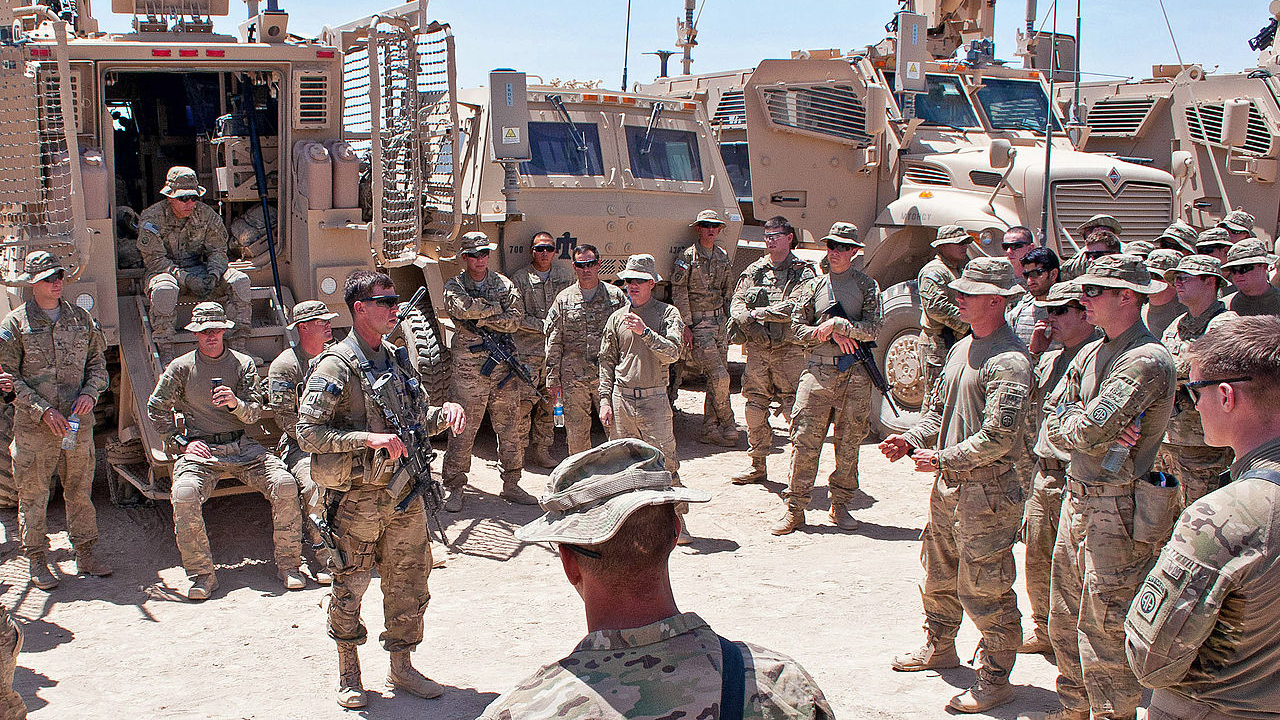
A U.S. Army captain briefs 82nd Airborne Division paratroopers before a patrol in Ghazni province, Afghanistan, in August 2012.


Built-in capabilities for speed and impact
The strength of the 82nd Airborne lay not in overwhelming firepower but in a combination of mobility, training, and coordination. As a light infantry force, it does not rely on tanks or heavy armor in the early stages of deployment. Instead, it focuses on rapid entry, flexible maneuvering and early control of key terrain.Its air operations allow troops to bypass traditional entry points and go directly to strategic areas. This capability is particularly important in securing infrastructure such as airfields, transportation corridors and communications hubs. Once these are under control, bigger forces can come.The division’s troops are equipped with standard infantry weapons, anti-armour systems and portable communications gear, supported by light artillery and aviation units when required. What sets them apart is not the tool itself, but how it is used, in a fast-paced, high-pressure environment where decisions must be made quickly.Paratroopers are prepared to operate with limited support, adapt to unfamiliar terrain, and coordinate with airborne and intelligence assets. Their role often involves stabilizing a situation long enough to allow broader operations to take shape.
The human element behind rapid deployment
Behind operational capabilities are soldiers trained for the most demanding roles in the military. Members of the 82nd Airborne must prepare to deploy on short notice, often with little clarity about the conditions they will encounter.Aerial training itself is physically and mentally rigorous, requiring precision, discipline and confidence under pressure. Once deployed, paratroopers may find themselves operating in a fragmented environment, where units are dispersed and communications are limited.This requires a high degree of independence. Soldiers are expected to quickly assess situations, make decisions in real time, and maintain cohesion under stress. It is the combination of training and mindset that enables the division to function effectively in the early stages of complex operations.
a force that is defined by its first speed
The role of the 82nd Airborne Division is defined by time. It is not designed to run long, heavy campaigns alone, but to act at that critical moment when action is first needed. Its objective is to enter quickly, secure key objectives, and create conditions for widespread operations.This makes it one of the most strategically valuable units in the US Army. Its presence signals readiness, its speed signals intent, and its capabilities provide flexibility in uncertain situations.