



Sorry zubine da, I misunderstood you
I am sorry, I did not know anything better, because social media, which could make people viral overnight for the most trivial things, never brought the side of the zubine, which was charitable, vocal, and who loved his people deeply, his Assam.

Zubeen Garg was an incident, and that truth, unfortunately, I realized only after his death, when a sea of fans cried and bid him farewell MayabiniPerhaps I was living under a rock, who did not know the man who composed 38,000 songs, or the limit of his huge charitable efforts. For me, Zubeen da Zubine was Garg (such as anyone who is not from Assam or Bengal), the man who sang two full hits – Then Ali From Rogue And What do you want From Side effects of loveIn addition to being a playback singer for some early hits by Bengali star Dev Adikari.
I am sorry, I did not know anything better, because social media, which could make people viral overnight for the most trivial things, never brought the side of the zubine, which was charitable, vocal, and who loved his people deeply, his Assam. He paved the way for future singers in his kingdom and saddened his sister to lose like a wound that never recovered.

Instead, the viral that went viral was an out-of-context clip-he was drunk, struggling to stand before a crowd, or referring to the GA*ja and alcohol on the podcast.
But Zubeen da was a person who spoke about his mind and heart without any hesitation, without any hesitation. Perhaps this is their honesty and non -good that has now dared to write me about an uncomfortable truth, that I, like many other people outside Assam, only see her pieces. I took time to process that Zubeen Garg was not just another singer, but a cultural icon, social worker and a flashlight of proud identity and pride. It is a cruel irony that it finally took my death to me to see the humanist that he really was.
Discussing the life of the singer, a friend of mine took a pinch from Asam, “Bihu means Zubeen. She was our cultural identity.”
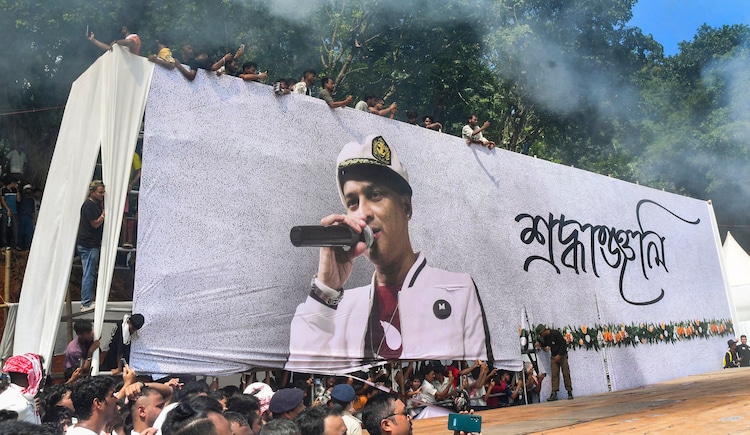
And when I started reading about his life beyond the stage, regret became the only fitting reaction.
Many people do not know (at least I did not) that Zubeen founded the Kalguru artist Foundation, a charitable trust that was standing year -up by Assam, especially during the devastating annual floods of the state. He raised funds, collected clothes and medicines, and urged him to take steps to relieve relief from the common people.

His passion for the games also turned into another Avenue to give back, charity football matches that raised money for the victims who had lost everything.
But his generosity was never public. It was deeply individual. In Assam, countless people recall the financial assistance offered for healthcare, education, weddings, or even funeral. He was known to take the phone himself, to make sure that help is needed immediately.
“There are countless stories about how they helped those who needed medical treatment and children in orphanages,” called Ulla Borpujari reviewing the debut album of the boil Anamika, About 30 years ago.
During the Kovid -19 epidemic, when the hospital beds went out, they opened their own two -storey Guwahati houses to be used as a Kovid Care Center. With his wife, dignity, he adopted 15 underprivileged children, fighting a legal battle to save children and not only sheltered them, but also gave love, education and dignity.

His activism was equally fearless. He gave his voice to AIDS awareness, brain cancer research and mental health initiatives, innumerable benefits to increase money and awareness in concerts. He stood at the forefront of the Anti-CAA movement, united the artists and the public in peaceful opposition, once again showing that he was not only from the stage but also for the people.
And through all this, he remained selfless in the best sense. From time to time, he pleaded with the authorities not to respect him with state-level awards, instead insisting that the young singers were entitled to that encouragement.
For his name, yet for people outside Assam and Bengal, he was surprised two-songs. As my senior colleague Yudhjit Shankar Das properly observed, “Zubine’s life and death highlight the dualism of India’s diversity, where icons like Punyath, Sharda Sinha, and Soumitra Chatterjee pass without widespread national recognition.”
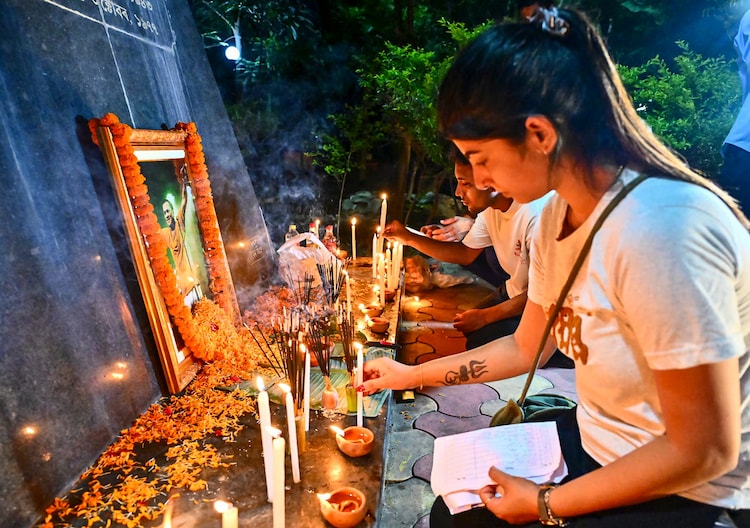
And this is not denied.
It is unfortunate that I misunderstood the pieces for the whole. I allowed a person to define the viral clip, whose life was nothing, but the task of giving. I judged him to be unstable on the stage, but never stopped to see the stability with which he took his people through floods, epidemic and despair.
Zubeen da once sung, “Xopunote paam tumak, bukute dhoru tumak” , “I find you in dreams, I catch you in my heart.” Perhaps this is where he is now: in the collective dreams of Assam, and in the hearts of those who were really too late to know him.