





Pakistan has a strange gift: just when the world starts taking it a little too seriously, it creates such a spectacular ‘oops’ moment that the script writes itself. For a week he has been presenting himself as a serious mediator between the United States and Iran; Next, a US senator is publicly asking whether he quietly grounded Iranian military planes at his airbase. The latest incident may not surprise many as Pakistan’s strategic doctrine often resembles that of a friend who lies badly, gets caught on CCTV, and yet insists that everyone else is misunderstanding the situation. Be it harboring terrorists, denying military ties, or claiming neutrality while taking sides, Islamabad has mastered the art of saying “nothing happened here” even when satellite images and foreign intelligence suggest otherwise.That’s why US Senator Lindsey Graham’s blunt declaration on Tuesday – “I don’t trust Pakistan as far as I can throw them” – was something waiting to happen. The immediate trigger was a latest report that Iranian military aircraft, including reconnaissance aircraft, were allowed to shelter at Pakistan Air Force Base Noor Khan during the ongoing US-Iran confrontation. But the logic was simple: For many capitals from New Delhi to Washington, Pakistan’s credibility comes with a permanent asterisk: handle with care, history is attached.
Iranian plane at Pakistan airbase
The controversy erupted after a CBS News report claimed that Iranian military aircraft had used Pakistani facilities, including the Noor Khan Air Base, during the ceasefire phase of the US-Iran conflict. The suggestion was explosive: a country presenting itself as a neutral mediator in peace talks might be quietly helping Tehran protect strategic assets from potential US attacks.Of course, Pakistan denied this. Its foreign ministry said the aircraft and personnel were only involved in diplomatic logistics for the “Islamabad talks”, backchannel talks hosted by Prime Minister Shehbaz Sharif and army chief Asim Munir. It described the military angle as “misleading and sensationalist”.This investigation has intensified because Asim Munir is not a normal army chief in the current system. His recent rise in Pakistan’s power structure, with the military increasingly assuming civilian authority under Shehbaz Sharif, has reinforced the view that foreign policy, security decisions and even crisis diplomacy are being passed through the military rather than the elected government.

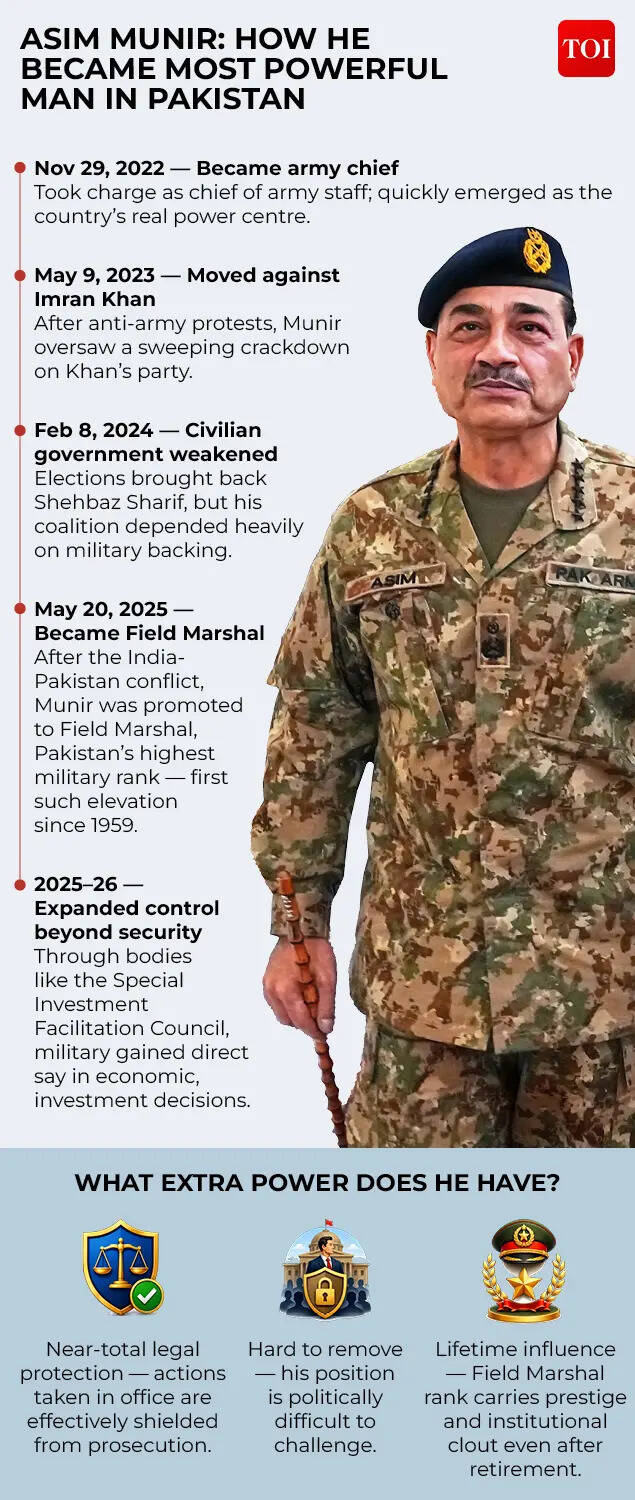
But the trust deficit is so deep that Islamabad’s denial is no longer enough. According to CNN, US officials are increasingly suspicious that Pakistani mediators are softening Iran’s position, giving the Trump administration a more “optimistic” picture than Tehran. According to CNN’s sources, many Trump officials now believe that Pakistani mediators have not been forceful enough in conveying Trump’s frustrations to Iranian negotiators.In other words, Pakistan has been accused of not only facilitating diplomacy but also managing perceptions to buy time for Iran.
‘There are no terrorists’ claim collapses within days
The most recent example for India came during Operation Sindoor. After India struck terrorist infrastructure in Pakistan and Pakistan-occupied Kashmir following the Pahalgam terror attack, Islamabad’s official response was immediate and clear: there were no terrorist camps, no terrorist commanders, and India had targeted civilians.Then came the videos of the funeral. Pakistani military personnel, including uniformed officers, were seen attending the last rites of terrorist operatives associated with banned groups. For India, it was a perfect display of a familiar paradox: harboring terrorists but denying that such an ecosystem existed.
Abbottabad template
Long before Operation Vermillion or the Iran plane controversy, there was the event that shaped American suspicion for a generation: Osama bin Laden in Abbottabad.For years, Pakistan continued to insist that the al-Qaeda chief was nowhere on its soil. Yet in 2011, US Navy SEALs found him living in a large compound a short distance from the Pakistan Military Academy.

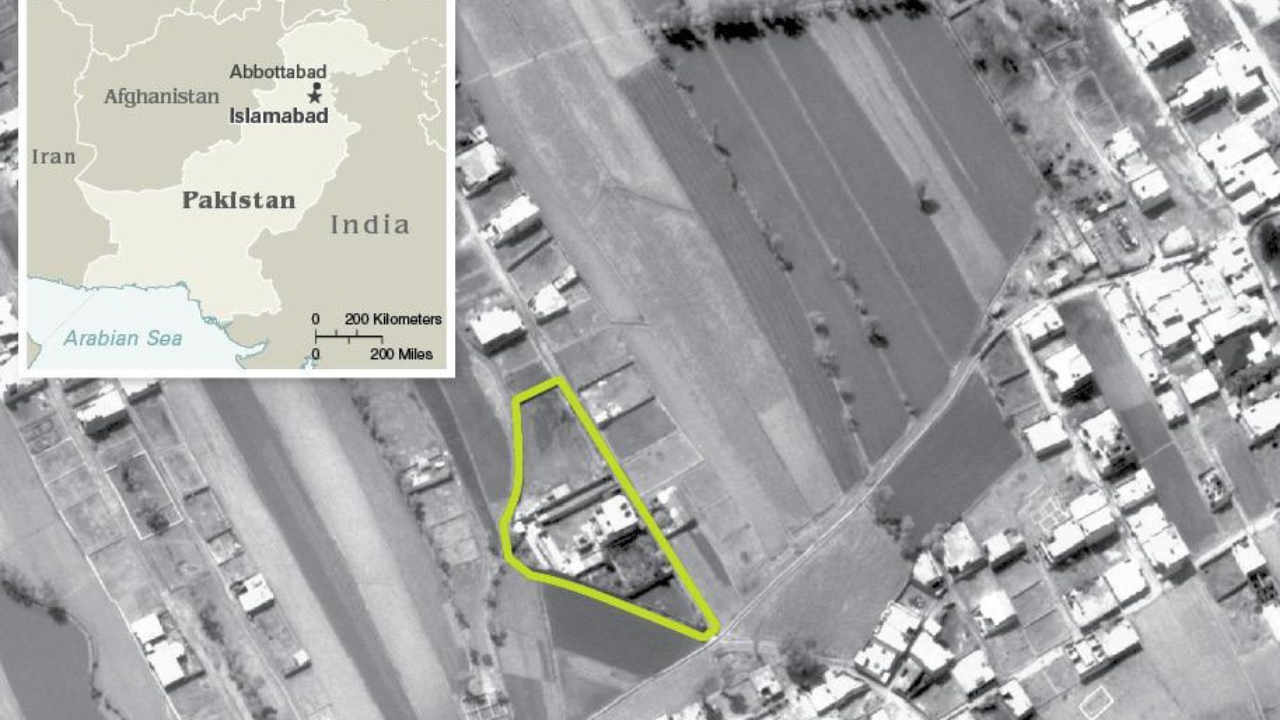
The Americans did not inform Pakistan before the raid, fearing that someone inside the establishment might inform on them.This remains perhaps the most famous ‘oops’ in intelligence history. Either Pakistan did not know that the world’s most wanted terrorist was living next door to one of its major military establishments, or it knew and hid it. Neither explanation inspired confidence.
Double game as principle
Complicating the double game is Pakistan’s own three-front security crisis, a kind of domestic ‘three-body problem’ that its military has struggled to contain. On one side is the Afghan Taliban regime, whose return to power has not translated into strategic peace for Islamabad; On the other is the Tehreek-e-Taliban Pakistan (TTP), which has stepped up attacks inside Pakistan and in the south-west, as the long-running Baloch insurgency is challenging its control of the state.


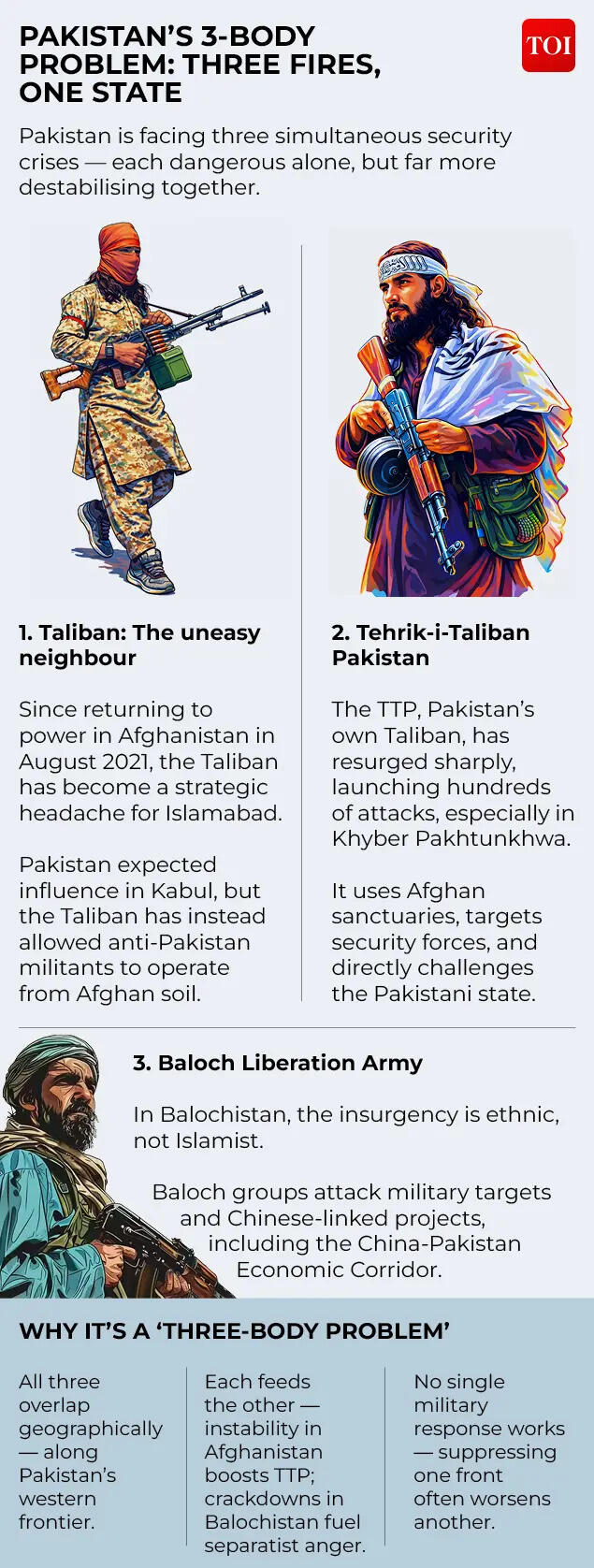
Given the growing crisis from all three directions, the Pakistan establishment is trying to manage external influence while simultaneously dousing the fire at home.This recurring pattern has led many analysts to argue that Pakistan’s “double game” is not accidental but structural. It has long used non-state actors, strategic ambiguity and carefully calibrated denial as tools of statecraft.During the US war in Afghanistan, Pakistan was designated a major non-NATO ally, as well as accused of allowing the Taliban leadership and Haqqani network to operate from its territory. American aid flowed in; Rebel sanctuaries reportedly remained. By the time Kabul fell in 2021, Washington’s strategic community had largely accepted that Pakistan had played the role of both sponsor and ally.The same script seems to be repeated in 2026 also.Pakistan wants to appear indispensable to Washington while also maintaining influence over Tehran, Beijing, the Gulf countries and domestic constituencies. It tries to be everyone’s medium and no one’s enemy. But Islamabad’s actions often give the opposite impression: that it is speaking different truths to different capitals. Pakistan likes to describe itself as a bridge between the Muslim world and the West, between rivals, between war and diplomacy. But a bridge only works if both parties are confident that it will hold.Today that trust seems to be breaking. In Washington, parts of the Trump administration are reportedly considering whether Pakistan should remain at the center of the US-Iran channel. Pakistan’s internal instability has further deepened that distrust. The removal and jailing of Imran Khan following differences with the military establishment intensified the perception that real power in Islamabad still lies not with elected leaders but with the generals in Rawalpindi.
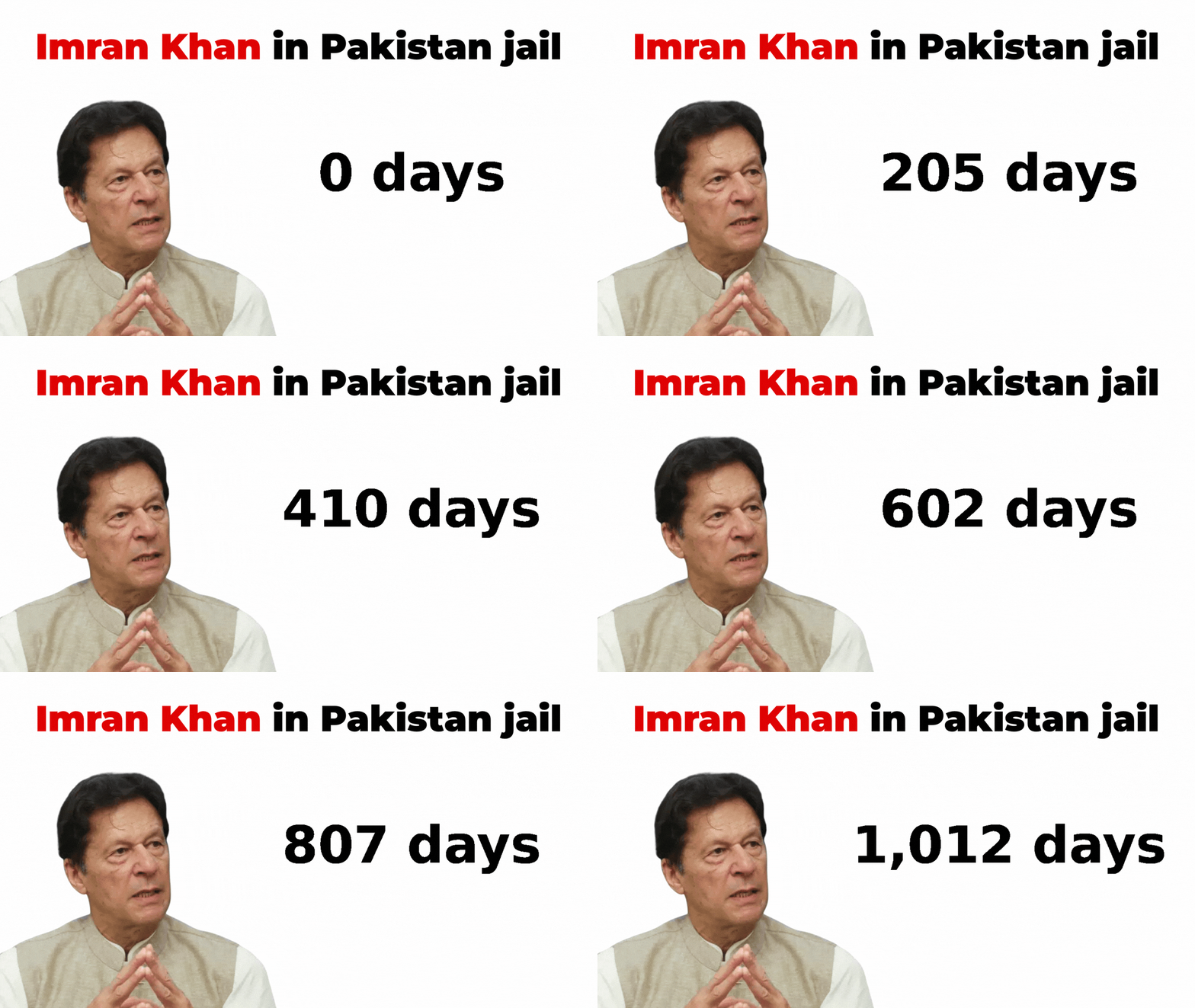
For outside powers, this means that any diplomatic assurance from Pakistan comes with an obvious question: who is actually speaking for the state?
Bonus: ‘Oops’ Moments That Became Global Memes
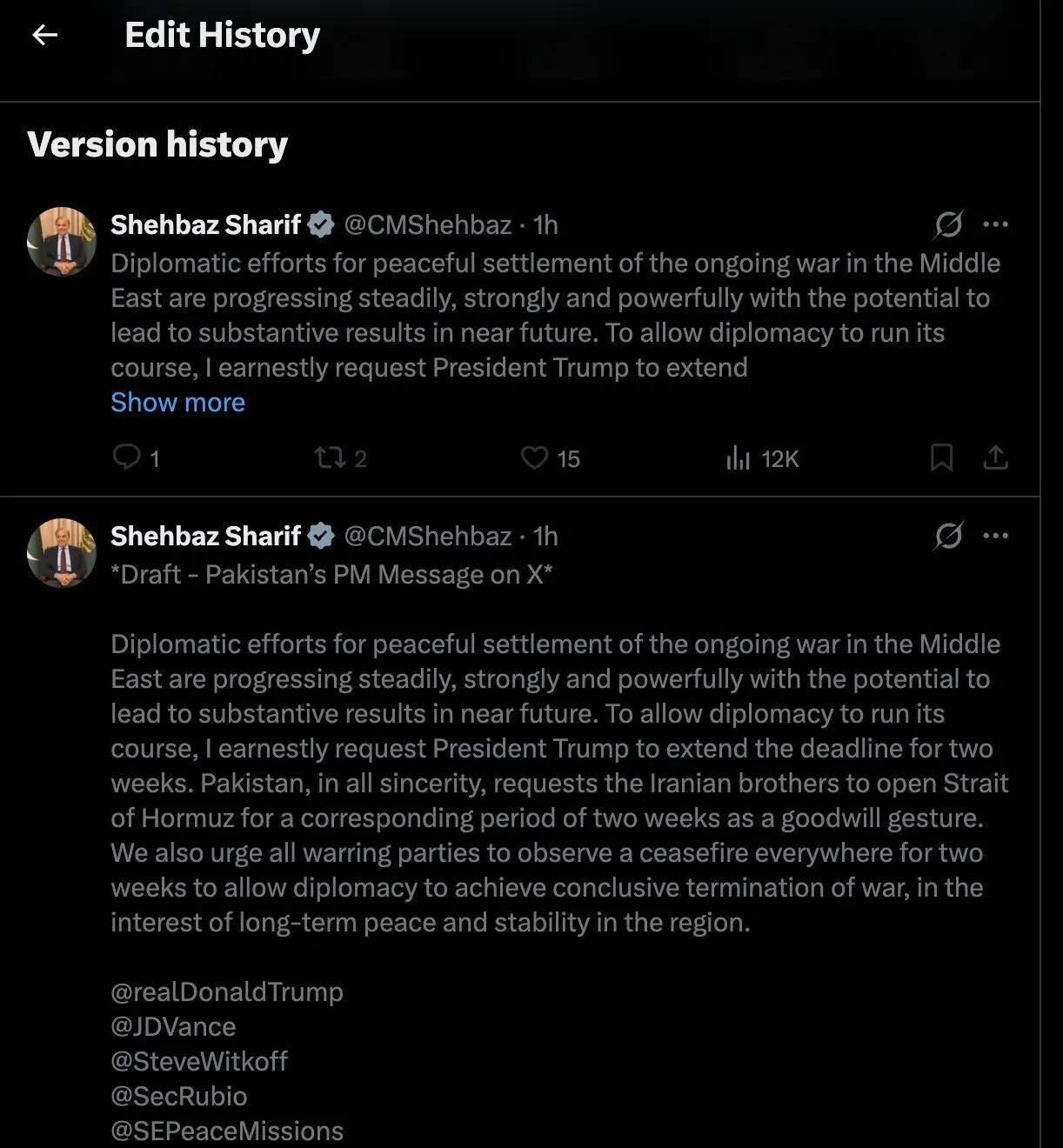
Some of Pakistan’s credibility crises are geopolitical. Others are so self-motivated that they avoid diplomacy altogether and enter meme culture. In recent years, Islamabad’s global image has been damaged not only by allegations of double-dealing but also by a series of communication errors that quickly went viral.The most recent case came in April 2026, when Prime Minister Shehbaz Sharif briefly posted an unedited draft message on X, commenting on the US-Iran ceasefire. The post, shared widely online, was reportedly labeled “Draft – Message from the Prime Minister of Pakistan on X” before being edited, sparking speculation that Islamabad had accidentally published an internal script during a sensitive diplomatic moment.

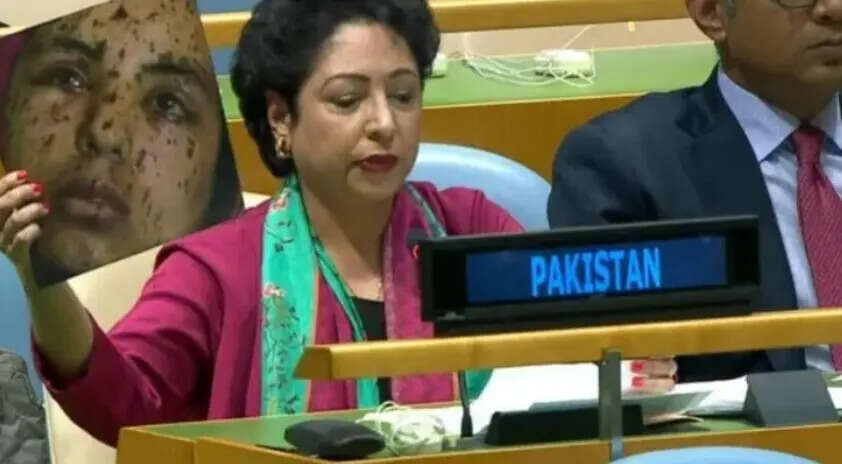
Going further back to September 2017, Pakistan suffered one of its most notable diplomatic setbacks at the United Nations. Its envoy Maleeha Lodhi presented a photograph as evidence of alleged Indian atrocities in Kashmir. The image was soon identified as that of a Palestinian girl injured in Gaza in 2014, turning Pakistan’s denial into international embarrassment.

For Pakistan, the real problem is no longer a single allegation, be it Iranian aircraft, terror safe havens or diplomatic mixed messages. It is that decades of strategic ambiguity have created a credibility trap, now every denial comes with distrust and every crisis risks becoming another global ‘oops’ moment.