



Javed Akhtar challenged the logic of burqa, asked- Why feel ashamed on your face?
At the SOA Literature Festival 2025 in Bhubaneswar, renowned lyricist Javed Akhtar answered a student’s question about women wearing burqa, sparking a discussion on social pressure, choice and dignity in personal attire.
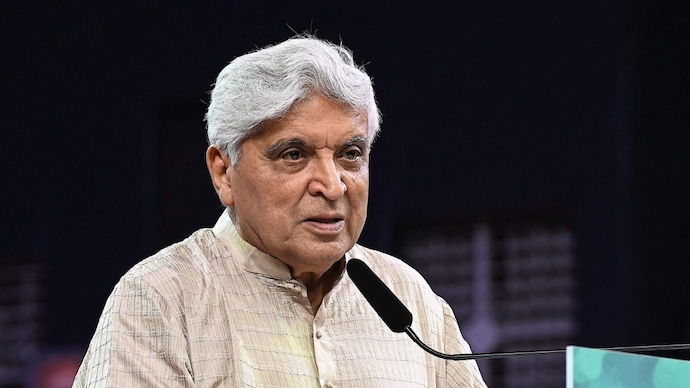

Javed Akhtar never shies away from uncomfortable conversations and at the SOA Literary Festival 2025, he once again sparked a sharp, necessary debate. “Why should a woman be ashamed of her face?” It was an obvious question asked by the veteran lyricist and screenwriter as he took aim at the idea of women covering their faces. BurqaS. Akhtar sparked a sharp conversation on choice, dignity and social conditioning, arguing that face coverings are less about individual freedom and more about deeply rooted peer pressure.
Speaking at a session organized by the Indian Performing Rights Society, supported by the Culture Ministry, Akhtar questioned the social logic behind expecting women to cover their faces. BurqaS.
The session, which was attended by students and members of the public, became particularly engaging during the interactive segment when a young girl mentioned Akhtar’s earlier comments about being raised among women who did not wear clothes. BurqaS. She asked whether covering herself makes a woman less strong, to which the writer gave a candid and unfiltered response.
“Why should you be ashamed of your face?” Akhtar asked. “Why should you be? I believe that revealing clothes – whether men or women wear them – do not look respectable. If a man comes to office or college wearing a sleeveless shirt, it is not a good thing. He should dress modestly. And a woman should also dress modestly.”
However, Akhtar drew a clear distinction between dressing modestly and covering one’s face. “But why does she cover her face? What is so obscene, vulgar, indecent about her face that it has to be covered? Why? What is the reason?” He pressed viewers to consider the deeper motivations behind this practice.
Calling it a product of social conditioning, Akhtar argued that such decisions are rarely taken in isolation. “It’s peer pressure. If given a choice, she is brainwashed. If she says she is doing it herself, she is brainwashed,” he said. Approval from one’s immediate social circle often plays a decisive role, he said. “Because she knows that some of her peers in her life would appreciate that it was done.”
Taking the argument forward, Akhtar questioned the very basis of voluntary choice in such an environment. “If you leave him, why would anyone hide his face? Does he hate his face? Is he ashamed of his face? What? Why?” he asked, highlighting how social expectations can quietly dominate individual agency.
Watch the full clip here:

While Akhtar’s comments highlighted how external pressures and long-held norms shape individual choices, he cautioned against viewing such practices as purely individual decisions without acknowledging cultural and social forces.
Akhtar was honored with the SOA Sahitya Samman for his contribution to literature and art at the festival organized at Shiksha ‘O’ Anusandhan University.
In a recent interview with IndiaToday.in, Akhtar spoke at length about his journey in Hindi cinema, his approach towards writing and the importance of strong, honest storytelling, conversations that spark larger debates around culture, freedom and social norms in India.