



German man possibly ‘cured’ of HIV, seventh case in the world
A 60-year-old man in Germany has been declared free of HIV after a stem cell transplant, marking a major milestone in the global fight against the virus.
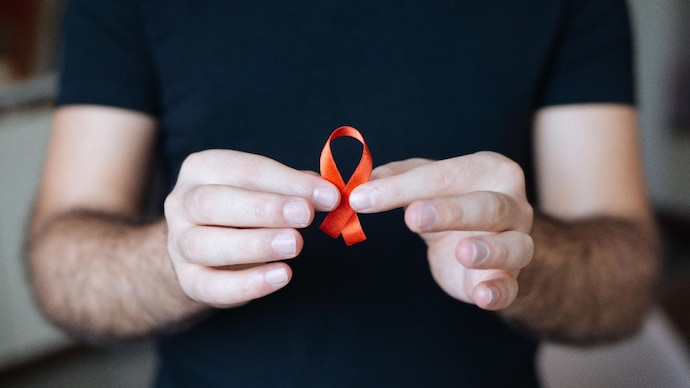
A 60-year-old man in Germany has been cured of HIV (human immunodeficiency virus) following a stem cell transplant. The significant development was announced ahead of next week’s International AIDS Conference in Munich.
Researchers have highlighted the unprecedented nature of the case, saying the man is the seventh person in the world to be cured of HIV.
This is a major milestone in the fight against the virus that has affected nearly 39 million people worldwide, and over one million in India.
What makes this case particularly notable is that the stem cell donor was not immune to HIV.
Professor Christian Gabler, an HIV expert at the Charité – Universitätsmedizin Berlin, expressed surprise at the result, and stressed its uniqueness in the history of HIV treatment.

The patient, who wished to remain anonymous and described himself as the “next Berlin patient”, was diagnosed with HIV in 2009 and acute myeloid leukemia (AML) in 2015.
This dual diagnosis led to a stem cell transplant by a team at Charité – Universitätsmedizin Berlin, Europe’s largest university hospital.
Since the patient discontinued antiviral therapy in 2018, his health has remained stable, and there have been no symptoms of cancer or HIV.
“A virus-free observation period of more than five years indicates that the HIV virus has indeed been completely eliminated from the patient’s body,” said Professor Olaf Pennack, senior physician at the treating clinic. “We therefore consider him to be cured of his HIV infection.”
Despite the success, Gabler cautions that the “considerable risks” associated with stem cell transplantation make it unsuitable for widespread use in HIV treatment.
“A previous stem cell transplant performed without an immune donor resulted in HIV relapse after a few months,” Gabler said.
Sharon Levine, president of the International AIDS Society, said researchers were cautious about calling it a “cure” because of the uncertain follow-up period.
However, the man, who has been recovering from the disease for more than five years, is considered cured.
Unlike other cases, where donors have two copies of the mutated CCR5 gene, making them immune to HIV, this Berlin patient received stem cells from a donor with only one copy.
This broadens the pool of potential donors.

The Geneva patient, whose case was announced at last year’s AIDS conference, is the second exception out of seven. He received a transplant from a donor without a CCR5 mutation – yet achieved long-term remission.
Levin said this showed that the effectiveness of the procedure did not depend solely on the CCR5 gene.
The first Berlin patient
Berlin’s original patient was Timothy Ray Brown, an American living in Germany at the time, who was diagnosed with HIV in 1995 and then with acute myeloid leukemia in 2006.
A team from Charité not only successfully treated leukemia, but also succeeded in completely eliminating the HIV virus from the patient’s body for the first time in the world. The treatment team made this case public in 2008.
He died in the US in 2020 at the age of 54 after a relapse of leukemia.
What is stem cell transplantation?
According to the U.S. National Cancer Institute, stem cell transplantation is a procedure in which healthy stem cells (blood-forming cells) are given to a patient to replace his or her own stem cells that have been destroyed by radiation treatment or high doses of chemotherapy.
Healthy stem cells may be obtained from the patient’s blood or bone marrow or from a related or unrelated donor.