



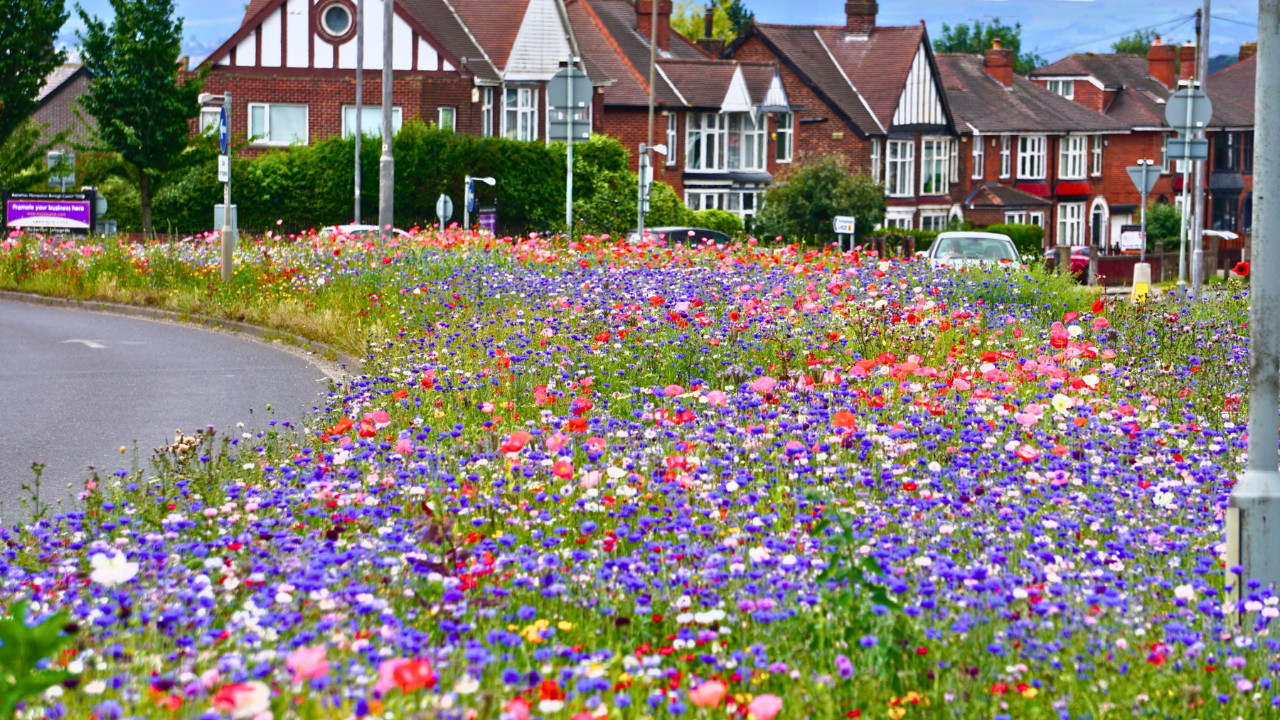
A quiet policy change in Rotherham has become one of the most talked-about examples of low-cost environmental change. In 2013, the city decided to stop mowing large sections of roadside grass and replace them with wild flowers. What happened next was unexpected. Maintenance costs dropped significantly, wildlife returned in noticeable numbers and the once plain shores transformed into colorful corridors of life. Today, the project is widely seen as a simple but powerful model of how cities can save money while supporting biodiversity.
How £25,000 was saved without mowing and nature was revived
The initiative began as part of a broader rethinking of how urban green spaces are managed. Rather than treating roadside verges as areas that required constant trimming, the council explored whether they could serve a more ecological purpose.Approximately 8 miles of meadows were selected and replanted with a mixture of carefully selected wild flowers. These were designed to ensure blooms throughout the season, constant color and a steady food source for pollinators. The project soon became known as the “River of Flowers”.Before the change, maintaining these banks required repeated mowing, labor and traffic management, increasing costs. By reducing logging and switching to seasonal maintenance, the city significantly reduced its expenses.The result was a saving of around £25,000 per year, showing that environmental initiatives do not always require large investments. In this case, doing less work actually produced better results.One of the most surprising results was how quickly the wildlife responded. As the wild flowers took hold, the verges began attracting bees, butterflies and other pollinators almost immediately.Birds also returned, attracted by the increase in insects and seeds. These roadside strips effectively became miniature ecosystems, helping to restore habitats that had been disappearing for decades across Britain.
more than letting the grass grow
Despite its simplicity, the project wasn’t just about stopping mowing entirely. This involved planning and design.The flower mix was selected as follows:
- bloom at different times of the year
- provide a constant nectar source
- Maintain visual appeal in all seasons
In some areas, a narrow strip near the road was still regularly mowed to ensure safety and visibility, while the rest was left to grow.

The perspective of seeing cities as ‘clean’ is changing
The project also challenged long-held ideas about what urban space should look like. Traditionally, neatly cut grass is seen as a sign of care, while tall vegetation is often seen as neglect.Rotherham’s approach showed that the wild look could be both deliberate and beneficial. Over time, public perception began to change as residents saw the environmental and aesthetic value of the change.The success of the project has attracted the attention of other councils and environmental groups. It has become an example of how small, practical changes can lead to multiple benefits.As cities look for ways to reduce costs and improve sustainability, similar initiatives are being considered and adopted elsewhere.
What does this mean for individuals
The idea behind the project is not limited to councils. Individuals can apply the same principles on a smaller scale.Allowing parts of the garden to grow wild, planting native flowers or reducing the frequency of mowing can all contribute to local biodiversity. Even a small piece of land can support pollinators and create micro-habitats.Rotherham’s Wildflower Verge shows that meaningful environmental change does not always require complex solutions. By rethinking a routine practice, the city managed to save money, support wildlife, and reshape the way we perceive the urban landscape.It’s a reminder that sometimes, the most effective action is to simply step back and let nature do the work.