





Did Timothée Chalamet’s opera comment derail his Oscar dream? Controversy explained
Timothée Chalamet, once considered a leading contender for Best Actor at this year’s Oscars, has now seen his chances bleak due to controversy over comments about ballet and opera. The actor has been nominated for his role in Marty Supreme.

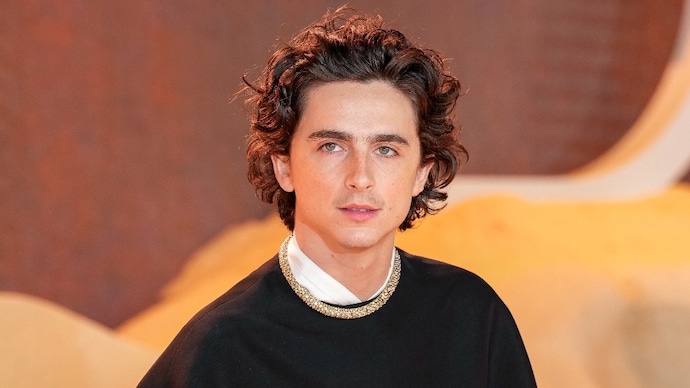


Just days before the 2026 Academy Awards, actor and nominee Timothée Chalamet has found himself at the center of a heated debate after comments he made about ballet and opera have drawn criticism from artists and cultural commentators. The comment, where he said that “no one cares” about the art forms, immediately sparked backlash, especially from within the performing arts community.
❮❯
Awards season is gaining momentum. A rave review here, a standing ovation there, and suddenly a performance gathers the kind of energy that can propel an actor to the Academy Awards stage. For months, Chalamet seemed to be riding the exact same wave. The 30-year-old enters the Oscar race with strong momentum, having already won a Golden Globe and a Critics’ Choice Award Marty SupremeWith Spotlight Actor honors at the Palm Springs International Film Awards.
But as Hollywood history has shown time and time again, one offhand comment can sometimes destroy months of goodwill.
When a comment provoked a strong reaction
The actor who won multiple awards for his stellar performances this season JOhan Safdie’s sports drama is currently facing intense backlash after comments he made about ballet and opera during a live-stream conversation with actor Matthew McConaughey. In the discussion, Chalamet reflected on the changing landscape of cinema and the challenges facing theatrical viewing.
Making his point, he said that he did not want films to become like art forms like ballet or opera – places where, in his words, people keep something alive “even if no one cares about it anymore.”
The comment, although brief, was bad.
Within days, the clip spread widely on social media, drawing criticism from artists, critics, and cultural commentators. Ballet dancers, opera singers and arts organizations protested what they saw as a contemptuous approach to centuries-old art forms that are thriving despite financial and institutional challenges.
Chalamet attempted to soften his statement during the same conversation, immediately saying that he had “complete respect” for the ballet and opera artists. But by then, that moment had already created a life of its own online. What perhaps came across as a clumsy comparison became a debate about cultural value, artistic respect, and celebrity responsibility.
The timing of the controversy has further intensified the investigation.
As Oscar voting reached its final stages, the comments began to heat up. For a candidate once seen as a frontrunner, the sudden wave of criticism has sparked conversations about whether the backlash could hurt his chances of winning an Academy Award.
Watch the clip here:
Jessie Buckley adds a different layer
The reaction to Chalamet is not an isolated case. Awards season has often seen moments where a casual comment or personal anecdote unexpectedly becomes part of a larger conversation.
Irish actor Jessie Buckley, who is a frontrunner for the Best Actress award for her role in Chloé Zhao HamnettShe recently faced criticism after joking on a podcast that she once threatened to get rid of her pet cats after they defecated on her pillow. Knowing that the comment would provoke backlash, she even said, “That’s too bad. I’m going to get canceled.”
As the clip circulated online, Buckley later addressed it during an appearance The Tonight Show Starring Jimmy Fallon The day Oscar voting closed. Clarifying her comment she said, “I need to clarify something for all the cat lovers. I am a lover of cats. When I came out to the world I thought I didn’t love cats. It really affected me.”
When off-screen controversies changed the Oscar race
Hollywood watchers know that the Oscars are not decided by performance alone. The narratives surrounding the nominee – public perception, industry goodwill and media coverage – can often shape the final outcome.
And history offers many examples where off-screen controversies changed the course of an awards campaign.
One of the most widely discussed cases dates back to 2002. Russell Crowe won the Best Actor Oscar last year the Gladiator And again considered a strong contender a beautiful Mind. However, reports emerged of a heated exchange between Crowe and a BAFTA executive after a ceremony. The incident quickly became part of the conversation surrounding his campaign. When the Academy Awards were announced, the trophy went to Denzel Washington training Day.
In 2009, Mickey Rourke suffered a similar fate. His performance in Wrestler It earned tremendous critical acclaim, and many believed that it was hers to win the Oscar. But during the campaign season, reports emerged that Rourke had made disparaging remarks about fellow candidate Sean Penn. Whether coincidence or consequence, Penn ultimately won Best Actor MilkRourke’s comeback story was left without its expected Hollywood ending.
Some other examples:
Recently, controversies have taken different forms in the age of social media.
In 2025, Spanish actor Carla Sofia Gascón saw her Oscar campaign fade away after several old social media posts resurfaced online, sparking intense debate.
The 53-year-old was nominated for Best Actress Emilia PerezMade history as the first openly transgender actor to receive an acting nomination at the Academy Awards. However, his campaign soon ran into trouble when past tweets resurfaced, with comments widely criticized for being Islamophobic, racially insensitive and dismissive of Oscar diversity.
Ultimately, Gascón lost the Best Actress award, which went to Mickey Madison. Anora. And, what once seemed like a historic moment in awards history quickly turned into a polarizing discussion.
Another matter that sparked widespread discussion involved Andrea Riseborough’s unexpected nomination for indie drama To Leslie.
Her inclusion in the Best Actress category at the 2023 Oscars follows an unusual grassroots campaign by several Hollywood actors, including Cate Blanchett, Gwyneth Paltrow and Edward Norton, which immediately drew scrutiny. Critics argued that the push could overshadow widely expected contenders such as Viola Davis and Danielle Deadwyler.
The debate soon became part of the broader Oscar conversation. In the end, Riseborough did not win the award; Michelle Yeoh received the Oscar for Best Actress everything everywhere at once.
Why does perception matter in the Oscar race?
In each of these examples, the central lesson remained the same: In the weeks leading up to the Oscars, perception can matter almost as much as performance.
For Chalamet, the situation seems especially striking because his career has been largely defined by careful choices and strong industry goodwill. Since his breakout role call me by your nameThe actor has earned a reputation as one of the most thoughtful artists of his generation. His work across projects ranging from artistic dramas to large-scale productions has earned him praise from critics and audiences alike.
That’s why the reaction to his recent comments has surprised many observers.
Some fans have argued that the response may have been disproportionate, pointing out that Chalamet was intentionally speaking about the importance of preserving the relevance of cinema rather than undermining other art forms. Others believe that the criticism reflects a greater sensitivity about how traditional cultural spaces are discussed within the arts community.
Either way, the debate has become part of the Oscar conversation.
Watch the trailer of Marty Supreme here:

How does an Oscar campaign work?
The Academy consists of more than 10,000 members in 17 branches representing different sectors of the film industry, from actors (the largest group) and directors to writers, costume designers and publicists.
For the Best Actor Oscar, nominations are adjudicated exclusively by members of the acting branch of the Academy of Motion Picture Arts and Sciences (AMPAS). However, the final winner is selected through voting by the entire eligible Academy membership. All votes are cast through secret ballot.
What are nominees expected to do during the campaign session?
During the period between nominations and final Oscar voting, nominees typically enter the most intense phase of the awards campaign.
Although they cannot directly solicit votes, they are expected to be highly visible within the industry (give interviews and press appearances, attend industry events and guild gatherings, maintain a positive public image, attend screenings and question-and-answer sessions and take part in ‘For Your Consideration’ campaigns) and engage with Academy members.
Important Dates (for the 98th Academy Awards):
December 8: Early voting begins
December 12: Early voting ends
December 16: Oscar shortlist announced
January 12: Voting begins for Oscar nominations
January 16: Voting ends for Oscar nominations
January 22: Oscar nominations are announced
February 10: Oscar Nominees Luncheon
26 February: Final voting begins
March 5: Final voting ends
March 15: 98th Oscar Ceremony
28 April: Scientific and Technical Awards
It remains to be seen whether the backlash will ultimately affect Chalamet’s chances. The Academy’s approximately 10,000 voters are known for making unexpected choices, and the end results often reflect a mix of artistic appreciation and industry sentiment.
For now, the situation is a reminder of how delicate awards-season stories can be. In an age where every comment can be clipped, shared, and debated within minutes, the line between casual conversation and cultural flashpoint has never been thinner.
And as Oscar history shows, sometimes the season’s most memorable moments happen not on-screen, but off-screen.
The 98th Academy Awards is scheduled to be held on March 15, 2026. The ceremony will be broadcast on ABC.